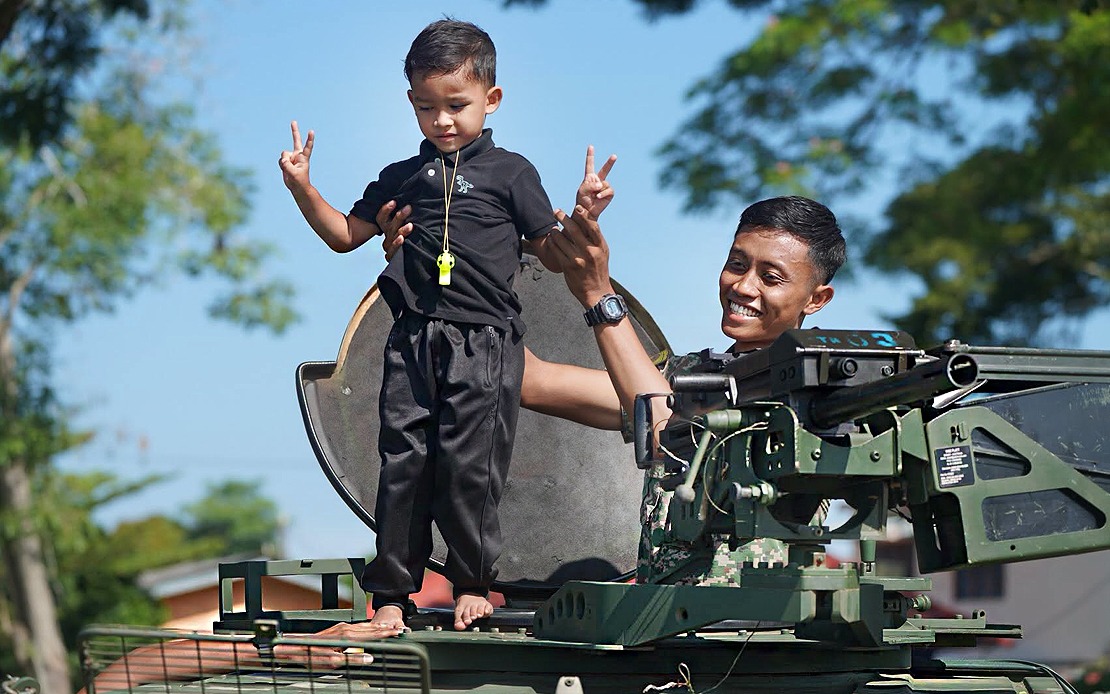
The Ministry of Defence has deepened its engagement with residents in Alor Gajah through a comprehensive community-focused programme designed to strengthen the relationship between the Malaysian Armed Forces and civilian populations. Held at Padang Awam Kampung Gadek on August 15, the 'Program Jiwa Murni MADANI' (PJM) represented the latest phase of the Defence Ministry's strategy to integrate social welfare delivery with military-civilian cooperation across Malaysian districts.
The initiative reflects a broader strategic shift within Malaysia's defence establishment toward positioning the armed forces as active contributors to community development and public welfare beyond traditional security functions. By combining health services, economic opportunities, and infrastructure improvements with military participation, the programme demonstrates how civil-military cooperation can address tangible local needs whilst simultaneously building public confidence in defence institutions. This approach aligns with evolving defence doctrines across Southeast Asia that emphasise the military's role in national development and disaster relief.
Tangible improvements to community infrastructure formed a significant component of the August initiative. The 9th Squadron of the Royal Engineers Regiment undertook five separate construction and repair projects valued at RM179,200 throughout the Alor Gajah area. These included restoration work on a community hall playground in Kampung Baru and Pondok Batang, fencing repairs at Sekolah Jenis Kebangsaan (Tamil) Durian Tunggal, refurbishment of a futsal court in Taman Seri Kelemak, and roof repairs at two religious educational facilities—Madrasah Seri Kemuning and Surau Madrasah Khairiah. Such hands-on contributions by military engineers directly address infrastructural deficits that affect quality of life in smaller towns and villages.
Financial support complemented the infrastructure work, with Deputy Defence Minister Adly Zahari presenting RM133,000 in grants through the Service Centre Initiative to eight local organisations. The beneficiaries represented a cross-section of Alor Gajah's religious and educational communities, including multiple surau committees, Hindu and Chinese temples, and one Tamil-language primary school. The distribution reflected deliberate inclusivity across different faith communities, signalling the Defence Ministry's commitment to non-discriminatory welfare provision and reinforcing the Defence Ministry's role as a unifying rather than divisive institution within Malaysian society.
The programme extended beyond infrastructure and grants to address immediate household needs. Five hundred RAHMAH baskets—government-subsidised essential goods packages—were distributed to Malaysian Armed Forces veterans and local residents, connecting welfare provision to recognising military service contributions whilst ensuring broader community benefit. The RAHMAH programme, introduced as part of the government's cost-of-living assistance initiatives, demonstrates how defence institutions can become channels for distributing targeted economic relief during periods of inflationary pressure.
Healthcare accessibility formed another programme component, with free medical screenings offered alongside exhibitions focused on career opportunities, volunteer engagement, and entrepreneurship development. Such activities position the Defence Ministry not merely as a security apparatus but as an institution actively investing in human capital development and economic mobility. For residents in smaller districts like Alor Gajah, access to free health assessments and career guidance through Defence Ministry-coordinated events represents meaningful intervention in areas where private healthcare and professional development services may be geographically distant or financially inaccessible.
Religious engagement through the Religious Corps of the Malaysian Armed Forces broadened the civil-military cooperation framework. The preceding day saw the 'Program Ilmu dan Muafakat MADANI' (PIKAT) organised at Masjid Kelemak, incorporating congregational prayers, lectures, and charitable contributions. This spiritual dimension reflects recognition that effective civil-military relations extend beyond material provision to encompass shared moral values and religious observance. For Muslim-majority populations, military participation in religious activities—rather than maintaining secular distance—normalises defence institutions as integrated community members rather than external forces.
The coordinated deployment of both PJM and PIKAT programmes illustrates strategic consistency within Malaysia's defence approach toward community engagement. By operating simultaneously across welfare, spiritual, and development domains, the Defence Ministry creates multiple touchpoints with civilian populations, each reinforcing messages about institutional commitment to inclusive national development. This comprehensive strategy differs markedly from narrower definitions of civil-military relations focused purely on security cooperation or emergency response.
These initiatives directly serve the aspirations outlined in Core 4 of the National Defence Strategic Plan (PSPN) 2026-2030, which emphasises strengthening defence-civilian connectivity through structured engagement. As Malaysia faces demographic challenges in smaller districts and intensifying competition for rural political allegiance, Defence Ministry-led welfare provision offers the government credible mechanisms for demonstrating investment in peripheral communities. The Alor Gajah programme exemplifies this approach, with military engineers, health personnel, and administrative staff working alongside civilian officials to deliver visible improvements.
For residents in secondary towns like Alor Gajah, such Defence Ministry initiatives often represent the most substantial direct government engagement experienced locally. Unlike national policies announced in Kuala Lumpur, infrastructure repairs and health screenings constitute tangible, immediate benefits that shape public perceptions of state capacity and responsiveness. The August programme's focus on educational facilities, religious institutions, and veterans' associations ensures that community leaders—individuals who shape local opinion—witness defence institution commitment firsthand.
The programmes also carry implications for Malaysia's broader security environment. By deepening institutional relationships with local communities and demonstrating capacity to deliver welfare services, the Defence Ministry builds social cohesion and civilian trust—factors critical for maintaining public order and reducing vulnerabilities to extremist recruitment or separatist agitation. In this strategic context, community welfare activities transcend humanitarian concerns to become components of comprehensive national security strategy.
Looking forward, the scaling of programmes like PJM and PIKAT across additional districts will reveal whether the Defence Ministry can sustain the coordination, resource allocation, and personnel deployment required for systematic civil-military integration. The Alor Gajah initiative, whilst impressive in scope, represents a single district-level implementation. Extending such programmes nationwide requires institutional capacity building, budget protection from competing defence expenditures, and sustained political commitment. As Malaysia's defence establishment increasingly positions itself as a development partner rather than exclusively a security provider, success in community engagement programmes like those in Alor Gajah will substantially influence public perceptions of defence institutions' relevance to ordinary Malaysian lives.

