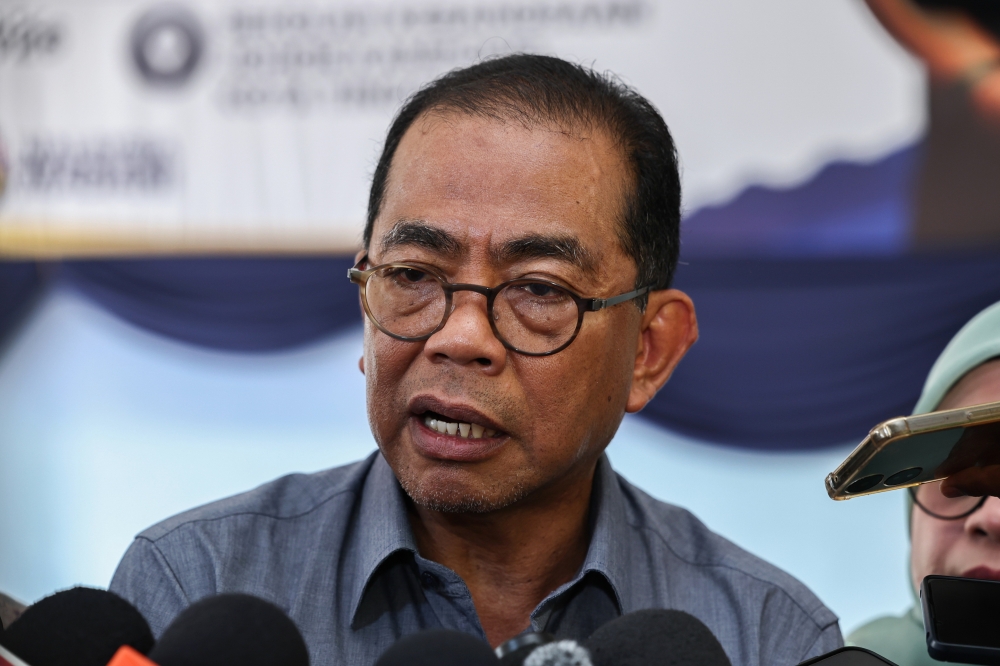
Defence Minister Datuk Seri Khaled Nordin has moved to settle a constitutional ambiguity that has long clouded the relationship between federal military authority and state royal prerogatives, declaring to Parliament that the armed forces can conduct military exercises throughout Malaysian territory without first obtaining permission from state rulers. This clarification, delivered during parliamentary proceedings on July 16, addresses a procedural gap that had created practical complications for military planning and operations across the country's diverse federal structure.
The minister's statement reflects an important interpretation of the Federal Constitution's distribution of powers between the federal government and the states. Under Malaysia's constitutional arrangement, while state rulers retain significant ceremonial and constitutional roles, defence and security matters rest squarely within federal jurisdiction. Khaled Nordin's position essentially affirms that the Defence Ministry does not require separate royal consent from each state's ruler before deploying troops or conducting tactical exercises on state soil, provided such activities fall within the military's ordinary operational mandate. This distinction matters considerably because it prevents the possibility of military readiness being hampered by the need to navigate multiple approval processes across the 13 states and three federal territories.
The clarification carries particular significance for Southeast Asia's regional security environment. Malaysia faces multifaceted defence challenges ranging from maritime security threats in the Sulu-Sulawesi corridor to maintaining readiness across its extensive maritime zones. Regular military exercises serve as essential instruments for testing operational capabilities, ensuring troop readiness, and maintaining interoperability between different service branches. If such activities required state-level royal endorsement, the complexity and delay could compromise the military's ability to respond swiftly to emerging security challenges. Khaled Nordin's statement therefore positions the armed forces to conduct more fluid and responsive training programmes.
The minister's remarks also illuminate a broader constitutional principle: the distinction between a ruler's ceremonial constitutional position and the practical execution of federal defence policy. While state rulers hold exalted positions within Malaysia's constitutional monarchy framework and retain important powers over matters of state sovereignty and ceremonial functions, they do not exercise operational control over defence matters. Federal Defence Ministry officials and military commanders retain full responsibility for strategic planning, operational execution, and resource deployment. This separation ensures that military effectiveness is not compromised by processes designed for different purposes.
The timing of this clarification suggests it may have been prompted by specific operational scenarios or parliamentary questioning that exposed confusion about the proper protocols. Defence ministries throughout Southeast Asia regularly conduct training exercises across provincial or state boundaries, and Malaysia's constitutional structure now appears clearly aligned with regional practice. By obtaining parliamentary confirmation of this principle, Khaled Nordin has created a formal record that should prevent future disputes or procedural challenges.
Practically speaking, this interpretation streamlines military logistics significantly. Large-scale exercises often span multiple states, requiring coordination across different terrain and climatic zones. The armed forces regularly conduct joint operations involving army units, naval assets, and air force components across the country. Without clear federal authority to conduct such activities, military planners would face an unwieldy approval process that could fragment operational effectiveness. The clarification enables the Defence Ministry to schedule exercises, allocate resources, and execute training programmes with the administrative efficiency that modern militaries require.
The statement does not, however, eliminate all coordination between the military and state authorities. In practice, the Defence Ministry and armed forces maintain close working relationships with state governments regarding logistics, civilian coordination, and public communication around military activities. State governments typically appreciate advance notice of major exercises to manage public affairs and ensure civilian-military cooperation runs smoothly. The distinction Khaled Nordin makes is fundamentally about constitutional authority rather than professional courtesy or practical coordination.
This clarification also reflects Malaysia's constitutional maturation since independence. The 1957 Federal Constitution established a carefully balanced system where federal and state powers, while distinct, operate within a framework requiring mutual respect and cooperation. Over six decades of independent statehood, Malaysian institutions have developed pragmatic approaches to constitutional questions that balance formal legal authority with political sensitivity. Khaled Nordin's parliamentary statement represents this evolution, providing legal clarity while respecting the constitutional position of state rulers.
For neighbouring countries monitoring Malaysia's security posture, this statement confirms that the Malaysian military operates under clear federal authority for defence matters, eliminating any ambiguity that might have complicated regional security cooperation or joint exercises with partner nations. Multilateral defence arrangements often require transparent command structures and clearly defined operational authority. The Defence Ministry's clarification strengthens Malaysia's credibility as a security partner by confirming that military decisions rest with federal defence authorities.
The broader implications extend to questions of civilian control over the military and proper constitutional governance. By anchoring military operational authority firmly within the federal Defence Ministry and the armed forces command structure, the statement reinforces the principle that defence decisions follow constitutional and administrative channels rather than ad hoc negotiations. This institutional clarity supports effective governance and prevents the emergence of parallel power centres that could complicate Malaysia's political stability.
Looking forward, this clarification should eliminate future procedural confusion and allow the Defence Ministry to conduct comprehensive military readiness programmes. As regional security environments evolve and threats become more complex, Malaysia's armed forces require the operational flexibility and constitutional certainty that Khaled Nordin's statement provides. The Defence Ministry can now proceed with exercise planning confident that federal constitutional authority supports military operations throughout Malaysian territory.

