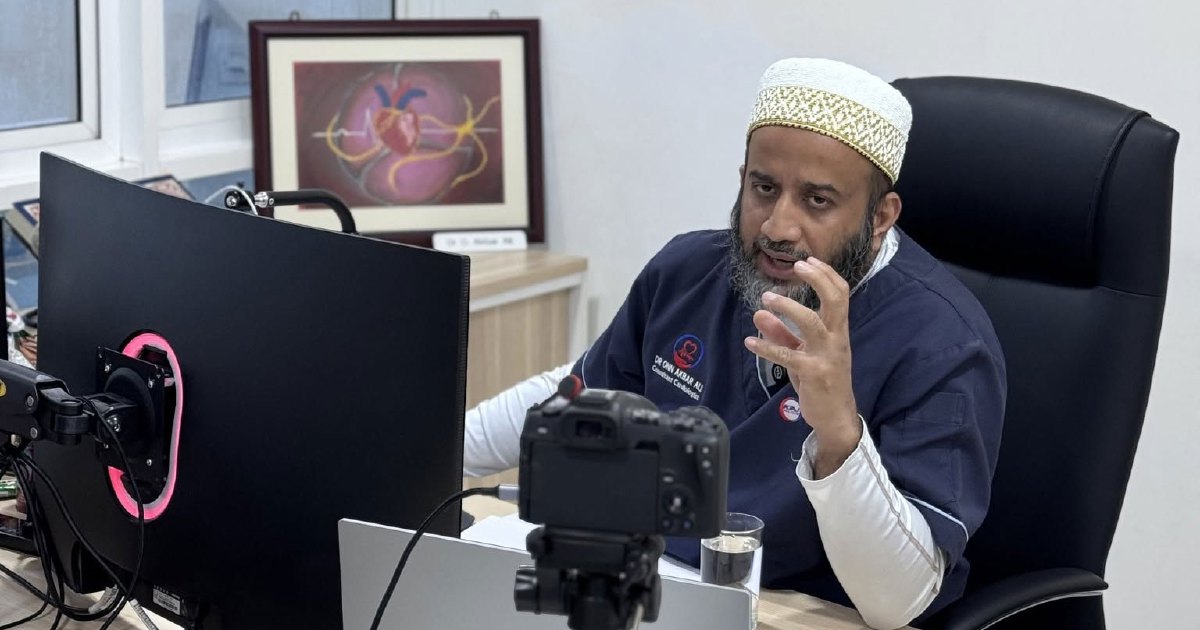
Consultant cardiologist Dr Onn Akbar Ali received a disturbing discovery when a deepfake video began circulating online, featuring his likeness and reproduced voice endorsing herbal tea as a cure for diabetes. The incident highlights an emerging vulnerability in Malaysia's healthcare ecosystem, where artificial intelligence technology is being weaponised to defraud consumers and damage the credibility of legitimate medical practitioners.
The manipulation of medical professionals' identities through deepfake technology represents a multifaceted threat extending beyond individual practitioners. When fraudsters co-opt a doctor's image and voice, they exploit the public's inherent trust in qualified healthcare providers—a relationship built over years of professional practice and ethical conduct. For patients accustomed to following medical guidance, encountering what appears to be a trusted physician endorsing unproven treatments creates genuine confusion about where legitimate health information ends and scams begin.
This particular case involving Dr Onn Akbar Ali underscores how digital identity theft in the medical field operates in practice. The perpetrators did not simply create a generic medical figure; they specifically targeted an established cardiologist, leveraging his actual credentials and professional standing to lend false authenticity to their product promotion. This represents a calculated strategy to maximise credibility and consequently the commercial success of dubious health remedies.
The implications for Malaysia's healthcare landscape are substantial. Public health authorities rely partly on citizen confidence in their doctors to ensure accurate dissemination of health information. When deepfakes successfully impersonate practitioners, they inject uncertainty into the healthcare communication chain. Patients may become hesitant to trust their own physicians, wondering whether online medical endorsements are genuine or fabricated, ultimately fragmenting the doctor-patient relationship that forms the foundation of effective medical care.
The technology enabling such fraud has become increasingly sophisticated and accessible. Advanced deepfake algorithms require less training data and computational power than even two years ago, democratising the capacity to create convincing false videos. Criminal operators in various jurisdictions can now generate these materials with relatively modest technical expertise, then distribute them globally through social media platforms where moderation remains imperfect.
From a regulatory perspective, Malaysia's healthcare and consumer protection frameworks face a significant gap. While existing laws address false advertising and health claims, the specific challenge of synthetic media impersonation of licensed professionals operates in a legal grey zone. Authorities must balance free speech protections with the imperative to protect both medical practitioners and vulnerable patients from AI-enabled fraud.
The commodification of health misinformation through deepfakes particularly threatens elderly Malaysians and those with limited health literacy. The herbal remedy sector, while containing legitimate products, has long attracted unscrupulous operators making extraordinary claims about disease cure and prevention. Deepfakes amplify this existing threat by providing false authority that earlier generation scammers could never achieve through text or static images alone.
Professional medical bodies and individual practitioners now face the burden of publicly debunking false endorsements attributed to them. This reactive approach consumes resources and time that could otherwise focus on patient care or continued professional development. The emotional and reputational toll on targeted doctors can be significant, particularly when deepfakes promote products that contradict their actual medical principles or when false endorsements concern treatments within their specialty.
Regional dimensions add complexity to addressing this challenge. Deepfake videos created in one country spread instantly across Southeast Asia, yet legal remedies remain jurisdiction-specific. A deepfake generated in one nation targeting a Malaysian doctor might be hosted on servers in a third country, while the scamming operation itself operates from yet another location. This fragmentation makes coordinated law enforcement response difficult without regional cooperation frameworks.
Technology platforms bear partial responsibility for permitting such content to proliferate. While fully preventing deepfakes remains technically unfeasible, improving detection systems and implementing stricter verification for health and medical content represents an achievable intermediate step. Several major social media platforms have begun adding labels to synthetic media and removing health misinformation more aggressively, though enforcement remains inconsistent across different regions.
The path forward requires multistakeholder coordination. Medical regulatory bodies must develop rapid response protocols for practitioners targeted by deepfakes, potentially including temporary verification badges or public statements of authenticity. Consumer protection agencies should intensify public awareness campaigns teaching citizens how to verify medical claims independently. Technology companies need to prioritise development of detection tools specifically calibrated for healthcare fraud.
For individual practitioners like Dr Onn Akbar Ali, the discovery of deepfake impersonation signals an era where professional identity itself requires active defence. Maintaining social media presence and directly communicating with patients becomes increasingly important as a counterweight to synthetic misinformation. The alternative—withdrawal from digital communication—cedes the online health information space entirely to fraudsters.
Ultimately, the deepfake healthcare fraud phenomenon reflects broader vulnerabilities in how societies verify authenticity and establish trust in the digital age. Malaysia's response will establish precedent not only for managing this specific technological threat but also for confronting the wider challenge of synthetic media deception across all sectors. The stakes involve nothing less than the integrity of healthcare communication itself.

