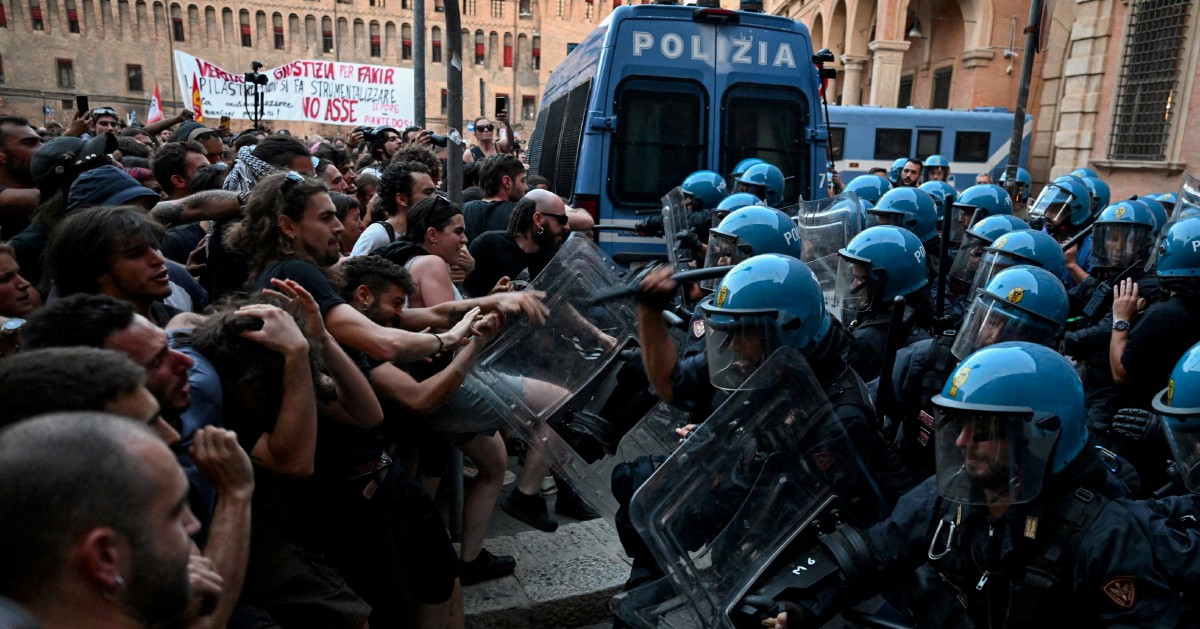
A Moroccan national's death during a police detention operation in Italy has escalated into a significant diplomatic incident, drawing demands for accountability from Rabat and triggering civil unrest across major Italian urban centres. The episode represents a flashpoint in ongoing debates surrounding policing practices and migrants' rights in Europe, with Morocco's government insisting on complete transparency regarding the circumstances surrounding the death.
Italian Prime Minister Giorgia Meloni responded to mounting pressure by emphasizing her government's commitment to establishing an accurate account of what transpired. Her statement—that authorities must pursue "the truth right to the end"—signals recognition of the case's sensitivity and the need to satisfy both domestic and international scrutiny. This measured language reflects the delicate diplomatic balance Rome must maintain with North Africa whilst addressing public concerns about law enforcement conduct.
Morocco's formal request for "full clarification" underscores the North African country's determination to ensure the incident receives serious investigation rather than becoming buried within standard administrative procedures. For Moroccan officials, the case touches upon fundamental questions of how their nationals are treated abroad and whether Italian law enforcement operates according to international standards protecting detainees' safety and dignity. The government in Rabat has positioned itself as a guardian of its citizens' welfare, a politically important stance domestically.
The death has catalyzed street demonstrations in Italy, reflecting broader societal divisions over immigration policy, police accountability, and the treatment of foreign nationals in custody. Protesters in multiple cities have used the incident as an occasion to voice wider grievances about systemic inequities and what they perceive as excessive force during law enforcement operations. These rallies indicate that the case resonates beyond bilateral diplomatic channels, touching domestic Italian anxieties about public safety, immigration, and social cohesion.
The incident arrives amid heightened international attention to police conduct across Europe. Italy, like many Western nations, has faced recurring questions about how law enforcement handles detention procedures, particularly involving vulnerable populations. Each high-profile death in custody invites scrutiny of training protocols, oversight mechanisms, and accountability structures designed to prevent such tragedies. Establishing clear facts becomes essential not merely for legal purposes but for restoring public confidence in institutional fairness.
From a regional Southeast Asian perspective, the case illustrates broader patterns affecting migrant workers and nationals abroad. Malaysian citizens and other Southeast Asians distributed across European labour markets face similar risks when interacting with foreign law enforcement systems. The Moroccan government's assertive response demonstrates how home nations increasingly mobilize diplomatic resources to protect their citizens' interests internationally, a development relevant to how ASEAN countries might similarly advocate for their populations working in distant jurisdictions.
Diplomatic channels between Italy and Morocco will likely intensify as investigations proceed. Both governments face pressure to demonstrate their commitment to justice—Italy to show that independent, impartial inquiry will follow facts regardless of political inconvenience, and Morocco to assure its citizens and international observers that persistent pressure yields substantive results. The outcome will influence bilateral relations and Italy's standing within North African diplomatic circles.
The timing matters considerably. Italy has pursued increasingly restrictive immigration policies under Meloni's administration, making any incident involving foreign nationals politically charged. Immigration remains a contentious electoral issue in Italy, with different constituencies holding divergent views on border management and integration. A death in police custody potentially feeds narratives of institutional overreach, complicating the government's ability to maintain support for its immigration agenda whilst appearing committed to fair treatment of all persons within its jurisdiction.
Investigative transparency will prove crucial in determining whether the death resulted from procedural violations, inadequate training, systemic failures, or unavoidable circumstances. Preliminary findings will shape public and governmental perception. Should investigations reveal procedural lapses or negligence, Italy faces pressure to implement reforms and pursue accountability—potentially including criminal charges against officers involved. Conversely, if inquiries establish that officers acted appropriately, Italy gains opportunity to demonstrate that its justice system operates impartially and that scrutiny, though intense, ultimately vindicates responsible conduct.
The broader context includes increasing dialogue between European nations and North African governments on migration management, border security, and law enforcement cooperation. Cases like this complicate such cooperation, reminding policymakers that effective partnership requires mutual confidence in how each nation treats the other's citizens. Morocco's diplomatic response signals that it will not permit such incidents to pass unexamined, establishing expectations for future interactions.
As investigations unfold, observers across Southeast Asia may track how Italy handles this case, deriving implications for their own citizens' safety abroad. The incident underscores the importance of monitoring legal procedures in foreign jurisdictions and maintaining active diplomatic attention to nationals in detention. For Malaysia and other ASEAN countries, the Moroccan government's assertive approach offers a model of how sustained pressure and diplomatic engagement can ensure that deaths in foreign custody do not disappear from public discourse or official responsibility.

