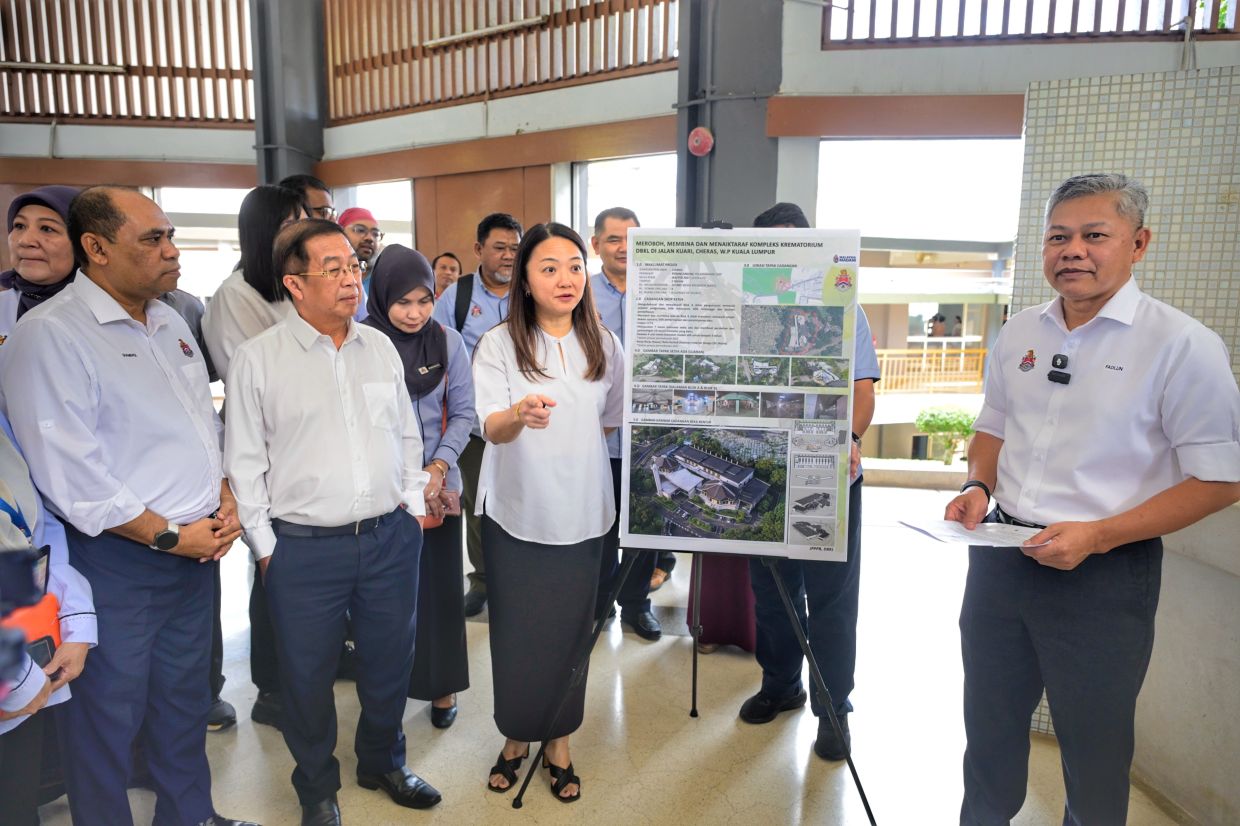
Kuala Lumpur City Hall has green-lighted a substantial infrastructure project to expand the ageing crematorium facility in Cheras, approving RM45 million in capital spending to modernise the complex on Jalan Kuari. The upgrade represents a significant commitment to addressing service pressures that have accumulated as the capital's non-Muslim population has grown, a concern that became increasingly acute during the recent visit by City Hall leadership and federal representatives to the site in early July.
The expansion will introduce three additional cremation units to complement the facility's existing seven units, effectively raising capacity by approximately 43 per cent once the work concludes. Mayor Datuk Seri Fadlun Mak Ujud outlined the implementation timeline during Wednesday's facility inspection, indicating that construction would commence in February 2025 and continue for approximately two years. This phased approach reflects pragmatic project management, with planners ensuring that four cremation units would remain in operation throughout the upgrade period to sustain essential services for the grieving families who depend on the facility.
The crematorium itself has accumulated nearly five decades of operational history, having first opened its doors in 1977. Across its lifespan, the facility has become the single municipal crematorium serving Kuala Lumpur, processing more than 5,800 cremations annually according to DBKL statistics. Such volume figures underscore the critical infrastructure role this modest complex plays within the capital's religious and cultural ecosystem. The accumulation of service demand over nearly 50 years has progressively strained the facility's capacity, creating bottlenecks during periods of high usage and highlighting the infrastructure deficit that planners must now remedy.
City Hall positioned the investment within the broader framework of the 13th Malaysia Plan, indicating that the upgrade aligns with federal development priorities and reflects coordinated long-term planning across multiple governance tiers. The framing suggests this project belongs to a larger modernisation agenda rather than representing a one-off spending decision. By anchoring the upgrade to a national development plan, DBKL has signalled that meeting the ceremonial infrastructure needs of Kuala Lumpur's increasingly diverse population represents a legitimate priority within Malaysia's planning architecture.
Cheras Member of Parliament Tan Kok Wai, who attended the inspection alongside Mayor Fadlun Mak Ujud, urged accelerated implementation of the upgrade. His intervention reflected concern that the existing facility's age—having operated for over five decades—risked inadequacy against the capital's expanding demographic profile. Tan's remarks captured the political dimensions of urban infrastructure provision, wherein elected representatives must respond to constituent needs as the city expands and diversifies. The MP's advocacy for expedition suggests that local voices at federal level recognise the crematorium project carries electoral significance within the Cheras constituency.
Minister in the Prime Minister's Department (Federal Territories) Hannah Yeoh's participation in the site visit demonstrated federal-level engagement with what might otherwise appear a routine municipal infrastructure matter. Her presence highlighted how cemetery and crematorium provision has evolved into a cross-portfolio concern spanning municipal, state, and federal jurisdictions. Yeoh's attendance signalled that the federal government views Kuala Lumpur's ceremonial infrastructure inadequacies as sufficiently pressing to warrant ministerial oversight, particularly within the Federal Territories portfolio where the federal government retains direct administrative authority.
Simultaneously, Yeoh disclosed parallel negotiations between the Federal Government and the Selangor state administration concerning Muslim burial ground provision, specifically exploring suitable sites in Semenyih. This revelation demonstrates that the infrastructure challenge extends beyond cremation capacity to encompass cemetery space for Muslim burials. The geographic expansion of the search to Semenyih—located outside Kuala Lumpur proper—reflects the acute scarcity of burial land within the federal territory itself, a constraint that has prompted policymakers to consider extra-territorial solutions. The difficulty in finding adequate funeral and burial infrastructure within a thriving metropolitan area illustrates a broader urban planning challenge that Malaysia's rapidly developing cities increasingly confront.
The broader context reveals that ceremonial infrastructure—cemeteries and crematoria—comprises an often-overlooked yet essential component of urban service delivery. As Kuala Lumpur has grown and its population has become more religiously diverse, municipal authorities have struggled to maintain proportionate investment in facilities serving minority religious communities. The crematorium expansion thus represents a corrective measure acknowledging that decades of underinvestment relative to demand have created a service deficit requiring substantial capital injection. For Malaysian urban planners and policymakers, the Cheras project offers a cautionary lesson about the importance of anticipating infrastructure needs that cut across religious and cultural boundaries.
The RM45 million expenditure also carries implications for resource allocation within DBKL's budget and raises questions about whether similar pressures affect other municipal services or facilities. Urban authorities managing multicultural cities must balance competing infrastructure demands across numerous domains—transportation, utilities, housing, and ceremonial facilities among them. The decision to commit substantial resources to crematorium expansion suggests that DBKL has determined this facility warrants investment parity with other critical urban services, reflecting a maturing recognition that inclusive governance requires proportionate provision of services across all communities.
Looking forward, the Cheras upgrade will likely establish a precedent for addressing infrastructure deficits affecting non-Muslim communities across Malaysia's urban centres. If Kuala Lumpur experiences genuine capacity relief through expanded cremation capacity, other major cities may face similar pressure to upgrade their own facilities. The project's two-year implementation window means that by 2027, Malaysia's capital will have substantially enhanced its ceremonial infrastructure capacity—a development that carries symbolic importance alongside its practical value.

