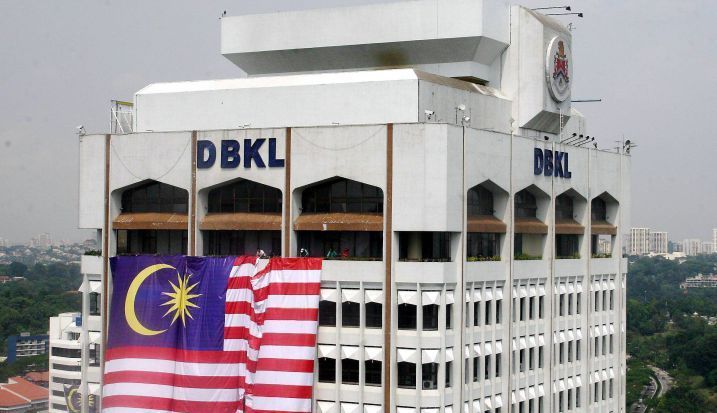
Kuala Lumpur City Hall has escalated its enforcement action against the Taman Desa Phase 1 Residents Association, issuing a formal two-week deadline for the removal of facial-recognition scanners and automated boom gates that have been blocking access to public roads within the neighbourhood. DBKL enforcement officers visited Guard Posts 1 and 4 on Thursday, affixing red notice papers directly to the facial recognition equipment and surrounding the structures with yellow DBKL enforcement tape. The notices specifically stated that both the scanners and gate mechanisms had been installed without prior approval from the Kuala Lumpur mayor, with enforcement action grounded in Section 70 of the Street, Drainage and Building Act 1974, which governs obstructions on public thoroughfares.
A DBKL spokesperson confirmed that City Hall had coordinated with its legal department before taking this step, emphasizing that the two-week grace period begins from the date the notices were posted. The official statement carried a measured but unmistakable warning: should the residents association fail to comply voluntarily, DBKL would proceed with forced removal of the equipment at the association's expense. This latest enforcement action represents a significant hardening of City Hall's position after months of warnings and compliance failures by the neighbourhood watch group.
The underlying dispute has festered for several months, rooted in the association's implementation of a comprehensive gated-community security scheme that fundamentally altered how residents and the public access roads that technically remain under municipal jurisdiction. During an inspection conducted on August 17, DBKL officers discovered that despite having been granted an additional 30-day extension period to bring their operations into compliance, the association had made no meaningful adjustments to the system. An official letter dated August 18 demanded that the group fully restore vehicle access at Posts 2, 5 and 6, dismantle all structures lacking proper municipal authorization, and return the affected public roads to their original open condition.
The equipment in question extends beyond simple gatekeeping infrastructure. The facial-recognition system represents a more sophisticated control mechanism, one that had never received City Hall's blessing. In a letter dated March 5, DBKL had explicitly informed the association that the combination of CCTV cameras and facial-recognition technology violated municipal regulations and had been installed without authorization. The repeated warnings across multiple official correspondences underscore how the association proceeded with escalating security measures while brushing aside municipal objections that should have halted the project from inception.
The situation crystallized into open neighbourhood conflict on August 24, when more than 40 residents, predominantly individuals aged 50 and above, organized a visible protest at Gate 5 along Jalan Desa Ria. Their grievance centred on the permanent vehicular closure at this access point, combined with the locked pedestrian gate that remains inaccessible to foot traffic until 6 o'clock in the morning. This time-based locking mechanism has effectively forced early risers, particularly senior citizens and health-conscious residents seeking to use nearby public recreation facilities, to navigate significantly longer alternative routes. The detour compels them to walk alongside busy traffic corridors rather than the safer internal neighbourhood pathways, creating potential safety hazards precisely for the demographic most vulnerable to traffic accidents.
Beyond the practical inconvenience, residents have articulated concerns that extend into personal privacy and public safety domains. The facial-recognition apparatus itself generates discomfort among many householders who view the technology as an unnecessary intrusion into their daily movements and routines. More substantively, community members have warned that the barriers and gating infrastructure could impede emergency vehicle access during medical crises or fire situations, potentially creating life-threatening delays in critical moments. These concerns touch upon fundamental urban planning principles regarding public safety and unfettered emergency response pathways.
The residents association leadership, represented by president Frank Yeh, has maintained that it acted with proper authorization and community backing. The association asserts that it followed prescribed procedural requirements and obtained support from 81 per cent of residents surveyed, suggesting legitimate neighbourhood consensus for the security measures. This assertion raises interesting questions about the scope of resident authority versus municipal regulatory oversight—whether majority agreement among property owners can supersede city-wide regulations governing public rights of way and infrastructure accessibility.
The conflict between the Taman Desa residents association and DBKL reflects broader tensions playing out across Malaysian urban developments regarding gated communities, privacy expectations, and the extent to which residential communities can impose their own security protocols on public infrastructure. Similar disputes have emerged in other Kuala Lumpur neighbourhoods where residents associations have attempted to implement access controls over roads that remain technically public property under municipal administration. The outcome of this particular enforcement action will likely set precedent for how City Hall deals with comparable situations elsewhere in the metropolitan area.
For residents outside gated communities, the case carries implications about the gradual privatization of public spaces in urban Malaysia. As affluent neighbourhoods implement increasingly sophisticated access controls, questions arise about equitable access to public parks, communal spaces, and efficient transportation networks. The August 24 protest illustrates how security measures implemented by one community can burden others—in this instance, non-residents who formerly used neighbourhood pathways to access public amenities but now face restricted routes and extended walking distances. These ripple effects extend the dispute beyond the immediate boundaries of Taman Desa Phase 1 into questions of urban equity and the Commons.
DBKL's enforcement action also reflects changing municipal attitudes toward infrastructure governance. Rather than accommodating or gradually negotiating with neighbourhood associations, the city authority has moved toward categorical enforcement of regulatory standards. The language in the official notices and statements projects a clear expectation that municipal authority over public roads will be asserted and protected, with limited flexibility for alternative arrangements that emerge from residential consensus. This represents a reassertion of municipal administrative prerogatives against the creeping privatization of public thoroughfares.
The two-week deadline creates an immediate decision point for the Taman Desa association. Compliance would require dismantling expensive security infrastructure that residents reportedly endorsed and that provides the neighbourhood with its primary operational feature—controlled access. Non-compliance will trigger DBKL's forced removal while potentially exposing the association to additional legal liability and enforcement costs. The association faces significant pressure to negotiate, but such negotiations appear unlikely given DBKL's hardened stance and explicit reference to legal statutes that provide no ambiguity regarding municipal authority over public roads.
Looking forward, this enforcement action should prompt other Malaysian residential communities to reassess any unauthorized structures on public roads within their boundaries. The precedent established by DBKL's actions suggests that municipal authorities will increasingly scrutinize and challenge gated-community arrangements that restrict access to or modify public thoroughfares, regardless of resident support levels or community consensus. For Taman Desa residents, the next fortnight will determine whether they retain their security system or face municipal removal and potential additional penalties for continued obstruction.

