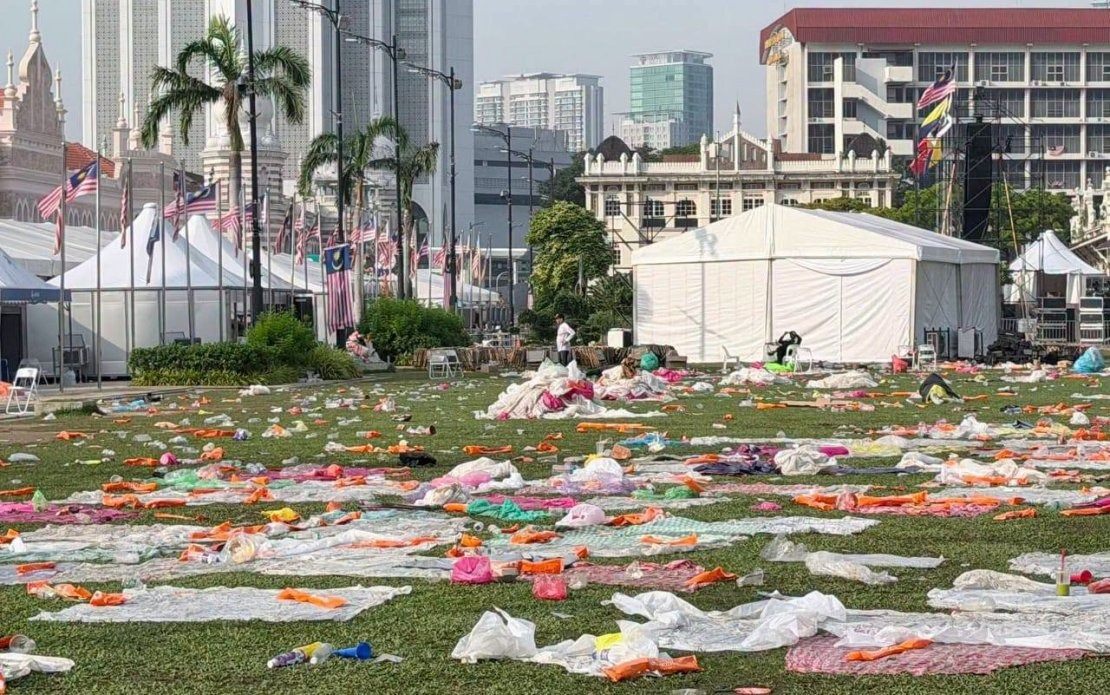
Kuala Lumpur City Hall (DBKL) has mobilised its cleaning teams to restore Dataran Merdeka following an influx of football supporters who gathered early this morning to watch Spain defeat Argentina 1-0 in the 2026 FIFA World Cup final. The popular open-air viewing event, which attracted more than 25,000 spectators to the capital's most iconic public space, left behind considerable quantities of waste and debris scattered across the historic plaza.
In a statement posted on social media, DBKL acknowledged the cleanup effort while addressing broader concerns about public responsibility and civic behaviour. The municipal authority's messaging extended beyond the immediate practical challenge, emphasising that the responsibility for maintaining cleanliness in the capital should not fall exclusively on municipal workers after public gatherings disperse. This framing positions the incident as part of a larger conversation about shared civic duties and community stewardship in urban spaces.
The authority drew a philosophical distinction between celebrating and littering, noting that while citizens have the freedom to gather, cheer, and express joy through sporting events, this liberty does not extend to treating shared public spaces as disposable. DBKL's statement explicitly referenced Dataran Merdeka's status as a repository of national heritage and dignity, suggesting that how Malaysians treat the landmark reflects fundamental values about national identity and collective pride.
Dataran Merdeka holds profound symbolic significance as the historic site where Malaysia's independence was declared in 1957. Its transformation into a temporary outdoor stadium for international sporting broadcasts demonstrates the venue's contemporary role as a gathering place for mass celebrations. However, the incident also highlights the practical and cultural tensions between enabling public enjoyment of shared spaces and maintaining their condition for future use.
DBKL's messaging strategy reveals underlying frustrations with public behaviour at major events. The statement argues that a truly great city is evaluated not merely by the spectacle of large crowds assembling but by the condition in which they leave the location once festivities conclude. This metric-based approach to urban quality suggests that DBKL views civic cleanliness as an essential marker of a metropolis's standing and character.
The 2026 World Cup final broadcast at Dataran Merdeka represents a significant public event that successfully brought tens of thousands of football enthusiasts together to share a global sporting moment. Such gatherings typically generate substantial logistical demands for waste management and site restoration. The scale of attendance—over 25,000 people—indicates the enduring appeal of international football and Malaysia's engagement with global sporting culture, while simultaneously presenting municipal authorities with considerable operational challenges.
DBKL's call for public cooperation emphasises a partnership approach to urban maintenance. Rather than positioning the municipal authority as solely responsible for post-event sanitation, the statement frames cleanliness as a collective endeavour requiring citizen participation. This messaging reflects a broader shift in urban governance toward emphasising shared responsibility and individual accountability in public space stewardship.
The incident occurs within a global context where major public gatherings frequently generate similar challenges. Large-scale outdoor events typically require pre-event planning for waste disposal infrastructure, including strategically positioned bins and recycling facilities. Whether such provisions were available at Dataran Merdeka during the World Cup broadcast remains unclear, though their presence or absence would influence the scale of cleanup required and reflect on event planning protocols.
For Malaysian residents and visitors, the Dataran Merdeka incident serves as a reminder that public spaces depend on collective respect and responsible behaviour. The iconic location's significance makes its maintenance particularly important—it functions as a national symbol and tourist destination beyond its role as a venue for large gatherings. Degradation of such spaces, even temporarily, potentially diminishes their cultural and aesthetic value.
DBKL's response strategy also implicitly addresses recurring challenges municipalities face when hosting popular events. By publicly highlighting the cleanup requirement and emphasising public responsibility, the authority may be attempting to shape future behaviour at similar gatherings. If such messaging influences spectators to exercise greater care with waste during future broadcasts or events, it could reduce sanitation burdens on municipal services.
Looking forward, the incident raises questions about Dataran Merdeka's capacity to host large gatherings while maintaining its heritage status and physical condition. DBKL and relevant authorities may need to develop more comprehensive frameworks for managing major public events at this historic venue, potentially including clearer waste management expectations, enhanced temporary infrastructure, and coordinated post-event restoration protocols.
The World Cup final gathering ultimately demonstrates both the unifying potential of international sporting events and the practical complications they present for urban authorities. As major tournaments continue drawing Malaysian audiences to public venues, balancing enthusiastic celebration with responsible environmental stewardship will require sustained attention to public education, adequate infrastructure, and genuine partnership between municipal authorities and citizens who share these cherished public spaces.

