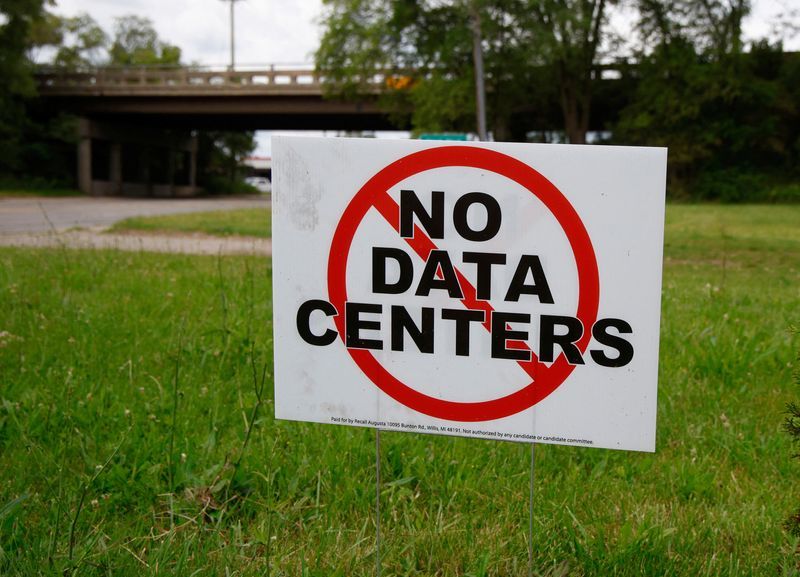
The backlash against America's accelerating data center expansion reached a new threshold this week as grassroots organisers coordinated demonstrations across at least 125 locations on Saturday, representing the first nationwide, unified effort to challenge the artificial intelligence infrastructure boom that has reshaped local political landscapes throughout the country over the past twelve months.
The nationwide campaign is being orchestrated by HumansFirst, a grassroots coalition founded by Amy Kremer, a former architect of the Tea Party movement who has drawn explicit parallels between the contemporary data center opposition and the populist conservative uprising of 2009. Rather than attacking government spending, today's movement targets what it perceives as unaccountable corporate expansion and the erosion of community autonomy in the face of technology company interests.
At the heart of these protests lies frustration with how the buildout process has unfolded at the local level. In numerous instances, municipal and county authorities have approved data center projects despite community objections, with developers frequently securing non-disclosure agreements that prevent transparent public discourse. The absence of meaningful regulatory oversight in many jurisdictions has left residents feeling excluded from decisions that will fundamentally alter their communities' infrastructure, utility costs and environmental footprint.
The scale of public disapproval has startled political observers accustomed to seeing technology expansion broadly championed across the ideological spectrum. A Reuters/Ipsos survey conducted in June revealed that only one-third of Americans support the pace of data center construction, a striking indictment given tech's traditionally favourable public standing. When the question becomes more personal—whether respondents would welcome a data centre in their own community to support operations for firms like Meta, Alphabet, Amazon, Microsoft or Elon Musk's xAI—support collapses to just 14 percent.
What distinguishes this movement from typical environmental or infrastructure campaigns is its genuinely cross-partisan character. Kremer explicitly rejects comparisons to partisan political causes, emphasising instead that anger transcends conventional left-right divisions. The geographic distribution of protests underscores this point: Texas, the Republican stronghold and data center hotspot, was leading with 16 planned demonstrations. Georgia, a crucial swing state, organised 11 protests, while California, Florida and Pennsylvania each mobilised seven.
Protesters articulate a diverse but interconnected set of concerns. Communities worry about astronomical increases in electricity demand and potential surges in power bills. Water-stressed regions face alarming projections of consumption; one proposed facility in California's Imperial County could withdraw 260 million gallons annually from the already-strained Colorado River. Environmental degradation, habitat disruption and health impacts from intensive industrial operations compound these anxieties. Yet beyond these material concerns lies a more fundamental grievance: residents feel systematically excluded from processes that determine their region's future, with developer confidentiality arrangements preventing meaningful community participation.
Organisers have articulated specific policy demands that reject both laissez-faire corporate expansion and blanket prohibitions. They are pushing for transparency in the approval process, meaningful environmental and resource protections, commitments to well-paid unionised employment, and enforceable accountability mechanisms should companies renege on community benefit agreements. This nuanced platform distinguishes the movement from simple anti-development sentiment; participants are not uniformly opposed to data centre construction but rather to its current unregulated, opaque modalities.
Eva Cardona, a 31-year-old Texas organiser who describes herself as a political newcomer and "nomad," exemplifies the movement's grassroots character. Previously uninvolved in activism beyond social media commentary, Cardona and thousands like her have been motivated to mobilise by what they perceive as alarming, unregulated expansion of AI infrastructure without community consent. Similarly, Ivan DelSol, a left-leaning activist in California's Imperial County, frames the water consumption question in starkly moral terms, characterising the diversion of vast freshwater supplies for artificial intelligence processing as dystopian.
The data centre industry, represented collectively by the Data Centre Coalition lobbying association, has largely remained silent in response to these protests, though it has previously asserted its commitment to responsible community stewardship. This reticence may reflect uncertainty about how to counter arguments grounded in legitimate resource scarcity and community governance rather than abstract opposition to technology innovation.
Politicians at state and national levels are scrambling to calibrate responses to intensifying voter anger. Some Democratic-controlled jurisdictions have imposed moratoriums or stringent approval processes, though organisers pointedly reject such blunt instruments as counterproductive. The question of data centre regulation is shaping up as a significant electoral issue, with Kremer predicting it will influence outcomes in November's midterm elections and the 2028 presidential contest. For Southeast Asian nations watching America's political economy, this episode illustrates how even technology-friendly societies can mobilise against unaccountable corporate infrastructure expansion when communities feel excluded from decisions affecting their environmental and economic futures.
The convergence of grassroots anger, cross-partisan coalitions and top-level political attention suggests data centre policy will remain contentious throughout the American political cycle, with profound implications for the pace and geography of global artificial intelligence infrastructure development.

