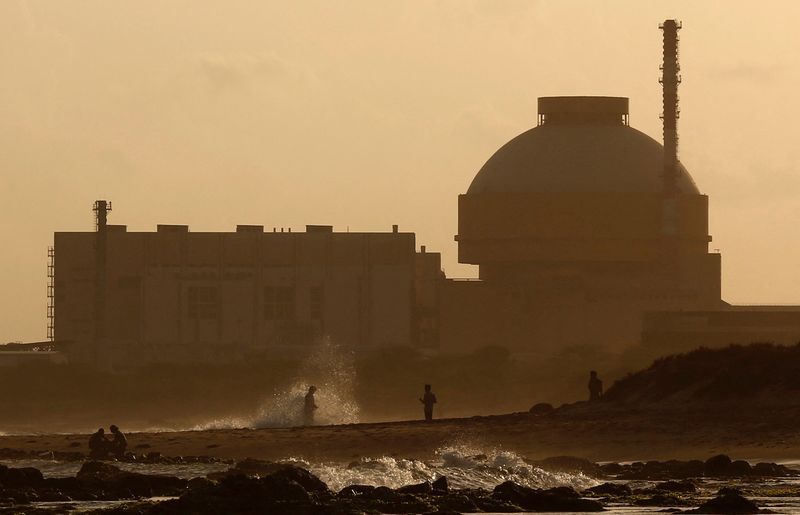
India's largest nuclear installation faces renewed scrutiny following the public disclosure of sensitive operational documents by a cybercriminal organisation known as World Leaks. The ransomware group has made available approximately 19,000 files purportedly originating from Reliance Infrastructure, a major contractor at the Kudankulam Nuclear Power Plant in Tamil Nadu. The leaked materials reportedly include facility blueprints, supplier rosters, meeting records, inspection documentation and insurance agreements, though authentication of the content remains pending.
The Kudankulam facility represents a cornerstone of Prime Minister Narendra Modi's strategy to substantially increase India's atomic energy generation capacity. As the country's most substantial nuclear installation among seven operational plants, it operates under heightened strategic importance for regional energy security and India's broader development agenda. The third and fourth units currently under construction, contracted to Reliance Infrastructure since 2018, are scheduled for completion by 2027 and will collectively generate 2,000 megawatts of electrical capacity when operational.
Reliance Group, controlled by Indian businessman Anil Ambani, confirmed the security incident in communications to media organisations, characterising it as a "partial breach" of data residing on servers provided by Yotta, a third-party Indian data centre operator. The conglomerate has notified relevant government authorities but has refrained from publicly specifying the extent or classification of compromised information. This circumspection reflects both the sensitivity surrounding nuclear facilities and potential legal obligations governing disclosure of security incidents affecting critical infrastructure.
The timing of the attack aligns with detection of suspicious server activity on May 29, according to Yotta's account. The data centre provider states that unauthorised access was immediately suspended and attempted ransomware installation was thwarted, though Reliance Infrastructure subsequently reported in late June that external threat actors were claiming possession of stolen data. The discrepancy between May's incident detection and June's notification to Yotta illustrates potential delays in identifying the full scope of compromised material, a recurrent challenge in managing sophisticated cyberattacks against institutional networks.
Nuclear security specialists express particular concern about the implications of exposed infrastructure documentation. Nickolas Roth, senior director at the Nuclear Threat Initiative, emphasises that leaked blueprints and supplier information could permit adversaries to comprehensively map supporting systems, identify critical procurement relationships and locate vulnerabilities within the security perimeter. Although the posted files apparently exclude core reactor systems—supplied by Russia's state-owned Rosatom—they contain detailed plans for ventilation and cooling apparatus serving Units 3 and 4, alongside complete architectural layouts of the centralised command facility. Such information, when synthesised with supplier details and personnel records, creates exploitable pathways for sophisticated threat actors seeking to compromise facility operations.
The disclosure of an insurance agreement valued at $112 million against terrorist acts perpetrated against either under-construction unit adds another troubling dimension. Potential adversaries gain insight into financial exposure and institutional risk assessments, intelligence that could inform targeting decisions or influence operational planning. Similarly, vendor lists and supplier relationships expose an extended ecosystem vulnerable to compromise through supply-chain infiltration, a proven attack methodology deployed by state and non-state actors across critical infrastructure sectors.
World Leaks maintains an established track record targeting major multinational enterprises, previously compromising Nike and India's Tata Group. When companies refuse ransom demands, the organisation publishes stolen materials on its dark web platform. In the Tata Group incident disclosed in June, the group sought $1.5 million compensation after threatening to release files containing confidential component designs obtained from clients including Apple and Tesla. The Reliance case follows a similar extortion pattern, though official confirmation of specific financial demands remains unavailable.
India's cybersecurity architecture struggled to mount an effective preventive response, reflecting systemic vulnerabilities within the nation's digital defence apparatus. The Indian Computer Emergency Response Team has initiated an investigation, whilst the Nuclear Power Corporation collaborates with Reliance on remediation efforts. However, broader institutional capacity constraints underscore why India ranks third globally in data breach incidents, with 28.9 million compromised accounts recorded during 2024, surpassed only by the United States and France. A Data Security Council of India survey encompassing 204 organisations revealed that approximately 73 percent remain uncertain whether they have experienced previous attacks, whilst 57 percent acknowledge deficient cybersecurity governance practices.
The Kudankulam incident represents the second documented cyber episode affecting this facility in five years. In 2019, administrative systems became infected with malware attributed to North Korean hacking operators, prompting immediate investigation by the Nuclear Power Corporation, which subsequently declared that core plant systems remained uncompromised. That earlier intrusion, whilst limited in apparent operational consequence, demonstrated that hostile state actors actively probe India's nuclear infrastructure for entry points and vulnerability chains. The repetition of such incidents suggests that adversaries perceive India's defence mechanisms as penetrable despite intervening security investments.
For Southeast Asian stakeholders, the Kudankulam breach carries sobering implications regarding regional critical infrastructure resilience. As neighbouring countries pursue accelerated nuclear power expansion and digital infrastructure integration, India's experience illustrates how supply chain interconnections, contractor networks and outsourced IT services create cascading vulnerability chains. Shared reliance upon third-party data centre operators, inadequate cybersecurity protocols within contractor organisations and delayed detection-to-notification timelines represent systemic weaknesses afflicting the broader South Asian technology ecosystem.
The incident underscores the vulnerability inherent in expanding nuclear capacity whilst simultaneously digitising infrastructure without corresponding maturation of defensive capabilities. Ransomware organisations continue targeting critical infrastructure because institutional responses frequently prove inadequate—either through financial constraint, technical incapacity or organisational inertia. Until South Asian governments and operators substantially elevate cybersecurity practices, invest in threat detection infrastructure and mandate rigorous hygiene standards across extended supply networks, nuclear facilities and associated critical infrastructure will remain attractive targets for sophisticated adversaries seeking leverage over national governments or seeking to inflict operational disruption.
Official responses remain notably restrained. Modi's office, the Department of Atomic Energy, and the Nuclear Power Corporation chairman have declined comment, reflecting sensitivity surrounding nuclear security disclosures and potential diplomatic considerations. This reticence, whilst operationally prudent, perpetuates a transparency deficit that impedes public understanding of institutional capacity and remediation effectiveness. Without forthcoming assessment of impact, corrective measures and preventive enhancements, confidence in India's ability to secure advancing nuclear expansion remains conditional.
The unfolding situation demands urgent attention to both immediate forensics and systemic reform. Investigation teams must identify precisely which materials were accessed, confirm authenticity of published content and assess potential operational consequences. Simultaneously, Indian authorities should mandate comprehensive cybersecurity audits across all nuclear contractor networks, establish binding standards for third-party service providers and implement mandatory reporting protocols with substantially abbreviated notification windows. Such measures would strengthen India's nuclear security posture whilst providing reassurance to regional partners and international stakeholders concerned about the safety and security of South Asian atomic infrastructure.

