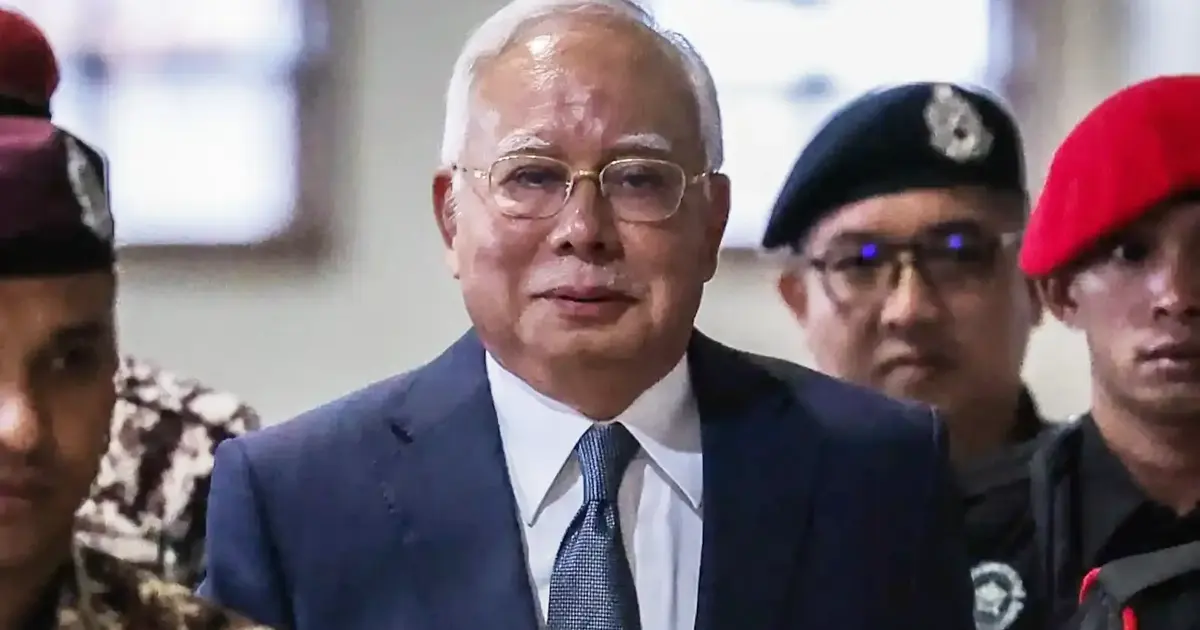
The political spotlight has shifted to the Malaysian Chinese Association as DAP legislator Ong Hui Xue challenged the party to clarify its position on intensifying calls within Umno to free former Prime Minister Najib Razak. The question cuts to the heart of coalition dynamics within Malaysia's governing structure and raises uncomfortable questions about the extent to which partners in government will tolerate mounting pressure to overturn a major corruption conviction.
Ong's intervention reflects growing concern among opposition and some coalition circles about the direction of high-level advocacy for Najib's release. Umno leaders have been systematically amplifying their calls for a full pardon, a development that appears to have prompted DAP to seek clarity on whether coalition partner MCA intends to endorse or resist this trajectory. The push for Najib's pardon represents one of the most significant tests of the current coalition's internal coherence and its commitment to the rule of law.
The former Prime Minister's conviction remains a defining moment in Malaysia's modern political history. Najib was found guilty of abuse of power and criminal breach of trust in connection with the misappropriation of funds from entities under his control. His sentence and subsequent incarceration became symbolic of accountability within the political establishment—a rare occurrence in Malaysian governance. Any move to overturn his conviction through executive pardon would effectively reverse one of the judiciary's most high-profile recent convictions.
Umno's sustained campaign to secure Najib's release has intensified over recent months, with senior party figures regularly raising the matter in public forums and private discussions. This coordinated push reflects the deep importance Najib and his legacy hold within the party structure. Many Umno members view his imprisonment as unjust and politically motivated, a perspective that has hardened rather than softened with time. The party appears determined to press the issue regardless of the broader political cost.
MCA's position on this matter carries particular significance given its role as part of the governing coalition. As a representative of Malaysia's Chinese business and middle-class interests, the party has traditionally positioned itself as a moderate force within coalition governments. Its willingness—or reluctance—to align with Umno's pardon campaign would send a clear signal about the coalition's commitment to independent judicial processes and the principle that no political figure stands above the law.
DAP's challenge to MCA appears calculated to expose potential fissures within the coalition and to force explicit statements on a matter that has thus far remained somewhat ambiguous in public discourse. By demanding clarity, DAP is essentially asking whether MCA believes that high-ranking political figures should be subject to the same accountability mechanisms as ordinary citizens, or whether considerations of party loyalty and political stability should override judicial outcomes.
The implications for Southeast Asia are noteworthy. Malaysia's handling of Najib's case has attracted international attention as a test of whether large developing economies can sustain robust anti-corruption enforcement despite political pressure. A move toward pardoning Najib would reverberate across the region, potentially signaling that corruption convictions of major political figures remain negotiable outcomes subject to subsequent political pressure rather than final legal determinations.
For MCA specifically, the dilemma is acute. The party risks either alienating its coalition partner by refusing to support the pardon push, or damaging its own standing among voters who view anti-corruption measures as essential to good governance. Chinese-educated and business-oriented Malaysians, core MCA constituencies, have historically expressed strong support for rule of law and transparent governance. A decision to back Najib's pardon could undermine MCA's own credibility on these issues.
The broader coalition government also faces pressure to establish a clear policy framework on this issue. Allowing individual parties to adopt contradictory positions on something as fundamental as executive clemency for convicted politicians creates governance ambiguity. Cabinet collective responsibility ordinarily requires alignment on major policy matters, yet the pardon question has not been formally addressed as a government position.
Umno's persistence reflects confidence in its ability to eventually achieve its objective, particularly given the executive's clemency powers. However, the increasingly visible opposition from coalition partners and civil society suggests that any pardon decision would carry significant political cost. The government would need to prepare for substantial public backlash and potential coalition strain.
Ong's intervention also serves DAP's broader strategic interest in positioning itself as the defender of institutional integrity and rule of law. By forcing the issue into explicit debate, the party shifts narrative control away from Umno and toward the question of whether democratic institutions should be subordinated to factional political interests. This framing resonates with voters concerned about governance standards.
The coming weeks will likely see more direct statements from MCA and potentially other coalition members. Their responses will reveal much about the current coalition's internal dynamics and its willingness to resist sustained pressure from its largest component party. Ultimately, this episode will be remembered as a crucial moment for testing whether Malaysia's post-2018 political reforms have genuinely strengthened institutional independence or merely created a temporary respite before established power networks reasserted themselves.

