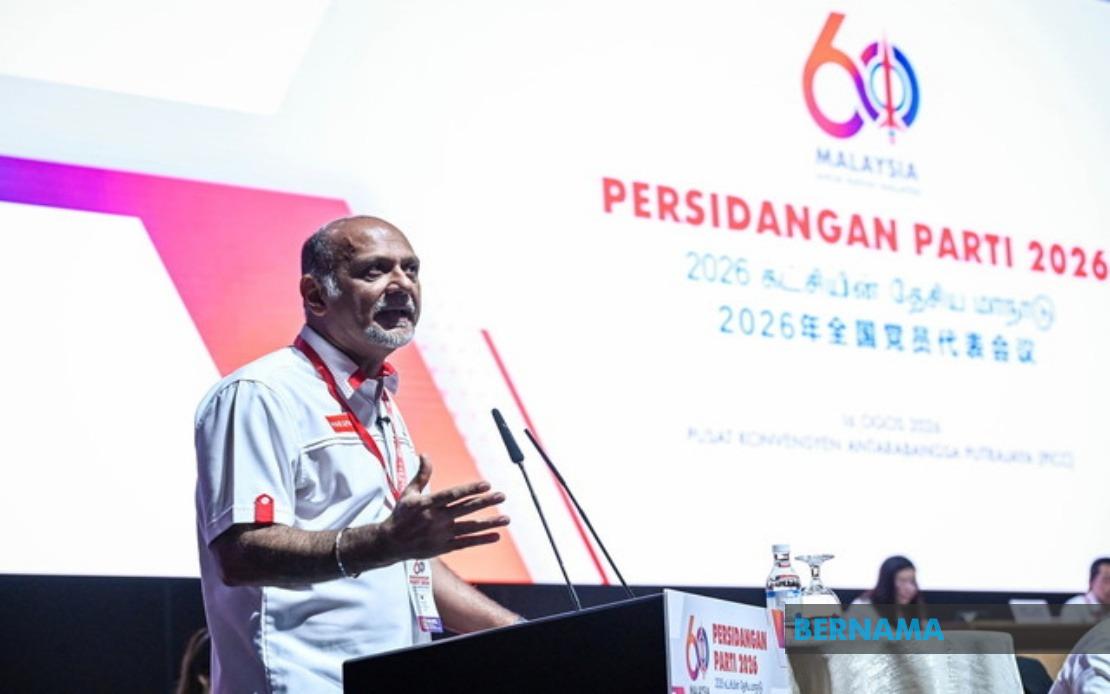
Malaysia's Democratic Action Party must leverage the outcomes of recent state elections to fundamentally reconsider its political strategy and maintain relevance in an increasingly complex domestic landscape, according to the party's national chairman Gobind Singh Deo. Speaking at the DAP Party Conference 2026 in Putrajaya on August 16, Gobind acknowledged that the electoral results have prompted serious internal reflection about how the party should navigate the months and years ahead, signalling that the organisation is prepared to learn from both its successes and failures during its tenure within the Unity Government.
The veteran politician's remarks represent a critical juncture for DAP, which has participated in Malaysia's multi-party governing coalition for three and a half years. During this extended period of government responsibility, the party has accumulated practical experience managing the complexities of shared power, a reality that demands honest evaluation. Gobind's call for reassessment comes at a time when Malaysian voters appear to be sending mixed signals about the performance of the Unity Government, and DAP leadership recognises that complacency could prove politically costly in future electoral contests.
Central to Gobind's message is the principle of political pragmatism. Rather than attempting to unilaterally implement the party's comprehensive election manifesto, DAP must prioritise reforms that can win agreement from fellow coalition partners including PKR and Amanah. This shift towards incremental, negotiated progress represents a maturation of the party's approach to governance, acknowledging that ideological purity often yields to practical constraints within a coalition setting. The approach reflects a broader truth about Malaysian politics: single-party dominance in a government structure is exceedingly rare, requiring sustained dialogue and compromise among multiple political actors with competing priorities and constituencies.
Gobind specifically advocated for convening a special parliamentary session devoted to debating and approving amendments to foundational legislation. The Security Offences (Special Measures) Act 2012, commonly known as SOSMA, has long attracted criticism from human rights advocates and opposition figures who contend it grants excessive security powers to the executive without adequate parliamentary oversight. Complementing potential SOSMA reforms would be amendments to the Peaceful Assembly Act 2012, which regulates public demonstrations and has been controversially applied in various circumstances. These institutional modifications, if successfully pursued, could meaningfully alter the balance between state power and civil liberties in Malaysia.
Beyond the securitisation agenda, Gobind's institutional reform package encompasses a proposal to formally separate the constitutional roles of the Attorney General and Public Prosecutor. Currently, these positions are combined, concentrating prosecutorial discretion within a single office answerable to the Prime Minister. Separating these functions would theoretically reduce opportunities for political manipulation of the justice system and enhance prosecutorial independence. Additionally, Gobind advocated for constitutional amendments limiting the Prime Minister to two consecutive terms, a measure designed to prevent indefinite executive consolidation of power and encourage leadership succession planning across governing coalitions.
These institutional reforms address concerns that have animated Malaysian civil society and opposition politics for years. The concentration of power within executive institutions, particularly when combined with weak inter-party checks within dominant coalitions, creates structural vulnerabilities to authoritarian governance practices. Gobind's emphasis on transparency and abuse-of-power prevention suggests DAP recognises that institutional legitimacy depends partly on visibly constraining rather than accumulating governmental authority. For Malaysian readers and regional observers, these proposals signal whether the Unity Government truly intends meaningful democratic deepening or merely implements cosmetic adjustments.
On the economic front, Gobind shifted focus to bread-and-butter concerns affecting ordinary Malaysian households. He stressed that government must develop deeper understanding of economic pressures facing citizens—including inflationary pressures, employment instability, housing affordability, and stagnating wages—before crafting effective policy responses. This emphasis on lived experience represents important counterweight to purely technocratic or elite-focused policymaking, suggesting that DAP believes government legitimacy ultimately depends on tangible improvements in citizen welfare rather than institutional restructuring alone.
Gobind further connected economic performance to foreign investment attraction, arguing that political stability serves as prerequisite for investor confidence. Malaysia's position as a Southeast Asian economic hub depends partly on perceived institutional reliability and policy continuity, factors undermined by political turmoil or governance uncertainty. The linkage between domestic political stability and foreign direct investment creates mutual reinforcement: improved investor confidence generates employment and tax revenue, which can address citizen grievances, thereby stabilising the political environment. This virtuous cycle remains conditional on coalition durability and coherent economic strategy.
The conference itself carries substantial symbolic weight, coinciding with DAP's 60th anniversary and attracting 4,264 delegates from 1,704 party branches. These proportions indicate an organisation with substantial grassroots presence and democratic participation mechanisms, distinguishing DAP from more hierarchically-organised Malaysian political parties. The gathering provides forum for authentic internal debate rather than mere leadership pronouncement, as indicated by the scheduled motion on whether DAP should remain within the government bloc through the end of the 16th Parliament term.
This prospective motion vote represents genuine organisational deliberation with potentially far-reaching consequences. If delegates choose withdrawal from the Unity Government, Malaysian politics would experience significant reconfiguration, likely destabilising the current parliamentary coalition and forcing alternative alignments. Conversely, continued participation signals grassroots acceptance of incremental reform and coalition governance despite electoral disappointment. The secret ballot format protects delegate conscience and prevents leadership pressure, enhancing legitimacy of whatever decision emerges.
For Malaysian readers and Southeast Asian observers, DAP's introspection illuminates broader questions about coalition governance sustainability in Malaysia. As regional democracies experiment with multi-party power-sharing arrangements, the Unity Government's trajectory provides instructive example of how ideologically-diverse parties negotiate divergent priorities while maintaining governing coherence. DAP's emphasis on realistic, achievable reforms rather than comprehensive manifesto implementation offers template potentially applicable to other coalition contexts across Southeast Asia where single-party dominance proves impossible or undesirable.
The timing of institutional reform proposals deserves particular attention. By proposing amendments through special parliamentary session rather than ordinary legislative processes, Gobind implies these measures carry constitutional importance transcending routine governance. This framing transforms institutional reforms from technical adjustments into foundational governance questions, elevating their political profile and demanding comprehensive coalition discussion. Whether fellow coalition members embrace this ambitious institutional agenda will reveal genuine commitment to democratic deepening versus preference for continuity with existing power structures.

