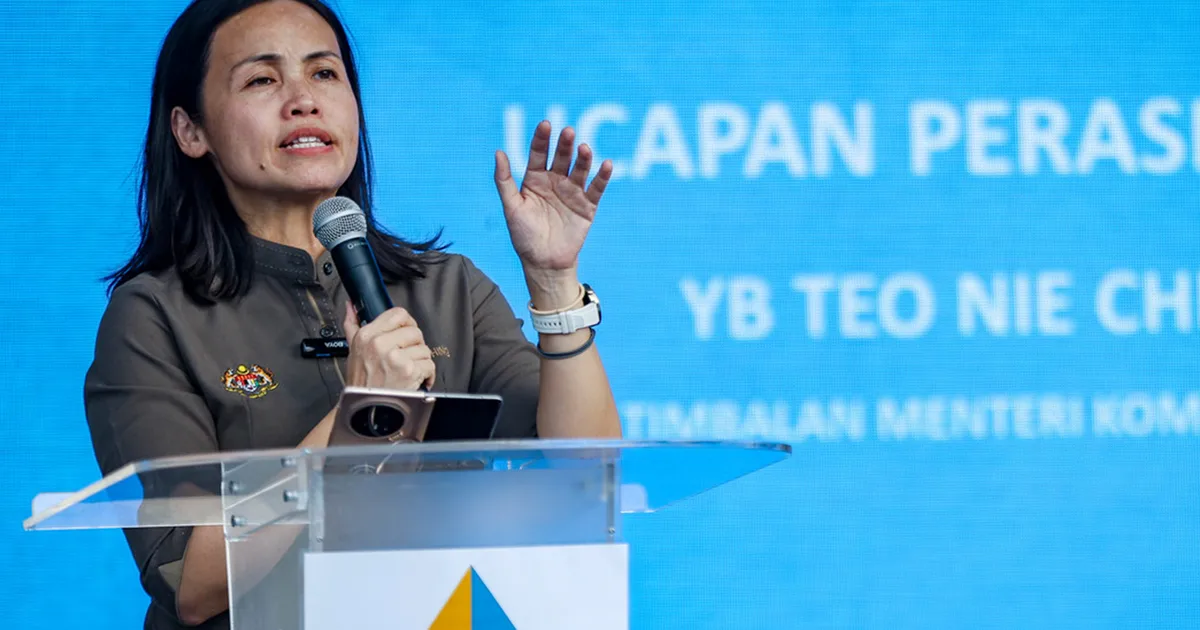
A prominent DAP politician holding the rank of deputy minister has publicly complained about what she characterises as a deliberate smear campaign orchestrated through social media. According to Teo, multiple accounts on various platforms have been created specifically to target her reputation by disseminating unfounded claims associating her with gang-related criminal activity.
The allegation raises troubling questions about the tactics being deployed in Malaysian political discourse, particularly the weaponisation of social media platforms to undermine political opponents through character assassination. Teo's complaint points to a pattern of coordination, suggesting that the accounts share a common purpose rather than representing spontaneous or isolated criticism.
Such campaigns have become increasingly common in Southeast Asian politics, where social media's speed and reach allow false narratives to circulate before fact-checking mechanisms can intervene. The relative anonymity afforded by newly created accounts makes it difficult for targets to identify perpetrators or hold them accountable through conventional channels.
The timing of Teo's statement reflects growing concern among political figures across Malaysia's spectrum about the degradation of online political discourse. Rather than engaging substantively on policy matters, opponents increasingly resort to personal attacks and fabricated accusations designed to damage credibility and distract from substantive debate.
Gang-related allegations carry particular potency in the Malaysian context, where public anxiety about organised crime remains high. By linking a political figure to such activities, orchestrators of disinformation campaigns exploit existing public concerns to amplify impact and create lasting reputational damage, regardless of factual accuracy.
The DAP, as an opposition-aligned party with significant parliamentary representation, has frequently been subjected to coordinated online attacks from various quarters. However, Teo's specific complaint about newly minted accounts suggests a level of deliberate infrastructure-building that distinguishes this campaign from routine political criticism or disagreement.
Social media platforms have struggled globally to manage coordinated inauthentic behaviour and account creation networks used for disinformation purposes. In the Malaysian context, enforcement has been inconsistent, and takedown mechanisms remain sluggish despite platforms' stated policies against such activity. This enforcement gap creates space for coordinated campaigns to operate with relative impunity.
The implications extend beyond Teo personally. Such tactics, when successful, establish precedents that normalise character-based attacks over policy debate. They signal to political actors that fabricating allegations and creating fake networks can be effective strategy, encouraging replication across the political landscape and further poisoning public discourse.
For Malaysian voters and political observers, Teo's complaint highlights the need for media literacy and critical consumption of online political content. Claims circulating on social media, particularly those emanating from newly created accounts lacking verifiable histories, warrant substantial scepticism and cross-referencing against credible news sources.
The broader ecosystem question remains unresolved: who benefits from such campaigns, and what mechanisms exist to identify and deter coordinated disinformation networks? Unlike traditional media, social media allows contributors to remain anonymous while reaching mass audiences, creating asymmetrical power dynamics that disadvantage the targets of false allegations.
Teo's public disclosure of the campaign may itself serve strategic purposes—drawing media attention to the tactic, delegitimising the false claims through pre-emptive denial, and framing herself as a victim of unfair treatment. Simultaneously, her complaint becomes part of the public record, creating documentation that can counter the false allegations circulating online.
Moving forward, the incident underscores the importance of platform accountability and users' responsibility to verify information before sharing. It also highlights gaps in Malaysia's regulatory framework regarding coordinated online campaigns and disinformation networks, areas that may warrant parliamentary attention and policy development.
For political figures across the spectrum, Teo's experience serves as a cautionary example about the vulnerability to coordinated online attacks. It suggests that combating such campaigns requires not only immediate public response but also sustained engagement with platforms, law enforcement, and media organisations to establish consequences for coordinated disinformation and create deterrents against future campaigns.

