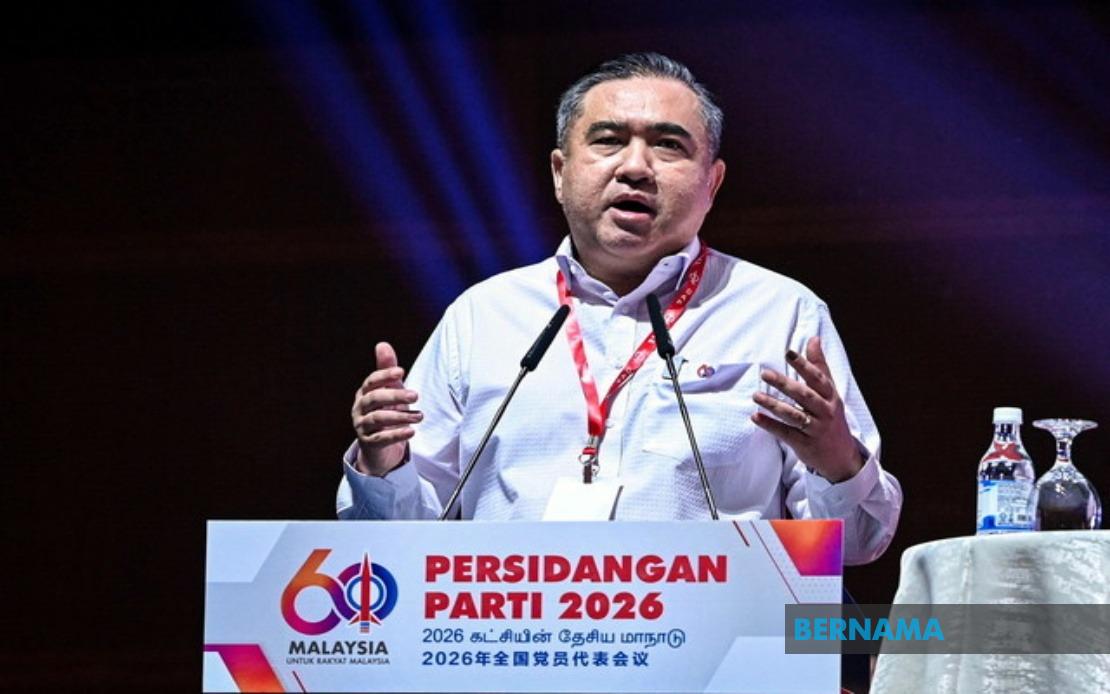
The Democratic Action Party resolved on Friday to maintain its participation in the federal government until Parliament's 15th term concludes, following a decisive vote at its national conference in Putrajaya. The decision, reached through a special motion presented by DAP secretary-general Anthony Loke, reflects the party leadership's intention to see through its commitment to the current administration despite ongoing political complexities in Malaysian governance.
The voting outcome demonstrated substantial internal consensus within the party machinery. Of the 2,106 ballot papers distributed among conference delegates, 1,857 cast votes in favour of remaining in government, 242 opposed the continuation, and seven ballots were spoilt. This outcome translates to an 88.2 per cent approval rate among those present and voting, providing DAP with a clear mandate from its grassroots membership to proceed with its coalition obligations.
The party elected to conduct the ballot through secret voting procedures rather than the conventional voice or hand-raising methods, a choice that underscored DAP's commitment to ensuring transparency and maintaining the integrity of the decision-making process. Conference Speaker Cha Kee Chin oversaw the proceedings at the Putrajaya International Convention Centre, where approximately 4,264 delegates representing 1,704 party branches nationwide were registered as eligible voters, though the final attendance fell short of this anticipated figure.
DAP's continued participation in the cabinet represents a significant component of Malaysia's ruling coalition architecture. The party currently holds five ministerial positions across key portfolios: Anthony Loke serves as Transport Minister, Steven Sim oversees Entrepreneur and Cooperatives Development, Gobind Singh Deo manages the Digital portfolio, Nga Kor Ming leads Housing and Local Government, and Hannah Yeoh represents the Prime Minister's Department with responsibility for Federal Territories.
Beyond the senior cabinet tier, DAP maintains substantive representation through its seven deputy ministerial appointments. These include Teo Nie Ching in Communications, Datuk Chan Foong Hin in Agriculture and Food Security, Wong Kah Woh in Education, and Liew Chin Tong in Finance. The party also occupies deputy ministerial roles in the Prime Minister's Department overseeing Law and Institutional Reform through M. Kulasegaran, while Lim Hui Ying handles Women, Family and Community Development, and Mordi Bimol manages Youth and Sports responsibilities.
For Malaysian governance, this commitment carries substantial implications. The stability provided by DAP's continued participation helps consolidate the ruling coalition and reduces uncertainty surrounding potential government collapses, which have periodically destabilised Malaysian politics. The party's decision comes at a time when coalition dynamics remain fluid, and maintaining predictable partner commitment strengthens the administration's capacity to pursue legislative agendas and maintain policy continuity.
The overwhelming internal support also reflects confidence among DAP's rank-and-file members regarding the party's role within government. Rather than viewing continued participation as a liability or compromise of party principles, the membership has endorsed the leadership's assessment that remaining in cabinet positions yields greater opportunities to advance party objectives and serve constituent interests. This grassroots validation is particularly significant for a party that prides itself on democratic internal processes and member engagement.
Southeast Asia's broader political context adds another dimension to DAP's decision. Regional governance structures have increasingly relied on coalition-building and multi-ethnic power-sharing arrangements, particularly in Malaysia where ethnic representation in government carries symbolic and practical importance. DAP's maintenance of ministerial representation ensures that Malaysian-Chinese and secular democratic voices remain embedded within executive decision-making, reinforcing pluralistic governance frameworks that extend beyond simple majority rule.
The scale of the endorsement—with nearly nine in ten voting delegates supporting continued participation—suggests limited prospect of internal schisms on this matter. This consensus, achieved through structured democratic processes, provides the leadership with political capital to navigate coalition-related challenges that may emerge before the parliamentary term concludes. Should disputes arise over government direction or policy decisions, the party can invoke this formal mandate when addressing internal dissent.
Looking forward, DAP's commitment extends beyond 2026 and potentially into 2027, depending on when Parliament's 15th term ultimately expires. This timeline positions the party to potentially contest the subsequent general election from within government, an advantageous position that typically strengthens incumbents' electoral prospects. However, it also means DAP accepts responsibility for government performance across this period, whether achievements or setbacks accumulate before the next election cycle.
The decision ultimately reflects practical political calculation tempered by principled governance commitments. DAP leadership has evidently concluded that the benefits of maintaining cabinet representation—advancing party policy priorities, securing resource allocation for constituencies, and preventing rival factions from consolidating alternative coalitions—outweigh the risks of continued association with government. The delegates' resounding approval validates this assessment and provides the foundation for DAP to pursue this course with internal legitimacy intact.

