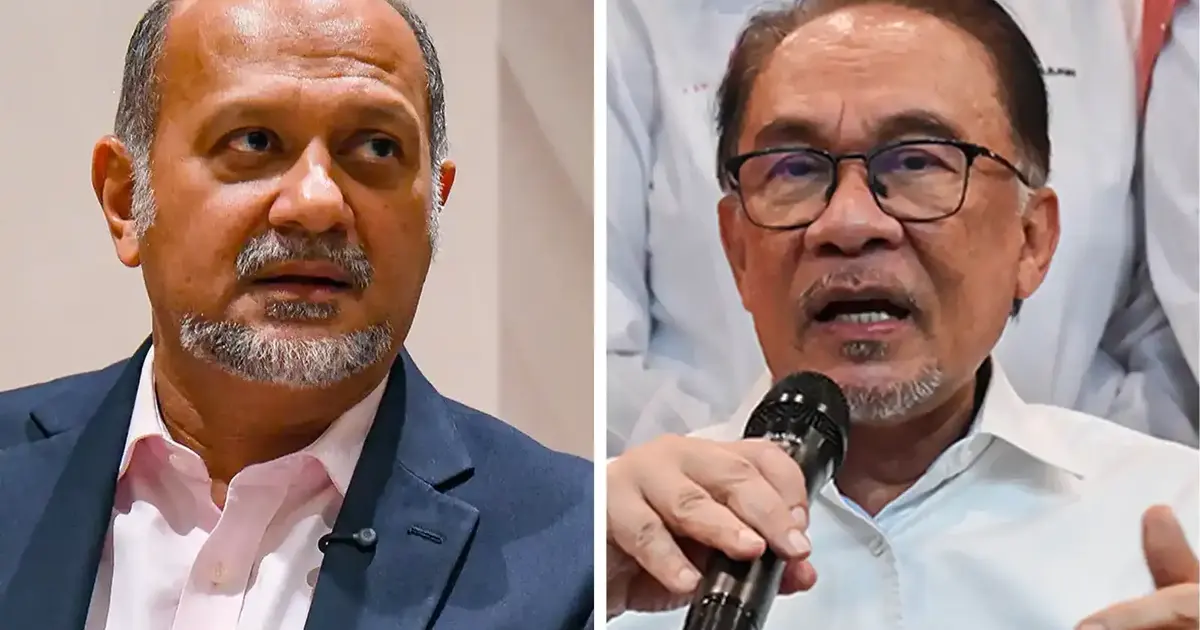
The Democratic Action Party has escalated its push for parliamentary reform by demanding that Prime Minister Anwar Ibrahim establish a formal legal framework guaranteeing equal financial allocations to all Members of Parliament, regardless of their political affiliation or government status. The proposal represents an attempt to address what DAP leaders view as systemic inequities in how federal resources are distributed among the nation's elected representatives.
Gobind Singh Deo, a prominent DAP figure, has emphasized that his party has maintained consistent dialogue with the Prime Minister's office on this matter, underscoring the significance of the issue within DAP's legislative agenda. The repeated nature of these discussions suggests a deliberate campaign rather than a casual policy suggestion, reflecting deep concerns within the opposition party about the mechanisms through which parliamentary resources flow.
The current system of MP funding in Malaysia operates without a uniform statutory framework, creating scenarios where the amount available to individual members can vary based on numerous factors including their role in government, seniority, and ministerial or committee responsibilities. This arrangement has long been a source of contention for opposition MPs who argue they operate at a structural disadvantage when serving their constituents compared to government backbenchers with supplementary allocations.
DAP's proposal to enshrine equal funding in legislation would represent a fundamental shift in how Parliament manages its internal economy. Such a move would require amending existing financial regulations and could necessitate revisions to the standing orders governing parliamentary administration. The party appears intent on making this a key reform objective, viewing it as central to ensuring fair representation and equal capacity for all MPs to discharge their duties.
The push for legislative reform reflects broader debates across Commonwealth parliaments about equity and resource allocation. Several democracies have implemented systems where opposition members receive comparable operational budgets to government counterparts, operating from the principle that effective parliamentary oversight requires adequate resources. DAP appears to be drawing inspiration from these international models whilst adapting them to Malaysia's constitutional and political context.
From a practical standpoint, the funding disparities affect MPs' ability to employ staff, maintain constituency offices, and support constituent services. Opposition members operating with limited allocations struggle to match the service delivery levels of government MPs who often enjoy additional resources through ministerial or departmental channels. This operational disadvantage compounds over time, potentially affecting electoral prospects and the capacity for meaningful constituency representation.
Prime Minister Anwar Ibrahim's response to this initiative will be telling. As a former opposition leader himself, he may be sympathetic to arguments about fair resource distribution. However, government leaders often benefit from the existing system and may resist formalizing changes that could reduce their practical advantages. The extent to which Anwar prioritizes parliamentary reform against maintaining traditional power structures will become apparent through his handling of DAP's proposal.
The timing of DAP's renewed emphasis on this issue carries political significance. With Anwar leading a coalition government that includes opposition parties in certain arrangements, there is arguably more receptiveness to reform proposals than might exist under a single-party administration. The current political configuration creates opportunities for minority parties to advocate for systemic changes that might otherwise be dismissed out of hand.
Implementing equal MP funding would require careful legislative drafting to define what "equal" means in practice. Decisions would need to be made about whether funding covers office rental, staff salaries, technology infrastructure, and travel expenses, and how these provisions would apply uniformly across vastly different geographical constituencies. These technical challenges are substantial but not insurmountable, particularly if there is genuine political will to pursue reform.
For Malaysian readers and regional observers, DAP's initiative represents a test case for whether contemporary governance in Malaysia can accommodate structural reforms that redistribute power and resources beyond traditional alignments. Success would signal that the current administration is willing to consider changes that level the playing field, whilst failure would reinforce perceptions that opposition parties remain systematically disadvantaged despite their parliamentary presence.
The proposal also carries implications for parliamentary effectiveness more broadly. When opposition MPs operate with constrained resources, their ability to conduct detailed scrutiny of government policies diminishes. A well-resourced opposition strengthens parliamentary oversight, which benefits governance quality and public accountability. DAP's advocacy thus transcends partisan advantage and touches upon institutional health.
As this discussion continues within government circles, the outcome will likely influence other reform proposals emerging from opposition benches. Should Anwar's administration demonstrate openness to restructuring resource allocation, it may encourage broader parliamentary modernization efforts. Conversely, resistance to this proposal may signal that foundational power structures remain resistant to change regardless of the coalition's composition.

