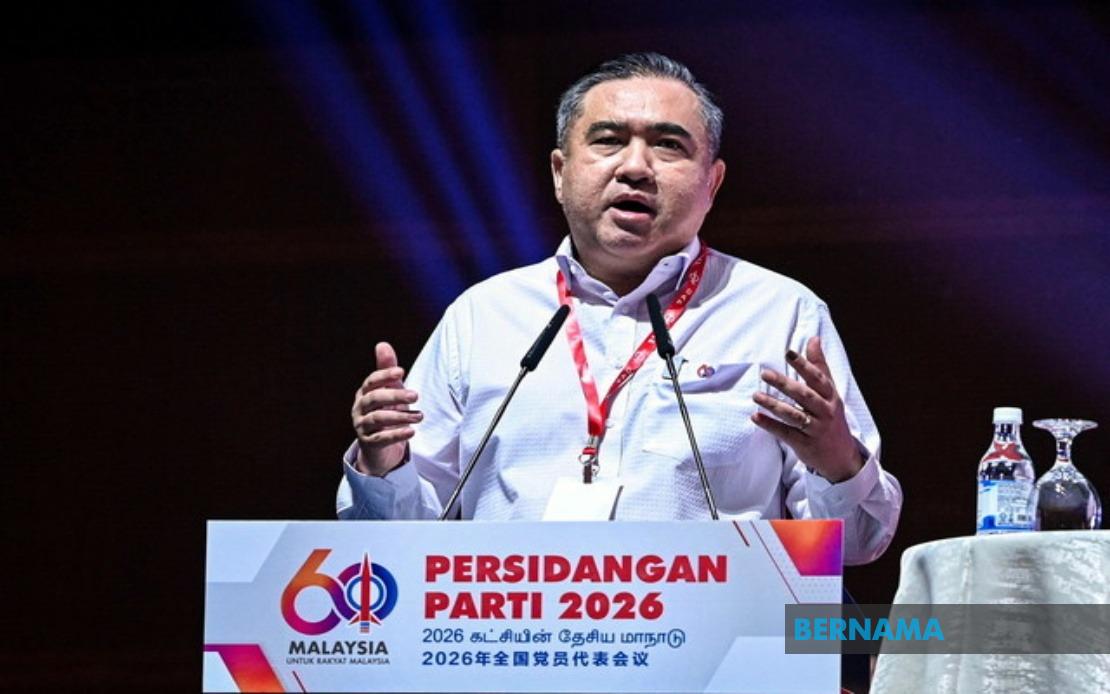
The Democratic Action Party has declared unequivocal support for the government's intention to repeal the Universities and University Colleges Act (AUKU) 1971, positioning the move as validation of the coalition's reform credentials. Party secretary-general Anthony Loke made the declaration during his policy address at the DAP 2026 National Conference at the Putrajaya International Convention Centre, emphasising that his party's participation in government extends beyond occupying ministerial posts to driving substantive institutional change that the party has advocated for over decades.
Prime Minister Datuk Seri Anwar Ibrahim unveiled the repeal plan at the PKR 2026 National Congress yesterday, framing it as a response to memoranda and appeals from student leaders seeking comprehensive amendments to legislation that has governed university conduct since 1971. The government intends to present the formal proposal to Cabinet next Wednesday, signalling momentum behind what would represent a major shift in how Malaysian universities operate. The initiative reflects growing political recognition that the Act, despite periodic modifications, remains a constraint on student activism and democratic expression within tertiary institutions.
Loke's remarks suggest that DAP views the AUKU repeal as an opening chapter in a wider reform programme. He explicitly called on Anwar to sustain the reformist momentum by advancing additional commitments, particularly measures guaranteeing equal access to higher education irrespective of racial background. This framing reveals an attempt to lock the government into a progressive agenda on educational equity, a perennial priority for the party and its voter base. The emphasis on cross-racial educational opportunity also reflects broader DAP positioning on meritocracy and the dismantling of race-based preferences in tertiary education.
The AUKU has undergone seven amendments since its enactment in 1971, reflecting episodic concessions to student movements and evolving governance philosophies. A pivotal 2012 amendment granted students the right to participate in political party activities beyond campus grounds, substantially widening the scope for student political engagement. However, these incremental changes have failed to satisfy advocates who contend that the legislation remains fundamentally restrictive. For Malaysian students and civil society observers, full repeal would represent liberation from Act-specific constraints that have historically been deployed to discipline student activism deemed politically inconvenient.
More recent modifications have also shifted the procedural architecture of student discipline. The 2024 amendment transferred disciplinary authority from vice-chancellors to newly constituted Student Disciplinary Committees, reducing the concentration of power in university administration. Concurrently, amendments to Section 15A expanded the financial autonomy of Student Representative Councils and affiliated bodies, permitting them to collect funds and accept contributions more flexibly. These provisions suggest a gradualist aperture in the Act's framework, though full repeal would eliminate the legislative ceiling altogether.
The timing of this announcement carries significant political weight. With Malaysia's university campuses serving as incubators for civil society engagement and political consciousness, the AUKU has long symbolised state control over youth mobilisation. Repealing it broadcasts to younger voters and educated urban constituencies that the Anwar-led government is willing to dismantle coercive instruments associated with the previous regime. This messaging resonates particularly among Chinese-majority constituencies and younger Malay professionals who form core DAP and PKR support bases.
However, the practical implications of repeal remain uncertain. Universities would require alternative governance frameworks to manage student conduct, prevent disorder, and uphold academic integrity. The government has not articulated how institutional discipline would be administered post-repeal, whether through revised legislation, campus-specific policies, or delegation to university authorities under reduced legal constraints. This ambiguity creates space for stakeholder negotiation, potentially including resistance from university administrators concerned about operational autonomy and student conduct management.
From a regional perspective, Malaysia's move aligns with broader democratic trajectories in Southeast Asian higher education. Other democracies in the region have progressively liberalised student activism within frameworks balancing institutional stability with expressive freedoms. Thailand's repeated constitutional transitions have involved competing visions of student rights, while Indonesia's democratisation embedded student activism as a constitutional expression. Malaysia's potential repeal would signal convergence with these regional trajectories, though implementation details will determine whether the shift constitutes genuine liberalisation or merely legislative symbolism.
The opposition backdrop is also noteworthy. Previous administrations defended AUKU as essential to maintaining university stability and preventing interference by external political actors. Arguments about protecting campus neutrality and institutional autonomy may resurface when the proposal faces parliamentary debate. Conservative voices might contend that unrestricted student activism invites partisanship and compromises educational mission. These tensions will likely structure the legislative process, with government messaging emphasising democratic maturation offsetting institutional stability concerns.
DAP's strategic framing of the repeal within a broader education equity agenda indicates the party's desire to maintain momentum on multiple fronts. By coupling AUKU repeal with calls for race-blind higher education access, DAP attempts to construct a holistic reform narrative appealing to its multiethnic constituency. This approach also positions the party as the progressive force within the coalition, potentially amplifying its influence over the government's longer-term policy direction on contentious social issues.
For Malaysian educators and student leaders, the announcement represents both opportunity and uncertainty. Freedom from AUKU-specific constraints could enable more robust campus discourse and student-led social movements. Yet the absence of a comprehensive alternative regulatory framework creates risks of institutional drift or ad hoc governance that could prove equally restrictive. Universities themselves will likely demand clarity on how institutional discipline, code of conduct enforcement, and security operations will function in a post-AUKU environment.
The success of this reform initiative ultimately depends on political durability beyond Cabinet approval. Parliamentary passage requires coalition discipline, while implementation requires coordinated action between the Education Ministry, universities, and student bodies. The coming weeks will reveal whether the government possesses the political capital and policy clarity to transform this announcement into substantive legislation that fulfils its democratic promise without creating institutional chaos. For Malaysia's student movement and civil society more broadly, this moment represents a pivotal juncture in the nation's long trajectory toward greater educational freedom.

