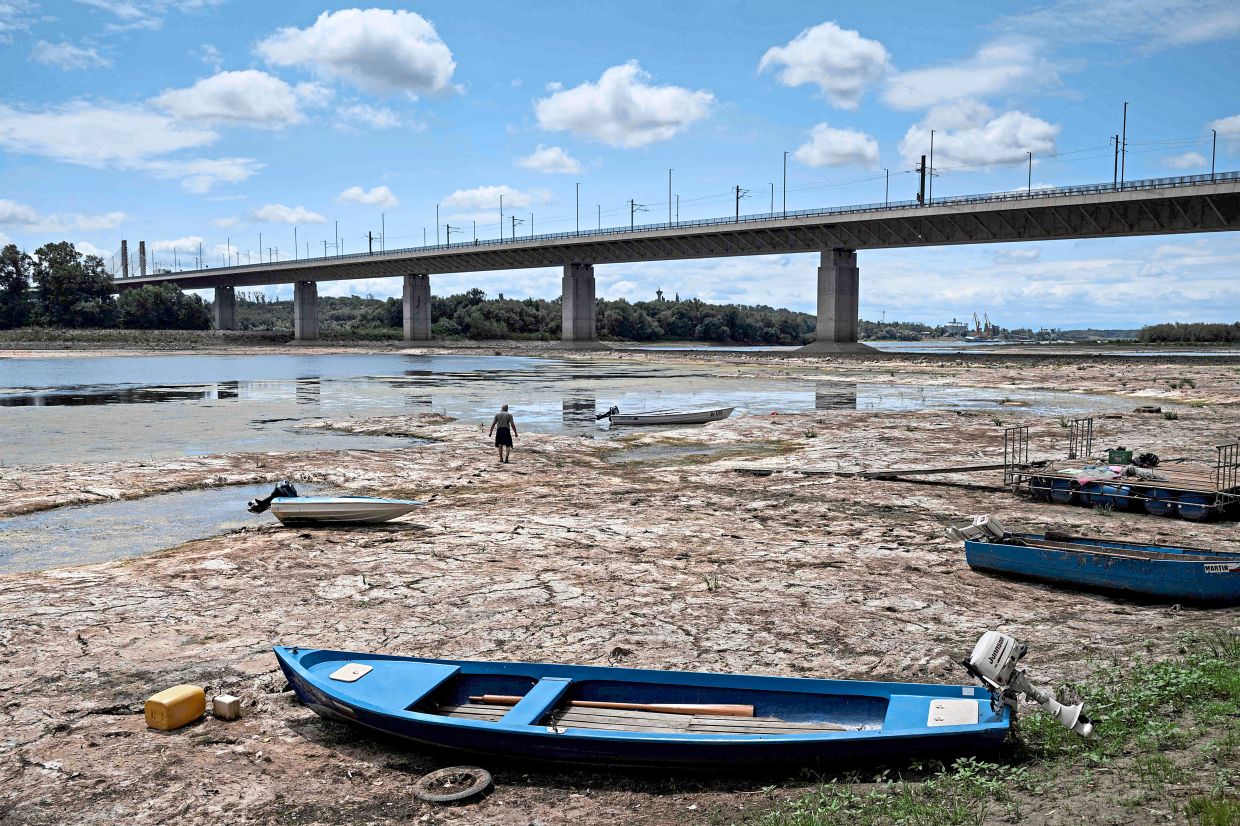
The Danube River, one of Europe's most vital waterways, has receded to unprecedented levels as a prolonged drought sweeps across Central Europe, exposing submerged obstacles and forcing authorities to grapple with cascading economic and energy consequences. The historic low-water event, stretching from southwestern Germany to the Black Sea across ten countries, represents a stark manifestation of climate change and extreme weather patterns that have intensified throughout the summer months.
In Budapest, Hungary's water authority documented the Danube's level at just 23 centimetres on July 29—a figure that shattered the previous record of 33 centimetres established in 2018. This dramatic decline reflects the cumulative impact of restricted rainfall and elevated temperatures across the region, with forecasters predicting further deterioration in the coming days as temperatures soared above 38 degrees Celsius and no substantial precipitation appeared on the horizon. The Hungarian Meteorological Service reported that precipitation levels across nearly the entire country fell between 80 and 130 millimetres below historical averages over a 90-day period, underscoring the severity of conditions.
The psychological impact of such visible environmental change has not escaped observers. Photographer Gabor Kertesz documented the exposed rock formations and sandy shoals at the base of Budapest's Margaret Bridge—areas normally submerged—capturing what he described as shocking evidence of transformation. His reflections on the cause and consequence of these conditions encapsulate growing public anxiety: residents are witnessing firsthand the manifestations of climate disruption and questioning what further deterioration may bring to their region and livelihoods.
Tourism infrastructure has faced immediate disruption as cruise operators adjusted operations to accommodate reduced navigational depths. Passenger vessels typically departing from Budapest for sightseeing excursions have been forced to dock substantially further upstream, constraining the tourist experience and potentially undermining revenue for operators dependent on the traditional river-based economy. The constraints on pleasure cruising pale in comparison, however, to the collapse of commercial cargo operations, which have ceased almost entirely according to Hungary's Ministry of Transport and Investment.
The human consequences have proven dramatic. In Bulgaria on July 28, police evacuated 186 tourists from the Viking Ullur cruise ship after it ran aground near Vidin while attempting to reach port for supplies. The vessel's passengers exhausted food and water reserves while stranded on a shallow bar, while its 52-member crew faced extended confinement pending refloating operations and improving navigation conditions. Such incidents, though captured in dramatic headlines, represent only the most visible disruptions among countless commercial disruptions along the corridor.
Serbia's northern river ports experienced comparable chaos, with hundreds of small recreational boats and dozens of cargo vessels stranded along the exposed banks near Novi Sad. Radovan Segrt, who operates river excursions from his houseboat, documented how the Danube had retreated between 15 and 20 metres from its normal shoreline—a withdrawal that effectively terminated the summer recreation season and threatened the viability of small-scale river tourism businesses that depend on consistent water access.
Beyond shipping and tourism, the drought has triggered energy security concerns across the region. Nuclear power plants that depend on Danube water for reactor cooling have begun curtailing operations. Romania's Cernavoda facility shut down one reactor unit for safety reasons after Danube water flow fell to approximately 1,630 cubic metres per second—roughly one-third of the typical July average. Additional shutdowns were announced as authorities prioritized safety over power generation capacity. Hungary's Paks nuclear plant, which supplies nearly half the nation's electricity, began powering down a reactor on July 29 due to insufficient cooling-water supplies, following two successive reductions across previous days.
The geopolitical and economic implications extend across the entire Central European region. Multiple countries relying on the Danube for industrial processes, agricultural irrigation, and power generation simultaneously face severe constraints, potentially exacerbating regional economic pressures and complicating energy security arrangements. For Malaysia and Southeast Asia, such developments underscore how climate-driven water stress in distant regions can trigger cascading disruptions to global supply chains and energy markets.
The exposed riverbed has also revealed hazards from previous eras. Budapest authorities closed the Margaret Bridge after a World War II-era bomb surfaced beneath the receding waterline, requiring hazard assessment and removal operations. This unexpected consequence of low water levels illustrates how climate extremes can resurrect forgotten dangers and create novel security challenges for riverine communities.
Amidst the crisis, some have found opportunity in adversity. Treasure hunter Zsolt Horvath exploited the exposed conditions to recover metal artifacts using powerful magnets, discovering items ranging from vintage radio amplifiers to World War-era ammunition casings. Though Horvath acknowledged that exceptionally low water levels enabled his hobby, he captured the paradox facing Central Europe: the conditions creating opportunity for historical recovery represent an unambiguous curse for the millions dependent on the river's normal functioning. The Danube's historic decline serves as a sobering reminder of climate change's capacity to disrupt essential infrastructure and daily life across heavily populated regions.

