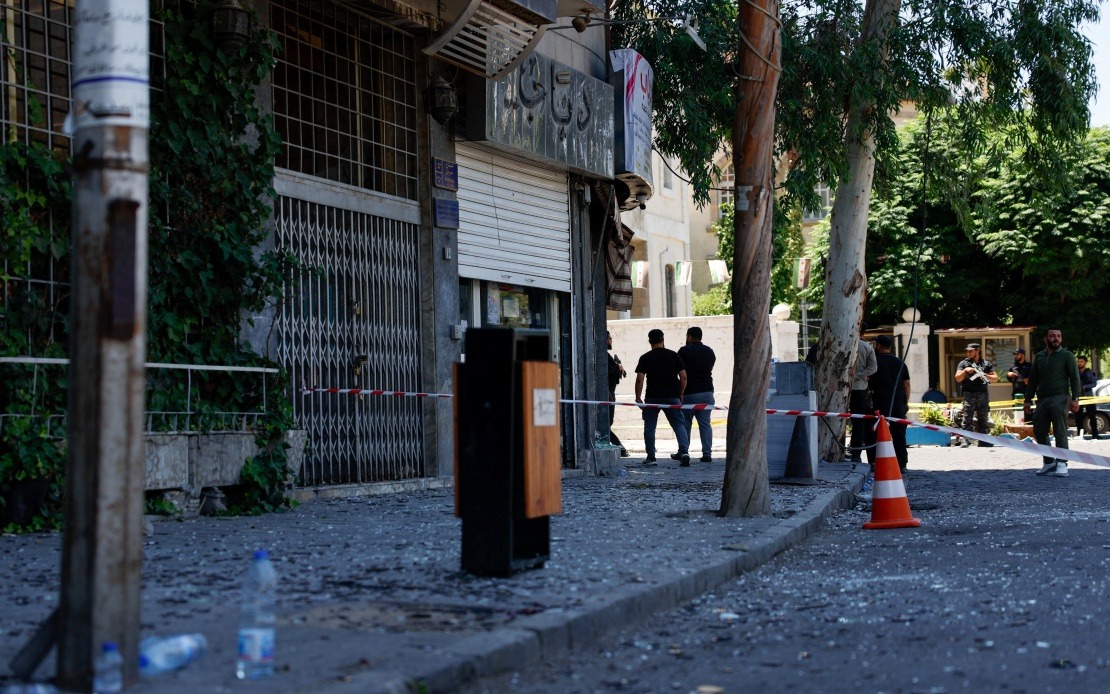
Calm returned to Damascus following twin explosions that rocked the Syrian capital on Tuesday, leaving at least 18 injured and prompting a swift security response. According to the Interior Ministry, the blasts involved two improvised explosive devices that detonated in close succession, with the second explosion notably more forceful than the first. Four police officers were among those hurt in the incident, which occurred near accommodation used by visiting French President Emmanuel Macron, creating an especially sensitive moment for diplomatic relations between the two nations.
The Syrian Observatory for Human Rights, a London-based monitoring organization tracking developments in the country, provided eyewitness accounts of the rapid sequence of events. Emergency personnel and ambulance crews mobilized immediately to assist the wounded, while security personnel established cordons around the affected zones to prevent further incidents and preserve evidence. The quick response helped contain potential casualties and restore order in what residents described as a tense and alarming situation.
Macron's presence in Syria during the incident underscored the delicate nature of his visit, which marks a watershed moment in European engagement with Damascus. The French leader had arrived in the country on Monday evening, making him the highest-level EU dignitary to set foot in Syria since 2010. This visit represents a significant thaw in relations between Paris and Damascus, reflecting broader shifts in how Western capitals are reassessing their approach to the Assad government following years of isolation.
The Élysée Palace in Paris promptly confirmed that Macron had not been harmed by the explosions, providing immediate reassurance regarding the security of the French delegation. At the time of the attacks, Macron was stationed at the presidential palace, where he was engaged in substantive discussions with Syrian officials covering matters of bilateral concern. The venue change demonstrated the security apparatus's ability to adapt quickly to emerging threats while maintaining the scheduled diplomatic agenda.
The explosions generated considerable alarm throughout Damascus, triggering heightened anxiety among ordinary residents already accustomed to periodic security incidents. The device deployments, though limited in scope, raised questions about security gaps in the capital despite the relative stability that has prevailed since the cessation of active civil conflict in many regions. The incident also highlighted vulnerabilities around high-profile diplomatic movements, a persistent challenge for host nations managing VIP security during international visits.
For Malaysia and other Southeast Asian nations, Macron's Syria visit carries strategic implications worth noting. The French President's decision to engage directly with Damascus signals Europe's pragmatic recalibration of Middle Eastern diplomacy, moving beyond the principled isolation of previous years toward measured re-engagement. This approach mirrors broader trends in how middle powers navigate their relationships with states previously considered pariahs, balancing humanitarian concerns with diplomatic necessity and economic interests.
The incident also underscores the ongoing security complexities that persist in Syria despite nominal peace. While the country has been spared the worst of its earlier civil war, sporadic violence from dissident elements continues to create unpredictability. Foreign dignitaries visiting the country operate within calculated risks, accepting heightened security measures as the cost of direct dialogue with Syrian leadership. The willingness of Macron to proceed despite these dangers demonstrates the perceived importance of the engagement from Paris's perspective.
Macron's bilateral discussions at the presidential palace covered topics central to France's Middle Eastern strategy, including Syria's reconstruction, regional stability, and the normalization of Damascus within international frameworks. The continuation of talks despite the security incident reflected both sides' commitment to pursuing the dialogue, though it inevitably introduced a sobering note into the proceedings. The explosions served as an uncomfortable reminder of the volatility that can erupt even during periods of relative calm.
From a regional perspective, the incident illustrates the complex security environment that foreign investors and diplomatic missions must navigate when engaging with Syria. Malaysia, as a major Muslim-majority Southeast Asian economy with growing Middle Eastern trade ties, observes such developments with interest. The trajectory of Syrian stabilization and international reintegration carries implications for broader regional dynamics and the potential for increased economic and diplomatic engagement across the Muslim world.
The authorities' rapid response and damage containment provided some reassurance about Syria's capacity to manage security during high-profile international events. However, the incident also serves as a reminder that normalization of relations with Damascus remains conditional on demonstrable improvements in security and governance. For European nations seeking to rebuild bridges with Syria, such incidents require careful recalibration of risk assessments and security protocols without allowing security concerns to derail diplomatic objectives entirely.

