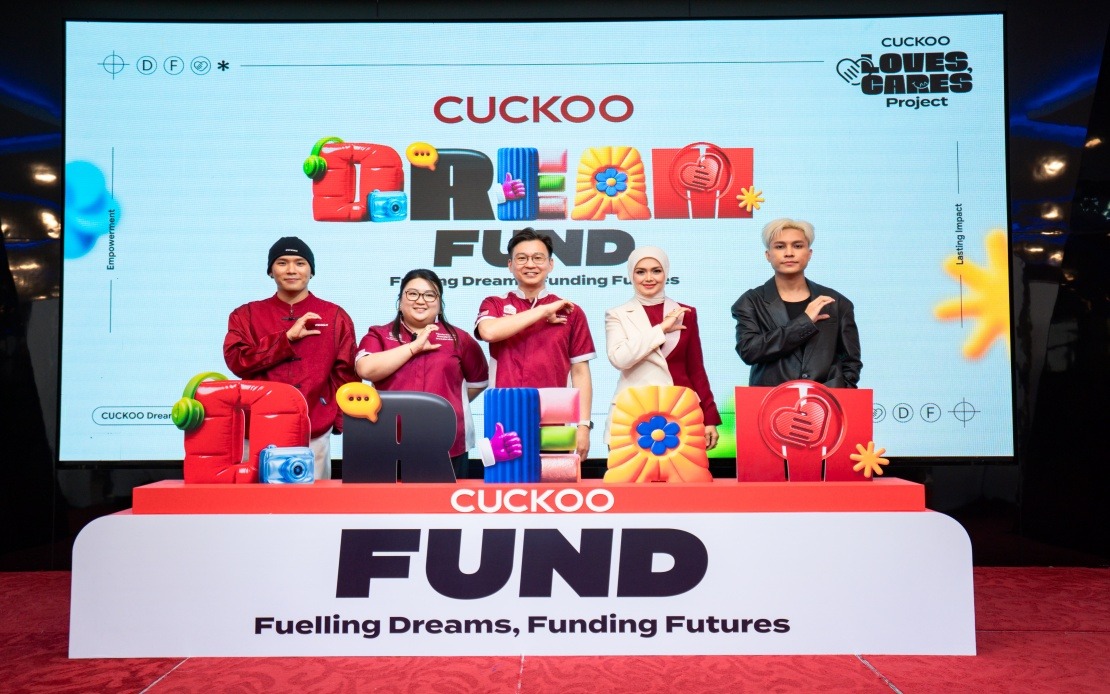
CUCKOO International (MAL) Berhad has unveiled an ambitious funding initiative designed to empower Malaysia's emerging creative talent while simultaneously addressing pressing community concerns. The RM100,000 CUCKOO Dream Fund, which opened for applications on July 31, represents a strategic investment in youth-led innovation that bridges commercial enterprise with corporate social responsibility. Accepting submissions until September 30, the initiative seeks to transform bold ideas from young creators into meaningful projects that generate both artistic value and measurable social benefit.
The fund specifically targets Malaysians between 15 and 30 years old, recognising the creative potential within this demographic whilst providing the structural support and financial resources that often prove decisive in converting promising concepts into executed reality. By setting this age bracket, CUCKOO acknowledges the particular challenges faced by young Malaysians—limited access to capital, professional networks, and industry guidance—which frequently stifle creative ambition despite genuine talent and innovative thinking. The initiative deliberately positions itself as more than transactional patronage, instead functioning as a comprehensive ecosystem designed to nurture emerging creators throughout their developmental journey.
Operating under the banner of "Fuelling Dreams, Funding Futures," the initiative forms a cornerstone component of CUCKOO's broader #SAMASAMAEmpower corporate social responsibility action brand, itself nested within the company's expansive CUCKOO Loves, Cares Project master blueprint. This multi-layered approach signals CUCKOO's commitment to embedding social responsibility across multiple operational dimensions rather than relegating it to isolated charitable gestures. The Dream Fund explicitly transcends financial disbursement, functioning instead as a comprehensive social empowerment platform that encourages young creators to confront community deficiencies, amplify awareness surrounding societal challenges, and utilise creative expression as a vehicle for cultivating positivity and systemic change.
The fund structure demonstrates careful calibration aimed at maximising impact across diverse project scales. Distributed across two application cycles of RM50,000 each, successful candidates within Cycle 1 can secure up to RM10,000 per project, divided into complementary components addressing distinct project dimensions. This dual-track allocation permits flexibility: applicants may access creative grants reaching RM5,000 to support original artistic deliverables and fundamental project execution, whilst simultaneously accessing up to RM5,000 in social impact alignment funds earmarked specifically for initiatives demonstrating unambiguous social cause engagement, substantive community outreach, or identifiable positive legacy contributions.
The initiative welcomes submissions from five distinct creative domains, reflecting contemporary creative practice whilst maintaining strategic focus. Digital content and storytelling submissions can leverage text, video, and multimedia formats to communicate narratives addressing social concerns. Music and sound proposals encompass composition, production, and sonic art with social messaging. Design and visual arts encompass graphic design, installation, photography, and visual communication serving community benefit. Performance and movement incorporates theatre, dance, film, and embodied artistic expression. Creative workshops represent educational initiatives utilising artistic practice to develop community capacities and address social needs. This categorical breadth ensures inclusivity whilst maintaining emphasis on creative quality and social value generation.
CUCKOO has strategically appointed accomplished singer-songwriter Firdhaus Farmizi as CUCKOO CSR Friend and Dream Fund Mentor, positioning him as both selection gatekeeper and ongoing strategic advisor. Farmizi's dual responsibility encompasses preliminary candidate shortlisting and direct guidance provision to grant recipients throughout project execution phases. This mentorship dimension proves particularly valuable for young creators often lacking professional networks and industry experience. Farmizi's involvement signals CUCKOO's intention to provide beneficiaries with substantive mentorship from someone possessing both artistic credibility and practical experience navigating Malaysia's creative industries—an asset that frequently proves as valuable as financial support itself.
The application process demonstrates accessibility whilst maintaining substantive evaluation capacity. Prospective applicants must submit a two-minute pitch video accompanied by detailed project proposals articulating both creative vision and social impact objectives via the CUCKOO Dream Fund official webpage. This format deliberately accommodates diverse communication styles and creative expressions whilst enabling evaluators to assess both conceptual clarity and genuine commitment. The two-minute video requirement particularly benefits applicants whose communication strengths lie in visual, performance-based, or narrative domains rather than formal written expression, thereby expanding accessibility beyond traditionally privileged applicant profiles.
For Malaysian readers contemplating application, this initiative arrives at a particularly opportune moment. Emerging evidence demonstrates growing appetite amongst Malaysian youth for creative work serving community benefit, yet structural barriers—capital scarcity, mentor unavailability, industry network limitations—frequently prevent promising concepts from advancing beyond ideation phases. The Dream Fund directly addresses these bottlenecks whilst explicitly valuing social contribution, potentially reshaping how Malaysian creatives conceptualise their professional identities and societal responsibilities. This contrasts notably with traditional creative funding models emphasising commercial viability or artistic prestige independent of social consequence.
The initiative carries broader implications for Malaysia's creative economy development trajectory. By investing in youth-led creative projects addressing social concerns, CUCKOO effectively endorses a creative economy model prioritising social purpose alongside commercial sustainability. This positioning proves particularly relevant as Southeast Asian economies increasingly recognise creative sectors as strategic growth vectors. Malaysia's creative economy has demonstrated substantial expansion potential, yet frequently struggles with perception that creative work occupies peripheral rather than central economic and social positions. Initiatives like CUCKOO's Dream Fund incrementally shift this perception, demonstrating that corporate investment in creative youth necessarily involves constructive community engagement.
The mentorship component deserves particular attention as it reveals CUCKOO's understanding that emerging creators require guidance transcending financial provision. Young Malaysian creatives frequently navigate isolation, lacking peer communities and professional mentors capable of providing honest feedback, industry connections, and strategic direction. Farmizi's appointment addresses this reality directly. His profile—combining artistic credibility with successful navigation of Malaysia's entertainment industry—suggests CUCKOO intentionally selected someone whose experience directly mirrors challenges likely confronted by grant recipients.
Sustainability considerations underpin the fund's two-cycle structure. Rather than dispersing all capital immediately, CUCKOO has opted for staged distribution permitting evaluation of Cycle 1 outcomes before Cycle 2 deployment. This approach allows programme administrators to assess which project typologies generate strongest impact, identify emerging creative practices deserving support, and refine selection criteria based on demonstrated results. Such iterative refinement typically proves more effective than rigid programme structures, enabling responsive adaptation as community needs and creative trends evolve.
For creative practitioners throughout Southeast Asia observing Malaysian developments, CUCKOO's initiative potentially signals shifting corporate attitudes toward youth engagement and social responsibility. Malaysian companies increasingly recognise that purpose-driven investment in emerging talent cultivates brand loyalty, attracts socially conscious consumers, and generates genuine social value simultaneously. Should the Dream Fund demonstrate meaningful impact—a realistic prospect given its strategic design—comparable initiatives may proliferate across the region, substantially expanding funding opportunities for young Southeast Asian creatives addressing local community concerns through artistic practice.

