Cuban President Miguel Diaz-Canel has launched a scathing attack on the latest round of American sanctions imposed on his nation, characterising Washington's actions as part of a calculated campaign to suppress progressive movements worldwide. Speaking on social media platform X on Friday from Hamilton, Canada, the Cuban leader drew parallels between current US policy and the anti-communist witch-hunts of the 1950s, contending that Washington is orchestrating what he termed a "new and more dangerous version of McCarthyism" targeting what he called a global "radical left."
Diaz-Canel's rhetoric extended beyond Cold War comparisons, invoking more sinister historical precedents to underscore his argument. He contended that transnational far-right coalitions being cultivated by the United States operate in ways reminiscent of Hitlerite fascism and evoke the notorious Operation Condor, the covert campaign of political repression and extrajudicial killings carried out across Latin America during the 1970s and 1980s. This framing reflects Cuba's longstanding interpretation of American foreign policy as fundamentally hostile to left-leaning regimes in the Western Hemisphere, a narrative that resonates with anti-American sentiment across portions of the developing world.
The Cuban president questioned whether the persistent allegations levelled against leftist governments and movements serve as a convenient pretext for justifying intensified American military and economic aggression. Rather than accepting Washington's framing of its actions as responses to authoritarian governance or human rights concerns, Diaz-Canel inverted the moral equation, arguing that the genuine threat to humanity emanates from what he described as the "philosophy of dispossession" guiding the transnational far right. This rhetorical strategy seeks to redirect international attention away from domestic governance issues toward perceived external threats and systemic injustice perpetrated by the West.
Diaz-Canel expanded his critique to encompass a broad catalogue of global grievances that he attributes to American and allied conduct. He held Washington and its partners accountable for the humanitarian catastrophe unfolding in Gaza, citing civilian casualties and alleged war crimes. Additionally, he condemned extrajudicial killings of alleged gang members and drug traffickers across Latin America, the persecution and deaths of migrants attempting to cross international borders, and Iran's bombing of a girls' school, all framed as consequences of Western destabilisation. The Cuban leader also resurrected the decades-long economic embargo imposed on Cuba as emblematic of American hostility toward his nation, framing it as collective punishment rather than a policy instrument.
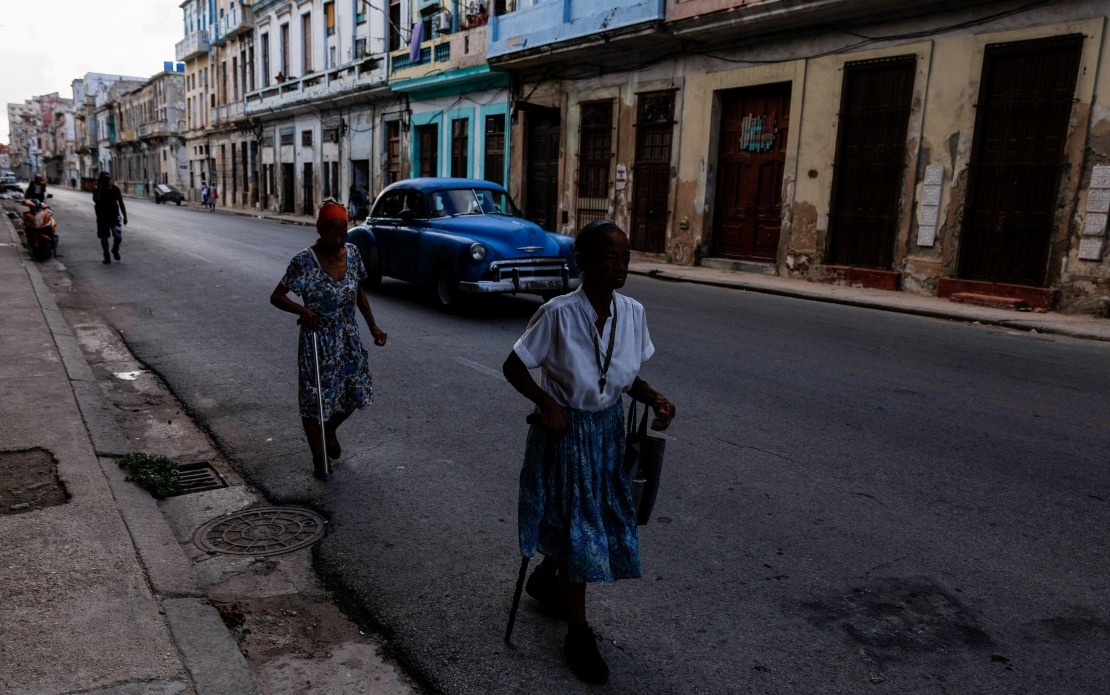
The timing and intensity of Diaz-Canel's denunciation cannot be divorced from the severe economic deterioration afflicting Cuba, which now confronts its worst financial crisis in several decades. The island nation is grappling with crippling fuel shortages, crumbling infrastructure, and an energy crisis of unprecedented magnitude. Official statistics reveal that Cuba's economy contracted markedly during the first half of 2026, with daily power outages averaging 20 hours and an electricity generation deficit reaching 1,955 megawatts, effectively leaving large portions of the population without reliable electrical service for the majority of each day.
Cuban authorities consistently attribute the economic crisis to tightened American sanctions and diplomatic pressure. Havana argues that successive US administrations have deliberately disrupted Cuba's access to petroleum supplies, intimidated international corporations and financial institutions from conducting business with the island, and systematically restricted Cuba's participation in global credit and financing mechanisms. From this perspective, the economic catastrophe is not primarily a consequence of domestic mismanagement or structural inefficiency, but rather an engineered outcome of sustained American economic warfare designed to destabilise and potentially overthrow the Cuban government.
The Trump administration has indeed escalated pressure on Cuba through successive executive orders. In May, the White House announced that President Donald Trump had signed an executive order implementing new sanctions targeting Cuban officials and government entities, with Washington citing repression of dissent and alleged threats to American national security and foreign policy interests. The administration's rationale reflects a longstanding American position that Cuba represents a regional security concern and a model of governance antithetical to American interests and values throughout the hemisphere.
Earlier, in January, Trump had issued another executive order declaring a national emergency regarding Cuba and establishing a mechanism to impose tariffs on goods originating from countries that supply or sell petroleum to the island. This extraordinary measure targets third-party nations, essentially attempting to weaponise American trade policy to prevent other countries from engaging in normal commercial relations with Cuba. Such an approach represents an escalation beyond direct bilateral sanctions, extending American coercive power into the international system to isolate Cuba through secondary pressure on its trading partners.
For Malaysian and Southeast Asian observers, the Cuba-US confrontation illuminates broader tensions within the contemporary international system regarding competing visions of development, governance, and sovereignty. The Cuban government's rhetorical strategy—invoking McCarthyism, fascism, and Operation Condor—appeals to postcolonial sensibilities and resonates with developing nations that view American hegemony as fundamentally coercive. However, the practical consequences of Cuba's isolation and economic collapse present a cautionary tale about the limits of resistance without technological innovation and economic diversification.
The escalating sanctions regime also reflects the Trump administration's more aggressive approach toward adversarial governments and its willingness to employ economic tools extraterritorially. The expansion of sanctions to target third-party nations willing to trade with Cuba signals an American determination to enforce its strategic preferences globally, a posture that carries implications for other nations navigating great power competition in Southeast Asia. Malaysia and its neighbours must consider how similar coercive mechanisms might be deployed against their own interests should they diverge from American preferences.
Cuba's crisis demonstrates the vulnerability of small economies heavily dependent on specific external relationships, whether to Soviet suppliers during the Cold War or to commercial partners in the contemporary era. The 20-hour daily power outages represent not merely an infrastructural failure but a fundamental breakdown in state capacity to provide basic services, creating humanitarian pressures and potential instability. This trajectory underscores how sustained sanctions regimes, regardless of their ostensible moral justifications, impose severe costs on civilian populations and can generate unpredictable political consequences.
The ideological dimensions of the dispute—McCarthyism, fascism, and the clash between left and right—obscure underlying structural economic questions about Cuba's ability to sustain its model without external support. Yet Diaz-Canel's framing reflects a genuine asymmetry in international power, whereby the United States possesses unilateral capacity to inflict economic damage on smaller nations that lack comparable leverage. Whether viewed as principled opposition to authoritarianism or as imperious interference in Cuban sovereignty, American policy toward Cuba reveals the enduring Cold War mentality informing Washington's approach to hemispheric relations.

