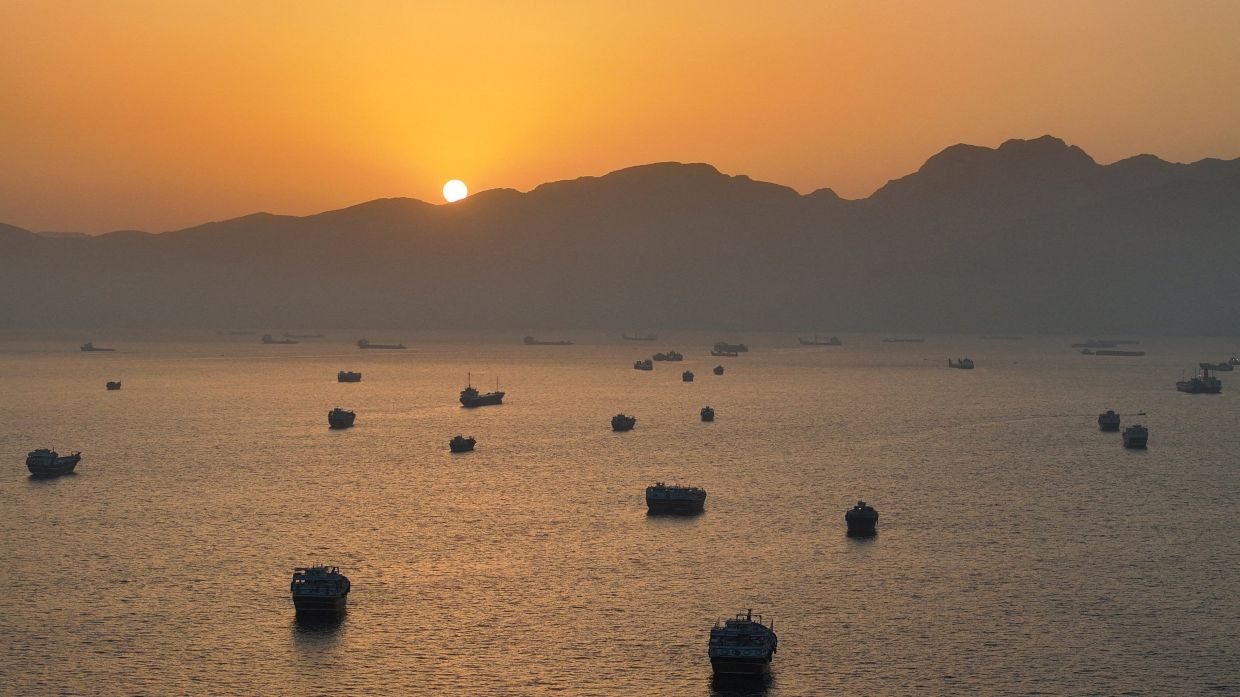
A significant relief valve has opened in global oil markets as three heavily laden crude tankers successfully transited the Strait of Hormuz on Wednesday, marking a tangible shift in the logjam that has constrained global energy supplies for months. The VL Breeze, Plata Carrier, and Prudent Warrior—carrying a combined 5 million barrels of crude—represent the vanguard of a much larger stranded fleet beginning to move again through the critical chokepoint that separates the Persian Gulf from the Arabian Sea. Their passage comes as an interim agreement between Iran and the United States gradually reduces the geopolitical tensions that have kept shipping traffic snarled in one of the world's most strategically vital waterways.
The VL Breeze, a South Korean-flagged Very Large Crude Carrier, has departed the Gulf with 2 million barrels of crude sourced from both Qatar and Abu Dhabi, bound for Daesan in South Korea where Hyundai Oilbank operates substantial refining capacity. This vessel's movement is particularly significant for Seoul's energy security, as South Korea remains heavily dependent on Middle Eastern crude imports to feed its petrochemical and refining complex. Meanwhile, the Plata Carrier, chartered by state-owned Indian Oil Corporation, is carrying 2 million barrels of Saudi Arabian crude and heading eastward toward Indian refineries, while the Prudent Warrior, a smaller Suezmax-class tanker, is routing to Sohar in Oman with 1 million barrels of Iraqi Basrah crude. The convergence of vessels heading toward different Asian destinations underscores how the bottleneck has affected refiners across the region.
The broader context reveals the severity of the supply disruption that has gripped the Gulf for the past several months. Analysts working with shipping data aggregators estimate that approximately 90 million barrels of crude oil have remained locked inside the Persian Gulf, unable to reach international markets and refineries that depend on steady Middle Eastern flows. This extraordinary inventory of stranded cargo has created an unusual dynamic in global oil pricing, with prices trending downward as markets begin to price in the anticipation that these supplies will gradually move. For Malaysian consumers and businesses, lower crude prices translate to reduced fuel costs and cheaper petrochemical feedstock, though this benefit remains contingent on sustained progress toward normalising transit through the strait.
Oman's role in facilitating this movement deserves particular attention, as the sultanate has established two temporary maritime corridors flanking the existing primary shipping lane through the Strait of Hormuz. By designating these alternative routes and pledging that the strait will remain open to shipping without the imposition of any tolls or charges, Oman has positioned itself as a stabilising actor in a region riven with tension. The International Maritime Organisation, in coordination with Oman, has worked to develop protocols that allow vessels to transit safely despite the precarious security situation. These temporary routes represent a pragmatic adaptation to the operational reality that traditional shipping lanes remain vulnerable, offering merchants and vessel operators a degree of confidence that they can move goods through the region without facing unexpected obstruction or seizure.
However, the scale of the challenge remains substantial. South Korea's maritime ministry confirmed that four vessels operated by Korean shippers have exited the strait on their respective voyages, yet this modest exodus highlights how far the region remains from normalcy. Of the 26 vessels that have been stranded since the Middle East conflict intensified, only eight have managed to clear the strait, leaving 18 still anchored within the Gulf. This remainder represents an enormous reservoir of capital tied up in the form of idle vessels and undelivered cargo, imposing significant financial costs on their operators while reflecting the persistent reluctance of many shipping companies to risk their vessels in an environment where geopolitical stability remains uncertain.
Liquefied natural gas markets are showing particularly encouraging signs of recovery. Two empty LNG carriers—the Shandong Redwood and Milaha Qatar—have been spotted positioning themselves west of the strait to load cargoes from Qatar, joining a growing queue of seven additional vessels engaged in the same mission. This concentration of nine empty LNG ships seeking Qatari supply represents the largest gathering since the conflict began, suggesting that global buyers remain hungry for liquefied natural gas and that suppliers believe they can now reliably export. Qatar's Prime Minister Sheikh Mohammed bin Abdulrahman al-Thani has indicated that the nation expects to resume normal production levels within a matter of weeks, a projection that carries weight given Qatar's status as one of the world's leading LNG exporters and a critical supplier for regional customers including Malaysia.
The implications for Southeast Asia extend well beyond crude oil and natural gas. Malaysia, as a significant net importer of energy and a country with substantial downstream petrochemical and refining investments, stands to benefit substantially from sustained improvements in Gulf supply flows. The reduction in global crude prices that accompanies increased supply accessibility translates into lower input costs for Malaysian fuel producers and petrochemical manufacturers, potentially improving competitiveness for regionally based industries that export energy-intensive products. Furthermore, the stabilisation of shipping through the Strait of Hormuz supports the broader continuity of trade in the region, as many Malaysian-flag vessels and goods transit through these waters regularly.
The interim Iran-US agreement that has catalysed this unblocking of supply represents a limited but meaningful de-escalation in the tensions that precipitated the initial shipping disruptions. This accord does not resolve the underlying geopolitical conflicts that have menaced the Gulf region for decades, but it has created sufficient diplomatic space for tanker operators to resume movements they had suspended out of concern for vessel safety and crew welfare. The willingness of major shipping companies to recommit capital and crews to Gulf operations signals that the market perceives the current truce as durable enough to justify the resumption of normal commercial activity, though this confidence remains contingent on sustained progress in talks between the major powers.
Looking forward, the test of whether this momentum will translate into genuine normalisation lies in the willingness of the remaining 18 stranded vessels to depart the Gulf and the pace at which additional cargoes can be loaded and shipped. If the current trickle becomes a stream, global oil prices could face downward pressure that would benefit importers while challenging producers. For Malaysian policymakers and business leaders, the key consideration is whether the current reprieve constitutes a sustainable restructuring of the geopolitical environment or merely a temporary pause that could reverse if diplomatic efforts stall. In the meantime, every tanker that successfully transits the strait and every LNG carrier that loads a full cargo represents a small but real improvement in the security and stability of the energy supplies upon which the regional economy depends.