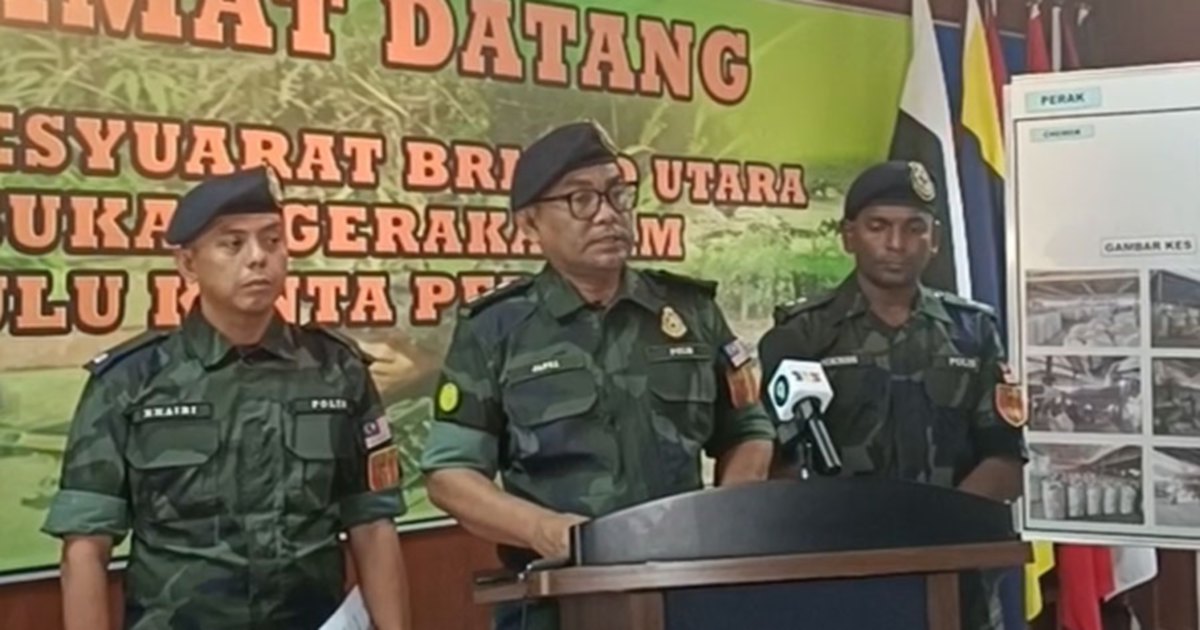
The General Operations Force Northern Brigade has delivered a substantial blow to illegal mining networks operating across Perak and Kedah, apprehending three dozen individuals and confiscating minerals and machinery valued at RM31.7 million. The operation underscores the security forces' intensifying efforts to combat the extraction and processing of mineral resources outside legal frameworks in these northern states.
Illegal mining has emerged as a persistent problem across Malaysia's mineral-rich states, particularly in the northern region where lax enforcement historically created openings for unregulated extraction. The activity generates substantial illicit profits while depleting national mineral reserves, damaging ecosystems, and creating safety hazards through unregulated machinery operation and inadequate site management. The GOF's action represents an escalation in enforcement following years of relatively limited consequences for offenders.
The scale of assets seized—exceeding RM31 million—indicates the substantial infrastructure supporting these illegal operations. Mineral extraction and processing require significant capital investment in machinery, equipment, and facilities. The fact that enforcement authorities recovered this magnitude of equipment suggests coordinated networks with financial backing, likely involving multiple operators and distribution chains. This complexity indicates that individual arrests represent only one layer of dismantling these enterprises.
Both Perak and Kedah harbour significant mineral deposits, making them attractive targets for illegal exploitation. Perak historically served as a tin-mining powerhouse, and residual mineral concentrations continue drawing illicit operators. Kedah's mineral resources similarly represent economic value that unscrupulous actors seek to extract without regulatory oversight or royalty payments to the government. The concentration of enforcement action in these two states reflects the geographic concentration of this problem.
The arrest of 30 individuals potentially disrupts multiple operational cells simultaneously. These detentions likely include equipment operators, site managers, middlemen coordinating sales, and financiers backing the schemes. Each role proves critical to maintaining extraction networks, meaning simultaneous arrests across the supply chain create cascading difficulties for reorganising operations. However, the persistence of illegal mining despite previous enforcement actions suggests that addressing supply-side demand remains incomplete without addressing the buyers purchasing these illegally extracted minerals.
Malaysia's enforcement framework against illegal mining has strengthened incrementally through legislative amendments and resource allocation to enforcement bodies. The Minerals and Geoscience Department, alongside GOF operations, coordinates responses to illegal extraction. Yet enforcement officials and observers note that profitability from illegal mining often exceeds penalties and disruption costs, creating persistent economic incentives for offenders. Sentencing guidelines and financial penalties require alignment with the scale of illegal profit generation to deter participation effectively.
Regional context matters significantly in understanding persistent illegal mining. Cross-border dynamics involving Thailand and, to a lesser extent, Myanmar create complications where extracted materials move across jurisdictions, complicating tracing and prosecution. Some illegal mining operations supply regional markets and export chains, suggesting demand originates internationally. Addressing supply requires coordinating with neighbouring countries and downstream industrial buyers to eliminate markets for illegally sourced minerals.
The GOF's operational capacity, while demonstrated in this action, remains constrained by geographic coverage demands. The Northern Brigade must monitor vast areas across multiple states with finite personnel and resources. Large operations sometimes escape notice for extended periods before enforcement visibility increases. Building intelligence networks capable of identifying operations before they achieve such scale and accumulate substantial assets represents an ongoing challenge for authorities managing enforcement across Malaysia's diverse terrain.
For Malaysian economic policy makers, illegal mining represents a significant revenue loss. Royalties from legitimate mining operations contribute to state and federal budgets, while illegal extraction circumvents payment obligations entirely. Beyond direct revenue losses, uncontrolled mineral depletion undermines Malaysia's long-term resource management objectives. Sustainable extraction requires planning and regulation that illegal mining completely disregards, potentially exhausting deposits or creating environmental degradation that undermines future legitimate development.
Environmental consequences from illegal mining operations typically exceed those from regulated extraction. Uncontrolled machinery operation, absence of restoration obligations, and unrestricted chemical use in processing create contamination risks and habitat destruction. Communities proximate to illegal mining sites experience environmental degradation and potential health impacts without receiving the community development contributions associated with legitimate mining operations.
The GOF's enforcement success requires ongoing investigation to determine whether seized assets belonged to single coordinated operations or multiple independent actors. The composition of detained individuals—their roles, affiliations, and previous enforcement records—informs analysis of network structure. Subsequent legal proceedings will test prosecution frameworks and sentencing outcomes, potentially establishing precedents influencing future enforcement deterrence.
Looking forward, sustained enforcement must combine immediate apprehension operations with longer-term disruption of operational funding, equipment supply chains, and commodity purchase networks. Intelligence work identifying financiers and downstream buyers offers prospects for addressing demand-side factors sustaining illegal mining profitability. Regional cooperation extending enforcement across borders and information sharing with neighbouring countries would strengthen Malaysia's ability to disrupt these transnational networks before substantial infrastructure develops.

