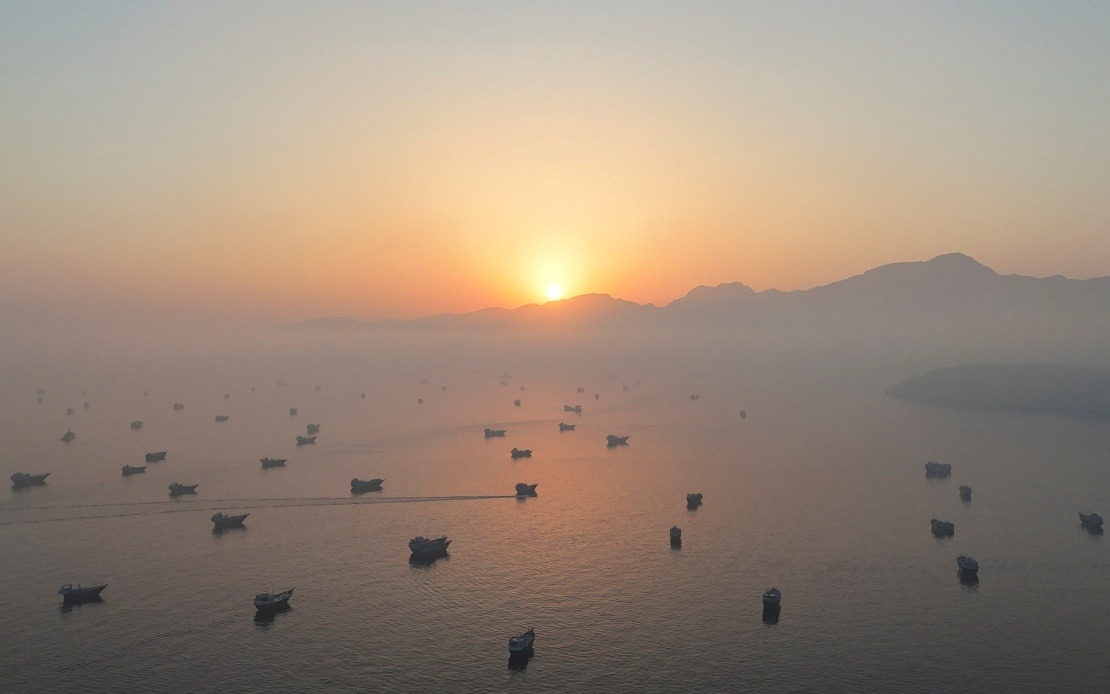
The Comprehensive and Progressive Agreement for Trans-Pacific Partnership, a regional trade coalition of twelve nations, has publicly endorsed moves by the United States and Iran to ease tensions and restore safe passage through one of the world's most strategically vital waterways. Through a joint ministerial statement released following a virtual gathering on Friday, the trade bloc signalled its backing for the diplomatic developments, framing them as essential to preventing further disruption to international commerce and energy supplies at a time when global supply chains remain under considerable strain.
The statement underscores a fundamental concern shared across the CPTPP membership: the Strait of Hormuz sits at the nexus of global energy trade, with roughly one-third of all traded petroleum passing through its narrow waters annually. Any prolonged closure or sustained tension in the region carries ripple effects across the world economy, affecting everything from fuel prices at the pump to manufacturing costs and inflation pressures felt by ordinary households. The ministers explicitly acknowledged this vulnerability by highlighting the trade bloc's commitment to maintaining open and secure sea lanes, ensuring freedom of navigation and overflight, and guaranteeing safe, unimpeded and continuous transit passage through the strait itself.
Beyond energy security, the CPTPP statement reflects deeper anxieties about the fragility of contemporary global commerce. The ministers identified a broad spectrum of trade goods that would benefit from Hormuz's stable operation—crude oil, diesel, natural gas, petrochemical products, and fertilisers among them. For countries like Malaysia and Vietnam, which depend heavily on imported energy and agricultural inputs, any disruption to these flows has immediate economic consequences. The agreement thus carries particular relevance for Southeast Asian economies that lack indigenous energy reserves and rely on stable international supply chains for manufacturing competitiveness and food security.
The trade bloc's statement also reaffirmed a commitment to what members termed a rules-based approach to energy trade, explicitly pledging not to impose unjustified trade restrictions and calling upon other nations to follow suit. This language appears directed at preventing the kind of tit-for-tat sanctions spirals that have periodically disrupted energy markets and complicated supply chain management. The ministers signalled that they view the resolution of the US-Iran tensions as an opportunity to reset expectations around energy trade governance and to prevent further fragmentation of global markets along geopolitical fault lines.
Recognising the uneven distribution of energy vulnerabilities across the membership, the CPTPP also acknowledged the particular risks faced by small-island developing states, particularly those in the Pacific region. These nations lack the scale, resources, and geographic advantages of larger trading partners and therefore face disproportionate exposure to energy price volatility and supply disruptions. The statement's inclusion of this concern reflects a growing awareness within multilateral trade forums that economic resilience cannot be achieved through trade rules alone; it requires active cooperation on supply chain diversification and regional energy security initiatives.
A key development flagged in the ministerial statement is the Partnership On Wide Energy and Resources Resilience Asia, or POWERR Asia, which the members described as a promising regional mechanism for building more robust energy supply chains. This initiative, involving coordination between energy-producing and energy-consuming nations throughout Asia, represents an attempt to create buffers against the kinds of geopolitical shocks that periodically roil international markets. For Malaysia and other Southeast Asian members, such regional cooperation mechanisms offer a pragmatic way to reduce dependence on distant suppliers and to build redundancy into critical supply chains.
The timing of the CPTPP's statement carries significance given the broader context of global supply chain disruptions that have persisted since the pandemic and been compounded by geopolitical conflicts. Ministers described the current environment as a genuine crisis for international commerce, one that demands collective problem-solving rather than unilateral action. By publicly endorsing the US-Iran rapprochement and calling for reinforced commitment to rules-based trade, the CPTPP sought to position itself as a stabilising force in an increasingly uncertain global economy.
The virtual meeting brought together ministerial representatives from Australia, Brunei, Canada, Chile, Japan, Malaysia, Mexico, New Zealand, Peru, Singapore, the United Kingdom and Vietnam—a geographically dispersed membership that collectively accounts for a substantial share of global trade. This diversity gives the CPTPP's endorsement particular weight; it suggests that countries with markedly different strategic interests and economic structures all recognise the mutual benefit of stable energy markets and secure maritime shipping lanes.
For Malaysian policymakers and business leaders, the CPTPP statement carries practical implications. As a trading nation heavily dependent on energy imports and maritime commerce, Malaysia benefits directly from any reduction in Hormuz-related tensions. The statement's emphasis on rules-based trade and resistance to unjustified trade restrictions also aligns with Malaysia's interests in maintaining a predictable, open trading environment. Furthermore, the emphasis on regional resilience-building through initiatives like POWERR Asia offers Malaysian stakeholders opportunities to participate in mechanisms designed to enhance energy security across Southeast Asia.
The ministerial commitment to uphold open markets and accelerate cooperation on resilience represents a conscious choice to prioritise multilateral engagement over protectionism or regional fragmentation. In an era marked by rising trade nationalism and geopolitical competition, such statements matter because they signal ongoing commitment to the institutional frameworks that have underpinned decades of prosperity. The CPTPP's backing for the US-Iran agreement thus extends beyond mere diplomatic pleasantries; it reflects a deliberate effort to preserve the conditions necessary for stable international commerce and equitable access to critical resources.

