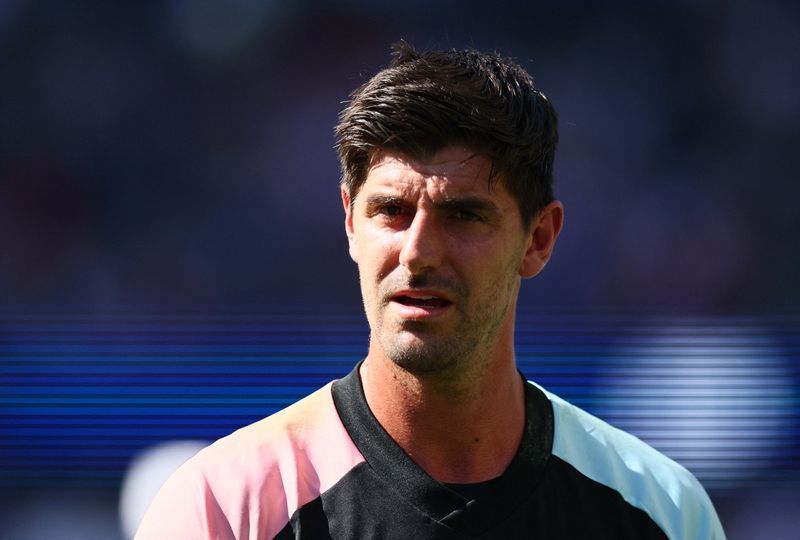
The appointment of Mark van Bommel as Belgium's new head coach has won the backing of the national team's senior players, with goalkeeper Thibaut Courtois expressing confidence in the former Dutch international's ability to lead the squad forward. Speaking at a sponsorship engagement in Brussels, Courtois acknowledged that Van Bommel's selection represented a logical choice, having been frequently linked with the position during the weeks following Belgium's disappointing World Cup campaign.
Van Bommel's path to the Belgium job came swiftly after the federation terminated its agreement with Rudi Garcia, whose tenure unraveled following the team's quarter-final elimination at the World Cup. The French-born coach's departure was effectively sealed by Belgium's inability to progress beyond the last eight, leaving the federation to seek a replacement who could restore stability and direction to a squad that had been among the pre-tournament favorites. The decision to appoint Van Bommel reflected the federation's preference for a coach with deep experience of European football and proven success at the club level.
Courtois emphasized that Van Bommel's credibility among the playing squad stems not merely from his coaching achievements but fundamentally from his distinguished career as a player. The goalkeeper highlighted how Van Bommel's experience competing at the highest echelons of international and club football naturally generates respect from current players who understand the demands of elite-level competition. This player-to-coach perspective represents a significant advantage when managing a national team that has recently endured a traumatic tournament exit, as Van Bommel can speak with authentic authority about pressure situations and the psychological resilience required during critical matches.
During his tenure at Antwerp, Van Bommel demonstrated tactical acumen and the ability to develop young talent, qualities that Courtois specifically cited as evidence of coaching prowess. Several squad members have reportedly praised Van Bommel's coaching methods and man-management skills, suggesting that the appointment has generated genuine optimism within the camp rather than reluctant acceptance. This groundswell of player support provides Van Bommel with valuable momentum as he assumes control of a squad that requires both immediate stabilization and longer-term strategic vision following the World Cup disappointment.
Yet the future participation of Courtois himself in the Belgium setup remains ambiguous, adding a layer of complexity to the transition period. The 34-year-old Real Madrid goalkeeper indicated that while he maintains a desire to represent his country, this commitment carries significant conditions. Courtois specifically flagged his reluctance to participate in the upcoming Nations League campaign, suggesting that he requires a carefully managed schedule that balances his club responsibilities with international obligations. This conditional approach reflects the realities facing aging players at elite clubs, where fixture congestion and injury management have become central considerations.
Courtois stated that his ultimate decision regarding international retirement will emerge from forthcoming discussions with Van Bommel. The goalkeeper's willingness to negotiate with the new coach about his availability demonstrates confidence in Van Bommel's collaborative approach to squad management. For Courtois, the prospect of selective participation rather than unconditional availability represents a compromise position that would allow him to remain involved in major tournaments whilst protecting his physical resources during less consequential fixtures. Van Bommel's receptiveness to such arrangements will likely prove influential in determining whether Courtois extends his international career or opts for retirement.
The circumstances surrounding Belgium's World Cup exit have colored Courtois' thinking about his international future. During the quarter-final against Spain in Los Angeles on July 10, Courtois sustained an injury that forced him to withdraw from the match. His replacement, Senne Lammens, subsequently committed a critical error that contributed to Belgium's 2-1 defeat by the eventual tournament champions. Courtois has since maintained that his physical condition, while compromised, would not have prevented him from fulfilling certain goalkeeper functions during open play, though his inability to execute goal kicks reliably prompted Garcia's decision to substitute him.
Reflecting on the Garcia era and the World Cup disappointment, Courtois adopted a measured and diplomatic tone that contrasts sharply with the criticism that has surrounded the departed coach. Courtois emphasized that team interests superseded individual considerations, suggesting that Garcia's decision-making, however contentious, derived from a commitment to fielding the most capable lineup. The goalkeeper stressed that no fundamental disagreement emerged between himself and Garcia regarding the substitution, despite the significant consequences that flowed from that tactical change. This perspective reveals Courtois' maturity as a senior international performer who recognizes that difficult in-game decisions form an inevitable component of management.
The Real Madrid goalkeeper's diplomatic handling of Garcia's legacy carries implications for the new coach's environment. By declining to leverage the substitution incident as justification for his own strategic reservations about Van Bommel or the national program, Courtois has signaled that the squad will move forward without destructive recriminations about the previous regime. This approach facilitates a smoother transition and creates psychological space for Van Bommel to establish his own methods and priorities. However, Garcia's removal also reflects the federation's acknowledgment that the 2022 World Cup campaign fell substantially short of expectations, creating pressure on Van Bommel to deliver tangible improvements in Belgium's competitive performance.
For Southeast Asian observers following European football, the Belgium coaching transition illustrates broader patterns in international football management. The appointment of Van Bommel represents the federation's pragmatic assessment that success requires coaches with firsthand experience of elite competition and proven tactical credentials. Similarly, Courtois' nuanced position regarding his international future reflects the contemporary reality that aging stars at top European clubs increasingly demand structured arrangements around national team participation. These dynamics have become standard features of international football management, particularly for nations seeking to maintain competitiveness while respecting the commercial and physical interests of players employed by elite clubs.
The early indications suggest that Van Bommel's appointment will proceed without major internal discord or player resistance, providing a relatively stable foundation for the rebuilding process. Courtois' early backing from an experienced senior player signals that the squad appears willing to invest confidence in the new coach's vision. However, the unresolved question of Courtois' continued participation illustrates that Van Bommel's early months will involve both establishing tactical direction and negotiating the practical considerations that shape modern international football. The resolution of these issues during his initial conversations with Courtois and other senior players will likely prove influential in determining whether Van Bommel successfully rebuilds Belgium into a competitive force or faces recurring friction with a squad still processing disappointment from the World Cup campaign.

