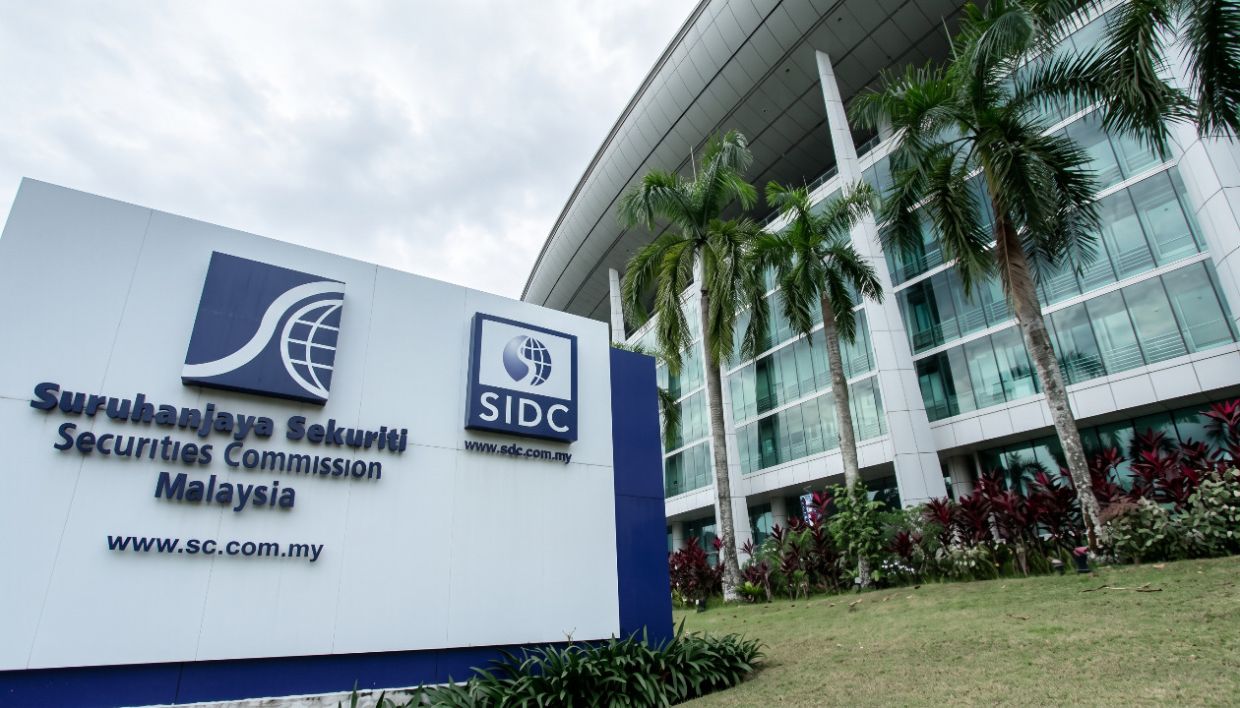
The Malaysian Court of Appeal has dealt a significant blow to businessman Ricky Wong by rejecting his attempt to overturn a sweeping freeze on assets valued at RM169.2 million, reinforcing the Securities Commission Malaysia's legal position in one of the country's most prominent financial crime cases. The appellate bench's decision on Monday sided entirely with the regulator's enforcement action, dismissing appeals filed by Wong Shee Kai—known professionally as Ricky Wong—his associate Teh Sew Wan, and their company Wong SK Holdings Sdn Bhd.
The three-judge panel, led by Justice Datuk Ravinthran N. Paramaguru alongside Justice Datuk Dr Choo Kah Sing and Justice Datuk Leonard David Shim, not only upheld the original asset freeze but also rejected the appellants' separate motion to overturn an earlier ex parte injunction that the High Court had issued in May 2020. This layered court decision underscores the strength of the Securities Commission's case and signals judicial confidence in the regulator's evidence and legal arguments. The court ordered the appellants to shoulder RM200,000 in costs payable to the SC, an additional financial penalty that reflects the bench's view of the appeal's lack of merit.
The asset freeze itself was originally formalized through an inter partes injunction granted by the High Court on April 28, 2022, following extensive submissions from both sides. This order does not merely lock away the disputed assets but extends to a comprehensive prohibition preventing any third party from knowingly facilitating transactions or dealings involving the frozen properties and holdings. Such expansive language protects the integrity of the assets while the underlying civil litigation proceeds, ensuring that potential proceeds of wrongdoing cannot be dissipated during the long judicial process ahead.
The Securities Commission initiated its civil enforcement action against these parties in 2020, alleging serious breaches of the Capital Markets and Services Act 2007. Specifically, the regulator accused the appellants of contravening Section 179 of that statute—a provision addressing securities fraud. This civil suit operates in parallel with criminal proceedings, a common enforcement strategy in white-collar crime cases where regulators pursue both remedial and punitive objectives through different legal channels.
The civil trial remains in early-to-middle stages, with proceedings currently scheduled to resume on September 1, 2026—a timeline reflecting the complexity of financial crime litigation in Malaysia. Such extended trial periods are typical when voluminous documentary evidence, expert testimony on financial transactions, and intricate analyses of market conduct must be examined in detail. The delay also suggests that the court system is managing substantial case complexity, with multiple issues requiring careful judicial attention throughout 2024 and 2025.
Wong's legal team was led by prominent criminal defence counsel Tan Sri Muhammad Shafee Abdullah of Messrs Shafee & Co, while Teh engaged Tan Sri Cecil W. M. Abraham from Messrs Cecil Abraham & Partners—both among Malaysia's most experienced advocates in complex commercial and regulatory disputes. Despite their formidable representation, the appellate court found insufficient grounds to disturb the lower court's decisions. The Securities Commission's case was advanced by in-house counsel Mohd Hafiz Mohd Yusoff and Loo Kit Ming Keith, supported by external counsel Datuk Lim Chee Wee and Kwan Will Sen from Messrs Lim Chee Wee Partnership.
Beyond the civil enforcement action, Wong faces an additional layer of legal jeopardy. The Securities Commission has indicated that he remains at large and is wanted in connection with criminal charges under the Anti-Money Laundering, Anti-Terrorism Financing and Proceeds of Unlawful Activities Act 2001, in addition to separate criminal allegations under the Capital Markets and Services Act itself. This combination of civil asset restraint and criminal exposure creates significant pressure on the fugitive businessman, though his continued absence from Malaysia complicates enforcement.
The case carries broader implications for Malaysia's financial regulation and investor protection framework. By successfully defending its enforcement action through multiple court levels, the Securities Commission demonstrates its capacity to pursue sophisticated financial crime cases and preserve disputed assets pending trial. For investors and market participants, the outcome reinforces that securities regulators possess meaningful tools to prevent dissipation of ill-gotten gains, a critical deterrent against fraudulent activity in capital markets.
For Southeast Asian perspectives, Malaysia's handling of this case reflects regional efforts to strengthen securities enforcement and combat financial crimes that often have cross-border dimensions. As capital flows increasingly move through the region's interconnected financial systems, the ability of individual regulators to freeze assets and pursue wrongdoers—even when they flee jurisdiction—becomes increasingly important for maintaining market integrity and investor confidence.
The Securities Commission's public appeal for information regarding Wong's whereabouts indicates that locating him remains an active investigative priority. Given the scale of assets involved and the seriousness of the allegations, Malaysian authorities are presumably engaged in transnational cooperation with regional and international partners to trace and locate the fugitive businessman. His continued absence, however, does not diminish the legal process or the eventual need to address the underlying allegations through trial.
The appellate decision provides a firm legal foundation for the Securities Commission to proceed with its civil case toward trial and judgment. Should the court ultimately find in the regulator's favour on the merits, the asset freeze will facilitate enforcement of any monetary judgment awarded. Meanwhile, the criminal proceedings continue on their separate trajectory, and any eventual apprehension of Wong would likely trigger both civil judgment enforcement and criminal prosecution.

