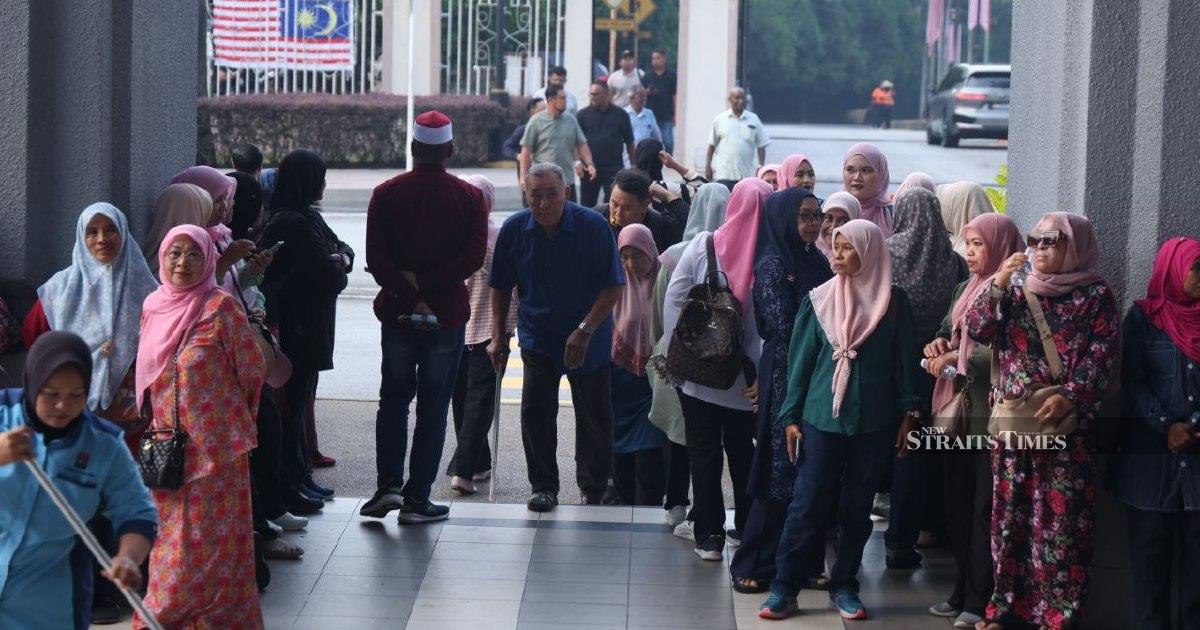
The Kuala Lumpur Court Complex filled with anticipatory energy as more than 30 media practitioners gathered in the lobby, preparing to witness a pivotal moment in Malaysia's recent political history. Former prime minister Datuk Seri Ismail Sabri Yaakob was expected to arrive for what promises to be a significant legal development, drawing intense scrutiny from the press corps stationed across the courthouse premises.
The presence of such a substantial media contingent underscores the public significance attached to Ismail Sabri's appearance and the charges he is expected to face. In Malaysia's context, legal proceedings involving former heads of government invariably command widespread attention, reflecting broader public interest in governance, accountability, and the rule of law. The concentration of journalists at the Court Complex demonstrates how closely domestic observers and international media partners monitor judicial proceedings involving senior political figures.
Ismail Sabri served as Malaysia's Prime Minister from August 2021 to August 2022, a relatively brief tenure that concluded during a period of considerable political volatility. His administration navigated various governance challenges during the Covid-19 pandemic recovery phase and broader questions about economic stability. The circumstances surrounding his political career and subsequent legal exposure have maintained public curiosity across multiple sectors of Malaysian society.
The formal charging of a sitting or former prime minister represents a watershed moment in any democratic system. Such proceedings test institutional resilience and public confidence in judicial independence. For Malaysia, these developments carry implications extending beyond individual accountability to encompass broader narratives about institutional strength and the nation's commitment to transparent governance frameworks.
The media mobilization at the Court Complex reflects standard practice for high-profile legal proceedings in Malaysia. News organisations deploy substantial resources to cover such events, recognising their significance for public information needs. The courthouse environment itself transforms into a hub of journalistic activity, with practitioners from broadcast, print, and digital platforms positioning themselves strategically to capture developments as they unfold.
Regional and international dimensions add further complexity to coverage of this nature. Southeast Asian governments and democratic institutions frequently reference Malaysian legal proceedings as indicators of regional trends regarding political accountability and judicial functioning. International observers monitoring democratic development patterns in ASEAN member states often scrutinise such high-profile cases as barometers of institutional health.
The logistics of managing significant media presence at the Court Complex require careful coordination between judicial administrators, security personnel, and media representatives. Such arrangements aim to balance legitimate public interest in court proceedings with the maintenance of courtroom decorum and judicial process integrity. Malaysian courts have developed protocols over successive high-profile cases to accommodate media requirements whilst preserving institutional order.
For Malaysian citizens, proceedings involving former premiers carry direct relevance to understanding governance standards, political accountability mechanisms, and the functioning of constitutional frameworks. These developments inform public discourse about expectations for political leadership conduct and consequences for alleged violations of legal or ethical standards.
The timing and nature of charges against Ismail Sabri will likely provoke varied interpretations across Malaysia's diverse political landscape. Different constituencies may view proceedings through divergent lenses shaped by partisan affiliations, regional interests, and contrasting perspectives on accountability mechanisms. Balanced media coverage becomes particularly important in such contexts, enabling citizens to form informed opinions based on comprehensive factual information rather than polarised narratives.
Court complexes in Malaysia, particularly the primary facilities in Kuala Lumpur, have become increasingly familiar venues for significant political and legal developments over recent years. These spaces function simultaneously as forums for judicial processes and focal points for democratic engagement and civic scrutiny. The gathering of media practitioners symbolises broader societal attention to accountability and institutional functioning.
Institutional credibility depends substantially on transparent proceedings and public confidence in judicial independence. High-visibility cases involving former office-holders influence broader perceptions regarding whether legal systems operate equitably regardless of political status or historical prominence. Malaysian courts operate within a context where such perceptions significantly affect public trust in democratic institutions.
The appearance of Ismail Sabri at the Court Complex marks a notable chapter in Malaysia's ongoing political and legal narrative. How proceedings develop, how information flows to the public, and how various stakeholders interpret developments will collectively shape understanding of contemporary governance standards and institutional accountability in the Malaysian context. Media's role in documenting and communicating these developments remains fundamental to democratic functioning.

