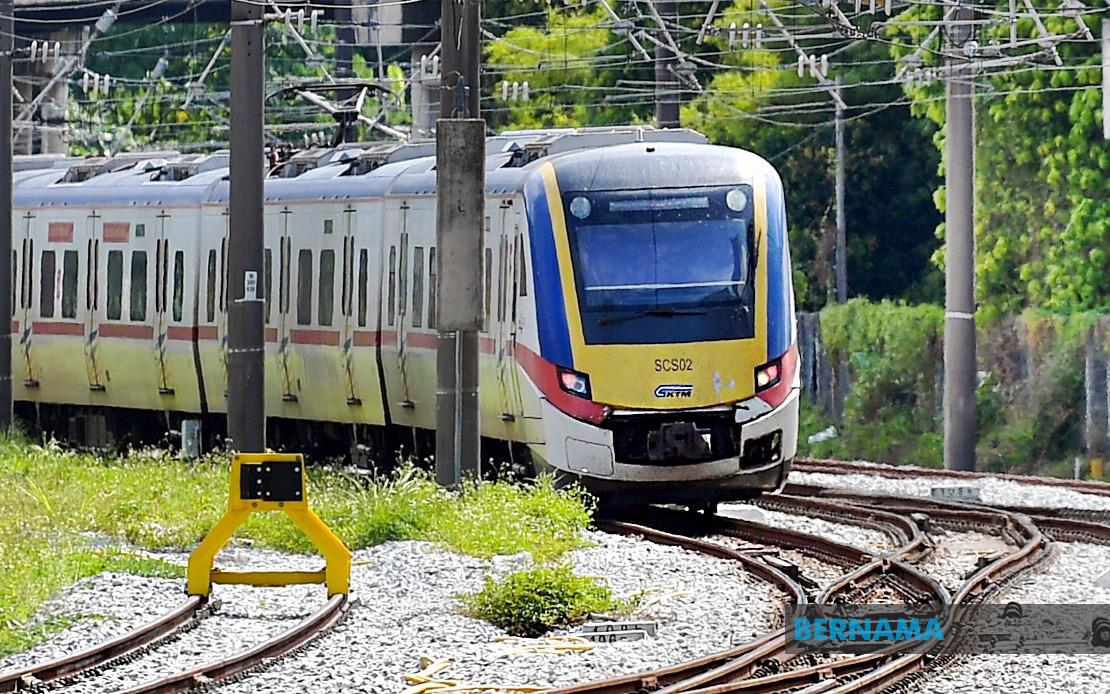
Malaysia's main rail operator faced significant operational disruptions on July 23 after a wooden construction structure toppled onto railway tracks near Batang Benar station, severing the overhead power supply and triggering widespread service cancellations across the Klang Valley commuter network. The incident underscores persistent coordination failures between railway authorities and third-party contractors working in proximity to critical infrastructure, raising fresh concerns about safety protocols at busy rail corridors.
Keretapi Tanah Melayu Berhad (KTMB) immediately announced sweeping service suspensions following the structural collapse. All KTM Komuter services operating between Bangi and Seremban stations were halted entirely, forcing the operator to terminate southbound services at Seremban and restrict northbound operations to commence only from Bangi. This bifurcation of the network left tens of thousands of commuters stranded during peak travel hours, with no direct rail connectivity across the affected 40-kilometre stretch. Electric Train Service (ETS) operations, which typically bypass local stations but traverse the same corridor, were similarly compromised by the damaged overhead line infrastructure.
To mitigate the chaos, KTMB mobilised shuttle bus services across multiple stations within hours of the incident. Three dedicated buses were deployed to ferry KTM Komuter passengers between Seremban, Tiroi, Batang Benar, Labu, and Bangi, though such alternative transport options typically offer minimal comfort during Malaysia's humid midday conditions and cannot match rail capacity. The ETS division established a separate shuttle bus network with seven vehicles stationed at KL Sentral, Bandar Tasik Selatan, Kajang, and Seremban to accommodate longer-distance passengers. Additionally, ETS travellers who elected to abandon their journeys rather than endure extended delays were granted full fare refunds, a gesture reflecting the severity of the service degradation.
The underlying cause pointed to serious dereliction by a contractor engaged by the Public Works Department (JKR) for wayleave projects in the vicinity. KTMB's preliminary investigation revealed that the contractor fundamentally breached mandatory safety protocols governing work around electrified railway infrastructure. Most critically, the contractor neither submitted a comprehensive work schedule nor formally notified KTMB of the precise timing for the bridge construction activities scheduled on the day of the incident. This breakdown in communication proved catastrophic—had KTMB possessed advance warning, it could have either halted train operations preemptively or positioned supervisory personnel to ensure proper precautions.
Under KTMB's established Site Entry Permit Standard Operating Procedure, any construction work in the railway corridor demands the physical presence of three KTMB technical representatives drawn from the Regional Engineer, Signalling and Communications, and Electrification departments. These monitors are tasked with supervising all activities and enforcing compliance once full written approval and requisite documentation have been formally submitted. The contractor's failure to trigger this mandatory oversight mechanism represents a systemic breakdown that KTMB attributed directly to non-compliance with prescribed procedures. For Malaysian commuters accustomed to crowded and occasionally unreliable rail services, such incidents fuel broader anxiety about whether basic safety standards are consistently enforced across the country's transport infrastructure.
The damage inflicted on the overhead line system proved sufficiently severe that KTMB's technical teams required many hours merely to assess the extent of repairs required. The operator committed to restoring full connectivity expeditiously but provided no specific timeline, cautiously acknowledging only that restoration work was underway. For business commuters and daily wage earners dependent on predictable transit, such ambiguity compounds the original inconvenience by rendering journey planning impossible. The incident occurs against a backdrop of mounting pressure on KTMB to improve reliability, particularly along the Klang Valley commuter corridor, which serves as the economic and demographic heart of Peninsular Malaysia.
This episode illustrates a recurring pattern whereby third-party construction or maintenance activities conducted near KTMB infrastructure routinely fail to maintain adequate coordination safeguards. The Public Works Department contractor's apparent casual disregard for notification requirements suggests that penalties for non-compliance may be insufficiently onerous to deter future violations. Without material consequences for safety breaches, contractors operating under tight budgets and schedules will naturally prioritise speed over communication. KTMB's apology emphasised that passenger safety and operational integrity remain paramount, yet such rhetoric rings hollow when preventable incidents stemming from external contractor negligence repeatedly disrupt hundreds of thousands of journeys.
For Malaysian rail passengers, the incident raises uncomfortable questions about regulatory oversight. The Department of Transport and various regulatory bodies theoretically supervise contractor activities affecting public transport, yet their enforcement mechanisms apparently proved ineffectual in this instance. Whether KTMB itself possesses sufficient legal authority and financial resources to impose meaningful sanctions on JKR contractors remains unclear. The operator's reliance on issuing public statements attributing blame, rather than announcing concrete corrective measures or structural reforms, suggests that systemic accountability remains elusive.
The disruption's ripple effects extended beyond direct rail users into broader regional commerce. Businesses dependent on just-in-time freight delivery via KTM facilities faced unexpected bottlenecks, while courier and logistics operations scrambled to reroute shipments. Tourism sector representatives noted cancellations and itinerary changes as visitors lost confidence in rail connectivity to popular destinations within the greater Kuala Lumpur region. The incident thus demonstrated how ostensibly localised infrastructure failures cascade throughout interconnected economic systems.
Looking ahead, KTMB faces pressure to implement enforceable mechanisms ensuring that external contractors respect safety protocols or face escalating penalties. This might include requiring contractors to post performance bonds, maintain detailed activity logs reviewed by KTMB supervisors in real-time, or face work suspension and financial penalties for communication breaches. Malaysia's rapid urbanisation and ongoing transport infrastructure expansion mean that coordination failures between rail operators and construction contractors will recur unless systemic improvements are mandated. For commuters, the practical takeaway remains that KTM and ETS services, despite their central importance to regional mobility, remain vulnerable to disruptions stemming from inadequate inter-agency communication and weak contractor oversight.

