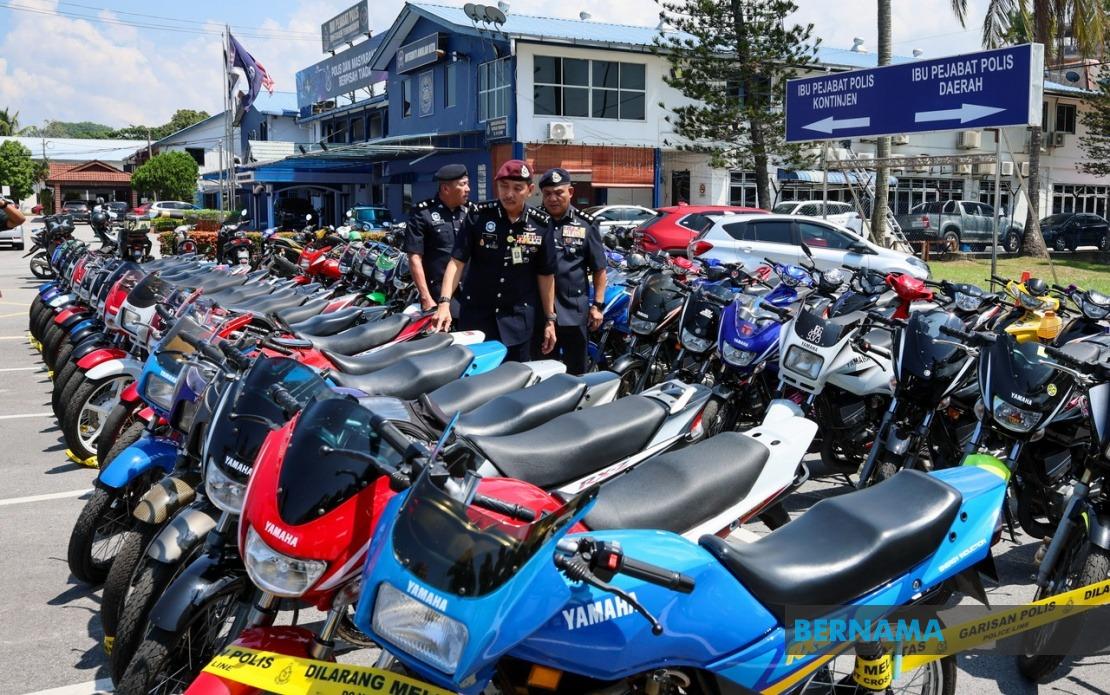
The escalating toll from Malaysia's largest annual motorcycle gathering demands a fundamental shift in how safety is managed at mass-participation events, according to road safety experts who are raising alarm over casualty figures that have climbed sharply in recent years. Shahrim Tamrin, formerly with the Malaysian Institute of Road Safety Research (MIROS), has issued a stark warning that the RXZ Members programme cannot continue relying on conventional traffic enforcement alone, and instead requires the sophisticated planning infrastructure typically reserved for large-scale public events.
The statistics paint a concerning picture that extends beyond isolated incidents. Over the past three years, deaths during the RXZ Members gathering have escalated from two fatalities in 2024, to five in 2025, and reached eleven in 2026—a trajectory that suggests deepening systemic vulnerabilities rather than random misfortune. This pattern of escalation underscores the urgency of intervention before the event's expansion further compounds the problem. The RXZ Members 8.0 edition, held recently at the Gong Badak Motor Racing Circuit in Kuala Nerus, attracted more than 200,000 participants over its four-day span, reinforcing its status as one of Southeast Asia's most significant motorcycle congregations and amplifying the responsibility of organisers to ensure participant safety.
During the most recent gathering from July 30 onwards, authorities documented 46 motorcycle-related accidents across the four-day period, with the severity distribution revealing a worrying concentration of fatal incidents. Of these accidents, eleven were classified as fatal collisions representing nearly 24 per cent of all recorded incidents, five qualified as serious injuries, and 30 remained minor in nature. These figures, reported by Bukit Aman's Traffic Investigation and Enforcement Department director Datuk Seri Muhammed Hasbullah Ali, demonstrate that the event's massive scale has created challenges that existing safety protocols are not adequately addressing.
Tamrin's proposed framework would fundamentally restructure how authorities approach event safety planning. Rather than deploying enforcement personnel reactively after accidents occur, he recommends instituting proactive measures including detailed participant flow projections, strategically designed entry and exit corridors, designated rest facilities positioned throughout the event area, pre-positioned ambulance stations with clearly mapped deployment points, an integrated emergency response operations centre, coordinated communication systems connecting all safety stakeholders, and comprehensive pre-event risk assessments that identify vulnerabilities before participants arrive. This systematic approach reflects international best practices for managing gatherings of comparable scale and complexity.
Crucially, Tamrin advocates for the establishment of post-event safety audits that would systematically analyse accident data according to multiple variables including precise incident locations, temporal patterns throughout the day, underlying causes, demographic profiles of riders involved, mechanical factors related to motorcycles themselves, and measurable outcomes of enforcement efforts. Such evidence-based analysis would enable future iterations of the event to implement targeted improvements grounded in verifiable data rather than generalised assumptions. Publication of these audit findings prior to subsequent editions would permit transparent course correction and build public confidence that organisers are genuinely committed to harm reduction.
Beyond traffic management, Tamrin has highlighted collateral concerns that extend the safety conversation into environmental and regulatory territory. Local residents have lodged complaints regarding the acoustic impact of modified motorcycles and excessive exhaust emissions that collectively contribute to air quality degradation across Kuala Terengganu during the gathering. He contends that authorities must strengthen enforcement of noise and emissions standards, signalling that large-scale events cannot be granted exemptions from environmental regulations that apply uniformly to road users throughout Malaysia.
A particularly thorny dimension involves the vehicle fleet itself. The Yamaha RXZ motorcycle, which has become culturally synonymous with the gathering, represents a vehicle category now spanning two to three decades in age. Many examples on Malaysian roads have been extensively modified, restored, or transferred through multiple ownership chains, creating documentation and registration challenges that sometimes result in technically roadworthy machines being barred from legal operation. Tamrin recommends that the Road Transport Department (JPJ) establish a pathway enabling comprehensive re-registration of mechanically sound RXZ motorcycles following stringent inspection by the Computerised Vehicle Inspection Centre (Puspakom), though with a critical caveat: machines modified in ways that compromise safety should either be restored to factory specifications or excluded from road registration entirely, ensuring all participants carry valid road tax and insurance coverage.
Coordination between enforcement agencies and event organisers represents another overlooked element of the safety equation. Tamrin proposes that police and JPJ personnel work collaboratively with RXZ clubs and programme organisers to establish formal training programmes for marshals and convoy group leaders. These individuals, who often serve as informal safety shepherds for their respective participant clusters, require structured instruction on convoy movement protocols, hazard communication, and emergency procedures. Currently, many operate on informal knowledge and experience rather than standardised guidance systems.
Additional mechanisms adapted from Malaysia's established transportation infrastructure could yield tangible benefits. Highway concessionaires have successfully deployed travel advisory systems during festive season peaks that inform drivers of congestion patterns, optimal departure windows, and alternative routing options. Similar intelligence systems tailored to the RXZ gathering—identifying peak travel periods, suggesting bypass routes to reduce congestion-related accidents, and recommending scheduled rest stops—could substantially mitigate collision risks without restricting participation.
The trajectory of fatalities over recent RXZ editions reflects a broader challenge facing Malaysian authorities as large-scale social and sporting events grow in participant numbers and geographic dispersion. The RXZ Members programme's evolution from a localised motorcycle gathering into a national phenomenon with hundreds of thousands of attendees has outpaced the administrative frameworks designed to manage it safely. Tamrin's intervention represents not merely technical criticism but a clarion call for systemic modernisation of how Malaysia's government and event industry approach mass-participation safety. Without such restructuring, the casualty figures will likely continue their grim escalation trajectory, each edition potentially more lethal than the last.

