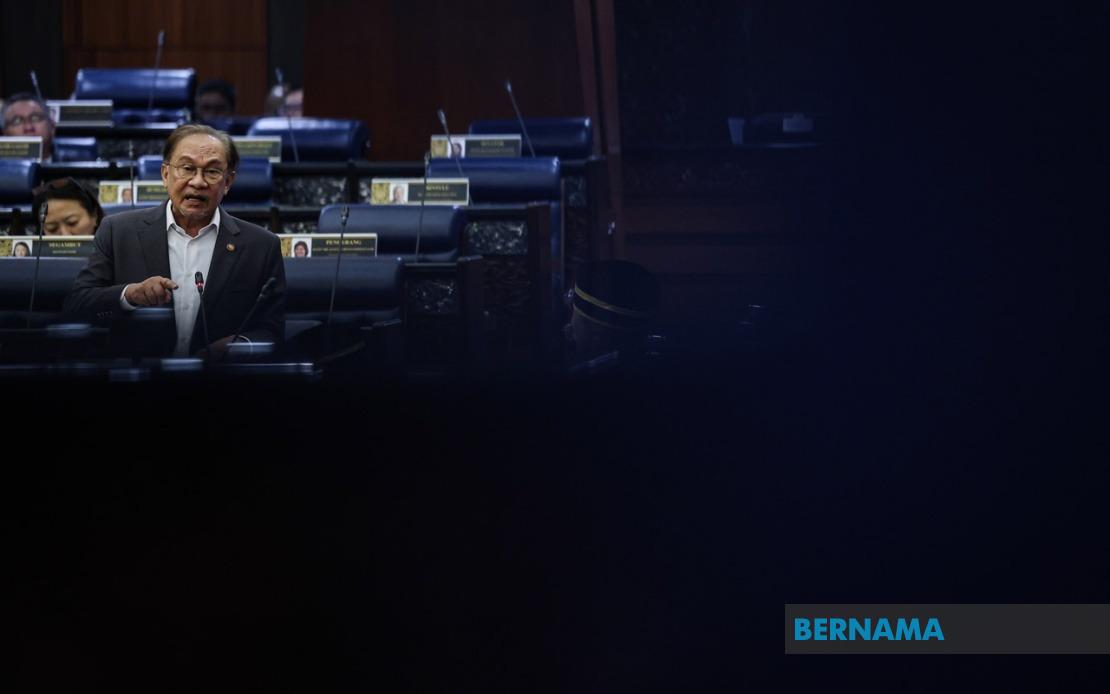
Prime Minister Datuk Seri Anwar Ibrahim has unveiled a significant procedural shift in how the government handles complaints lodged against journalists working for established media organisations. Under the new framework, authorities will no longer immediately launch investigations or enforcement actions based on such complaints. Instead, all grievances must be channelled through the Malaysian Media Council (MMM), which will conduct an independent assessment before determining whether further governmental action is warranted. This restructuring represents an attempt to inject greater transparency and fairness into a process that has historically drawn international scrutiny.
The Prime Minister articulated the rationale behind this institutional gateway during parliamentary questioning in the Dewan Rakyat, framing the mechanism as a safeguard against arbitrary persecution of news practitioners. His remarks directly addressed longstanding concerns that government departments and officials have weaponised defamation laws and national security statutes to silence or intimidate critical journalism. By interposing the MMM as a mandatory first checkpoint, the administration aims to establish credible distance between political grievances and prosecutorial decisions, thereby moderating perceptions that the legal system operates at the behest of those in power.
Anwar emphasised that journalists should not face investigation or prosecution merely because someone has registered a complaint, a principle that reflects international norms around press protection. The Prime Minister's declaration that "journalists should not be easily dragged into cases merely because a government department feels criticised" signals recognition that prior practice created a chilling effect on newsrooms willing to scrutinise official conduct. This acknowledgment matters enormously for Malaysia's media environment, where historical reliance on the Sedition Act 1948 and Official Secrets Act 1972 has subjected numerous journalists to lengthy legal proceedings that effectively punished them through process itself, regardless of eventual acquittal.
The MMM will now serve as the gatekeeping institution responsible for evaluating whether alleged misconduct by media organisations warrants escalation to state enforcement mechanisms. This role represents a significant expansion of the council's authority and reflects a deliberate choice to prioritise self-regulatory and industry-level accountability over immediate resort to criminal law. The council can presumably dismiss frivolous complaints, request corrections or clarifications from media outlets, or recommend disciplinary measures within journalistic professional frameworks before recommending whether government prosecution should proceed. Such a system mirrors complaint resolution architectures in established democracies, where press councils interpose between aggrieved parties and criminal courts.
Yet the Prime Minister's concession that "there is no law anywhere in the world that grants absolute freedom to members of the press" reveals the circumscribed nature of this reform. He positioned journalists as equally bound by law as political leaders, a formulation that technically acknowledges constraint but glosses over power asymmetries. Governments possess vastly superior resources to mount legal campaigns against individual journalists or publications, whereas journalists possess no comparable mechanism to prosecute state officials for abuse of process or malicious prosecution. The introduction of a buffer mechanism, while welcome, does not fundamentally rebalance this structural inequality.
The reference to Sedition Act and Official Secrets Act prosecutions remains particularly resonant for Malaysian newsrooms. These statutes have enabled authorities to criminalise speech in ways that democratic societies typically reserve for exceptional circumstances involving imminent violence or national security threats. By routing complaints through the MMM rather than directly to law enforcement, the government technically lengthens the pipeline but does not eliminate the possibility of prosecution under these expansive statutes. Publications and journalists must therefore remain cautious, understanding that MMM approval does not provide immunity should authorities ultimately decide to proceed with charges.
For Southeast Asian media practitioners and media freedom advocates monitoring Malaysia's trajectory, this announcement carries ambiguous significance. On one hand, it demonstrates governmental acknowledgment that unfiltered access to criminal prosecution instruments chills legitimate journalism. On the other hand, the reform operates within existing legal frameworks rather than reforming the substantive laws themselves. The Sedition Act and Official Secrets Act remain available for deployment, and their existence continues to influence editorial decisions across Malaysian newsrooms, particularly regarding coverage of sensitive political, religious, or security matters. Journalists cannot rely solely on procedural safeguards when the underlying legislation permits conviction based on intent to promote disaffection.
The establishment of this MMM-first protocol also reflects political calculation within the current administration. Since taking office, the Anwar-led government has repositioned itself as more pluralistic and reform-minded than its predecessor, seeking to rebuild international credibility damaged by documented press freedom violations under previous leadership. Implementing a buffer mechanism costs the government little operationally while generating significant goodwill among journalists, civil society organisations, and international observers who monitor democratic indicators. Whether the mechanism will prove substantively protective depends entirely on the council's independence, expertise, and willingness to reject complaints that appear politically motivated.
The implications for Malaysian journalism extend beyond formal legal structures to professional culture and institutional confidence. Newsrooms operating under the previous regime of potential spontaneous prosecution have adopted defensive editorial postures, avoiding stories that might provoke official complaint regardless of their newsworthiness or accuracy. The knowledge that complaints now face MMM screening before reaching law enforcement may incrementally embolden journalists to pursue investigations with greater vigour, particularly those examining government accountability, corruption, or policy failures. However, this confidence-building effect remains contingent on the MMM demonstrating genuine independence from political interference.
Moving forward, the success of this reform will be measured by actual implementation rather than policy statements. Journalists and news organisations should closely monitor whether the government consistently honours the MMM-first requirement or whether it continues filing cases directly, circumventing the council. Similarly, the MMM's decisions across various complaints will reveal whether it functions as a genuine firewall or as a de facto government instrument that simply delays prosecutions while providing procedural legitimacy. The international media freedom community will likely scrutinise both the council's composition and its verdicts to assess whether Malaysia is meaningfully constraining prosecutorial discretion or merely performing accountability.
For Malaysian readers and the broader public, this mechanism addresses a fundamental democratic concern: whether citizens can learn uncomfortable truths about government through journalism conducted without fear of retaliation. Press freedom and government accountability remain interconnected; journalism that operates under threat of prosecution cannot adequately serve the public interest. The MMM protocol represents incremental progress, but meaningful protection requires sustained political commitment to the principle that legitimate journalism should never be weaponised, regardless of how uncomfortable its findings may be for those in power.

