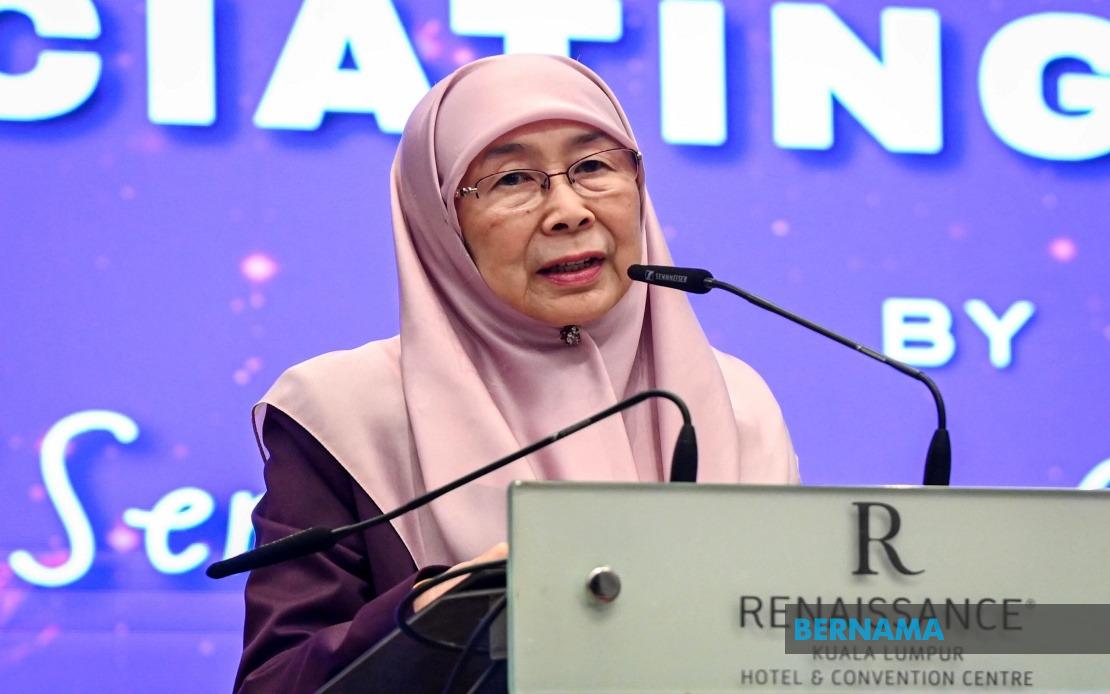
Datuk Seri Dr Wan Azizah Wan Ismail has delivered a pointed message to Malaysia's healthcare sector: that innovation divorced from compassion risks compromising the very essence of medicine. At the launch of the 16th Malaysian Obstetric Anaesthesiology Symposium (MyOASym) 2026 in Kuala Lumpur, the Prime Minister's wife articulated a vision of maternal care that places the human experience at the centre of clinical practice, challenging the assumption that technological progress alone constitutes healthcare excellence.
Wan Azizah's remarks come at a pivotal moment for maternal healthcare in the region, where rising maternal mortality rates and increasing obstetric complexity demand sophisticated medical responses. Yet her emphasis on dignity and emotional support reflects a growing recognition that clinical metrics tell only part of the story. The quality of a mother's experience during pregnancy and childbirth extends far beyond whether complications are successfully managed—it encompasses how she is treated, heard and supported during one of life's most transformative and vulnerable periods. This framework reframes excellence as a multidimensional concept rather than a narrow focus on mortality and morbidity statistics.
The mounting complexity of modern maternal healthcare requires urgent systemic attention. Advanced maternal age, obesity, complex cardiac conditions and obstetric haemorrhage present intersecting challenges that demand expertise far beyond any single medical discipline. Wan Azizah highlighted these growing complications as evidence that fragmented, siloed approaches to obstetric care are increasingly untenable. The traditional model of obstetricians working independently without seamless integration with anaesthesiologists, neonatologists and other specialists leaves dangerous gaps in preparedness for high-risk scenarios.
To address this fragmentation, Wan Azizah advocated for the systematic implementation of multidisciplinary simulation training across Malaysian healthcare institutions. These exercises, bringing together anaesthesiologists, obstetricians and neonatologists in controlled environments, serve multiple functions: they expose weaknesses in team communication, build familiarity and trust among professionals who must coordinate instantaneously during emergencies, and create muscle memory for crisis responses. The emphasis on simulation training reflects international best practice, particularly in countries where perinatal outcomes have improved markedly through sustained investment in team-based learning and structured debriefing protocols.
Wan Azizah's call for institutionalising early warning systems alongside this training represents a comprehensive approach to risk mitigation. Early warning systems—standardised protocols for identifying deteriorating maternal or fetal conditions—provide the crucial first line of defence that enables rapid, coordinated intervention. When embedded within a workplace culture that encourages clear communication and psychologically safe reporting, these systems transform the healthcare environment from one where problems are hidden until they escalate to crisis into one where issues are surfaced and managed proactively.
Her observation that healthcare professionals sometimes operate in silos revealed a persistent organisational challenge within Malaysian hospitals. This fragmentation may stem from institutional structures, differing training pathways, or simply the practical realities of managing multiple departments. Yet the cost of such separation is measurable in delayed diagnoses, duplicated work, and crucially, in preventable maternal morbidity and mortality. Building genuine multidisciplinary collaboration requires more than occasional joint meetings—it demands structural incentives, shared outcome metrics, and cultures where hierarchies do not impede information flow.
Wan Azizah also addressed the professional development of younger healthcare workers, emphasising curiosity, mentorship and the cultivation of empathy alongside technical competence. This message holds particular resonance in Malaysia, where healthcare workforce shortages and burnout are increasingly documented challenges. By framing professional growth as inseparable from emotional intelligence and continuous learning, she signalled that technical expertise unmoored from human connection represents an incomplete vision of medical professionalism. Young doctors and nurses who are encouraged to ask questions, seek guidance, and reflect on clinical experiences develop not only safer practitioners but more resilient ones.
The international participation at MyOASym 2026, drawing healthcare professionals from Singapore, Hong Kong and Pakistan alongside Malaysian practitioners, underscores the region's interconnected approach to obstetric excellence. Maternal healthcare challenges transcend national borders—advanced maternal age, obesity-related complications, and haemorrhagic emergencies affect all Southeast Asian populations. Regional collaboration enables knowledge exchange, benchmarking of outcomes, and shared learning from innovations and failures alike. For Malaysian practitioners, exposure to international standards and approaches provides opportunities to accelerate improvements in local practice.
Wan Azizah's framing of maternal healthcare excellence as inseparable from compassion also carries implications for healthcare policy and resource allocation. If excellence genuinely encompasses dignity and emotional support, then questions about staffing ratios, midwifery availability, postnatal follow-up and mental health screening for postpartum depression become central to performance measurement rather than peripheral concerns. This broader definition of quality demands investment not only in equipment and specialist training but also in the nursing and allied health workforce that delivers much of the direct care mothers receive.
The emphasis on patient-centred care reflects a subtle but significant philosophical shift in how healthcare systems conceptualise their mission. For decades, maternal healthcare has been dominated by a risk-reduction paradigm—identifying and managing complications. Yet this approach, while necessary, can inadvertently transform pregnancy and childbirth into a medical problem to be solved rather than a life event to be supported. Wan Azizah's message suggests that Malaysian healthcare should aspire to integrate both perspectives: rigorous clinical vigilance paired with genuine attention to the emotional and psychological dimensions of motherhood.
The symposium launch itself demonstrates institutional commitment to this vision. By bringing together anaesthesiologists, obstetricians, neonatologists and allied professionals in a focused setting to discuss best practices in obstetric anaesthesia, Malaysia is investing in the collaborative infrastructure Wan Azizah advocates. Such gatherings, when structured to emphasise multidisciplinary learning and when linked to tangible changes in clinical practice, can catalyse genuine improvements in maternal safety and satisfaction.
Moving forward, the challenge lies in translating Wan Azizah's principles into sustained systemic change. Healthcare cultures shift slowly, and compelling vision statements must be matched by structural support, training investments, and accountability mechanisms. Malaysian hospitals and health authorities have the opportunity to position maternal healthcare as a flagship service that demonstrates how compassion and innovation can be integrated. Success would not only improve maternal and neonatal outcomes but also serve as a model for other specialties within the healthcare system, proving that human-centred medicine and technical excellence are not opposing forces but complementary imperatives.

