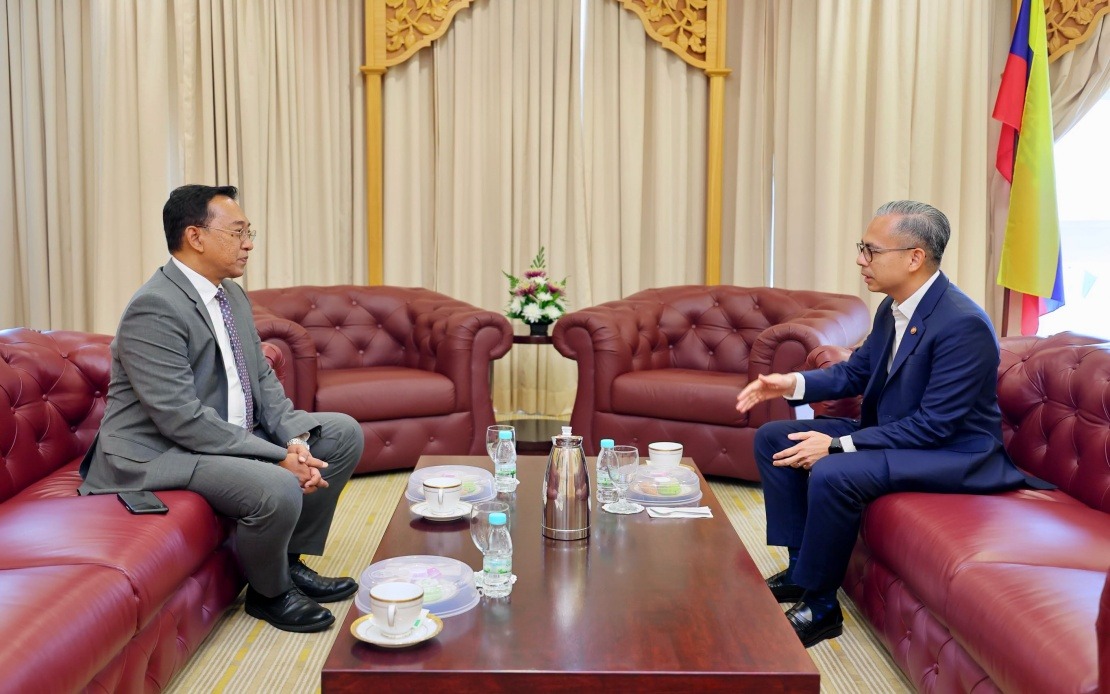
Communications Minister Datuk Fahmi Fadzil hosted a courtesy visit from Malaysia's newly-appointed Ambassador to Lebanon, Anwar Udzir, signalling the government's commitment to reinforcing diplomatic channels with the Middle Eastern nation. The encounter underscores the importance Kuala Lumpur places on maintaining robust representation across key international jurisdictions, particularly in regions where Malaysia's strategic, commercial, and humanitarian interests intersect.
Anwar Udzir formally received his letter of appointment from His Majesty Sultan Ibrahim, King of Malaysia, on May 18, 2026, marking the beginning of his tenure as the kingdom's chief diplomatic representative in Beirut. The timing of Fahmi's meeting reflects customary diplomatic protocol, welcoming the ambassador as he settles into his new posting and establishing initial rapport with senior government officials responsible for international communication strategies.
According to Fahmi's public statement, the conversation centred on deepening institutional ties between Malaysia's Ministry of Communications and the Lebanese mission, while simultaneously creating space for a broader exchange of perspectives on contemporary developments affecting Malaysian interests abroad. Such bilateral engagement at the ministerial level signals that Lebanon remains a territory of strategic consideration for Malaysian policymakers, whether through diaspora relations, trade opportunities, or participation in multilateral forums.
The minister expressed optimism regarding Udzir's capacity to advance Malaysia's diplomatic agenda in Lebanon, acknowledging the personal working relationship that had already developed between them. Fahmi noted that he had previously collaborated with Anwar during the organisation of the Asia-Pacific Telecommunity Ministerial Meeting, which took place in Tokyo, Japan, during the preceding year. This prior professional interaction lends credibility to their renewed engagement, suggesting continuity in personnel networks across Malaysia's diplomatic and ministerial establishments.
Lebanon has long occupied a complex position within Malaysia's Middle Eastern engagement. The nation serves as a critical intersection of Arab, Mediterranean, and international interests, housing significant populations with historical ties to Southeast Asia. Malaysian governments have historically maintained diplomatic presence in Beirut to monitor developments within the Levantine region, support Malaysian citizens residing there, and participate in multilateral initiatives addressing Middle Eastern affairs.
The courtesy call also reflects broader patterns of diplomatic renewal and consolidation within Malaysia's foreign service. Following various international transitions and reshuffles, ambassadorial missions worldwide receive fresh attention from Kuala Lumpur's ministerial leadership as a means of reasserting Malaysia's commitment to bilateral relationships and ensuring that diplomatic networks function optimally in service of national objectives.
Fahmi's role as Communications Minister places him at the intersection of domestic information management and international public diplomacy. His engagement with ambassadorial appointments therefore carries significance beyond ceremonial courtesy. The Ministry of Communications increasingly shapes how Malaysia projects itself internationally, manages information flows, and coordinates messaging across government bodies involved in foreign relations. Anwar Udzir's meeting with Fahmi thus represents an opportunity to align Lebanese diplomatic efforts with broader Malaysian communication strategies at the global level.
For Malaysian stakeholders with interests in Lebanon—whether commercial, educational, or communal—the ambassador's appointment and ministerial reception signal renewed governmental attention to that market and territory. Malaysian businesses operating in Lebanon, diaspora communities maintaining links to the homeland, and civil society organisations engaged in Middle Eastern work all benefit from enhanced diplomatic coordination.
The appointment occurs within a period of significant geopolitical flux across the Middle East, where Malaysian diplomatic representations must navigate complex regional dynamics while protecting national interests. An ambassador's effectiveness increasingly depends upon their ability to work cohesively with multiple government ministries rather than functioning in isolation. Fahmi's proactive engagement with Udzir demonstrates awareness that modern diplomatic success requires integrated approaches across defence, trade, communications, and external affairs.
Looking forward, the substance of Malaysia's engagement with Lebanon will likely evolve according to pressing regional developments, bilateral opportunities, and alignment with broader Southeast Asian diplomatic positioning. Udzir's mission encompasses not merely bilateral relations but also Malaysia's participation in Arab and non-aligned forums where Lebanon holds significance. The ambassador must simultaneously advance Malaysian interests while remaining attuned to the country's internal circumstances, which have undergone considerable transformation in recent years.
The encounter between Fahmi and Udzir, while appearing routine in diplomatic calendars, exemplifies how Malaysia maintains its extensive international network and ensures that ambassadorial missions operate with sufficient support and coordination from Kuala Lumpur's decision-making structures. Such engagement, repeated across numerous postings and ministerial interactions, collectively shapes Malaysia's diplomatic effectiveness and its capacity to advance national interests across diverse geopolitical landscapes.

