Prime Minister Datuk Seri Anwar Ibrahim has reframed the nation's anti-corruption struggle as a shared responsibility that transcends institutional boundaries, arguing that no single agency can effectively combat graft without sustained cooperation from multiple stakeholders across government, commerce, and civil society. Speaking in Parliament this week, he underscored the necessity of building a comprehensive framework where enforcement bodies, advisory institutions, legislators, the civil service, the business community, and ordinary citizens work in concert to address systematic corruption.
At the heart of this multisectoral approach sit two constitutional bodies tasked with providing oversight and institutional checks. The Special Committee on Corruption, known by its Malay acronym JKMR, and the Anti-Corruption Advisory Board, or LPPR, operate as independent mechanisms designed to scrutinise anti-corruption policies and recommend improvements to their implementation. Both bodies derive their authority from Section 13 and Section 14 respectively of the Malaysian Anti-Corruption Commission Act 2009, giving them a statutory foundation that reinforces their legitimacy across the institutional landscape.
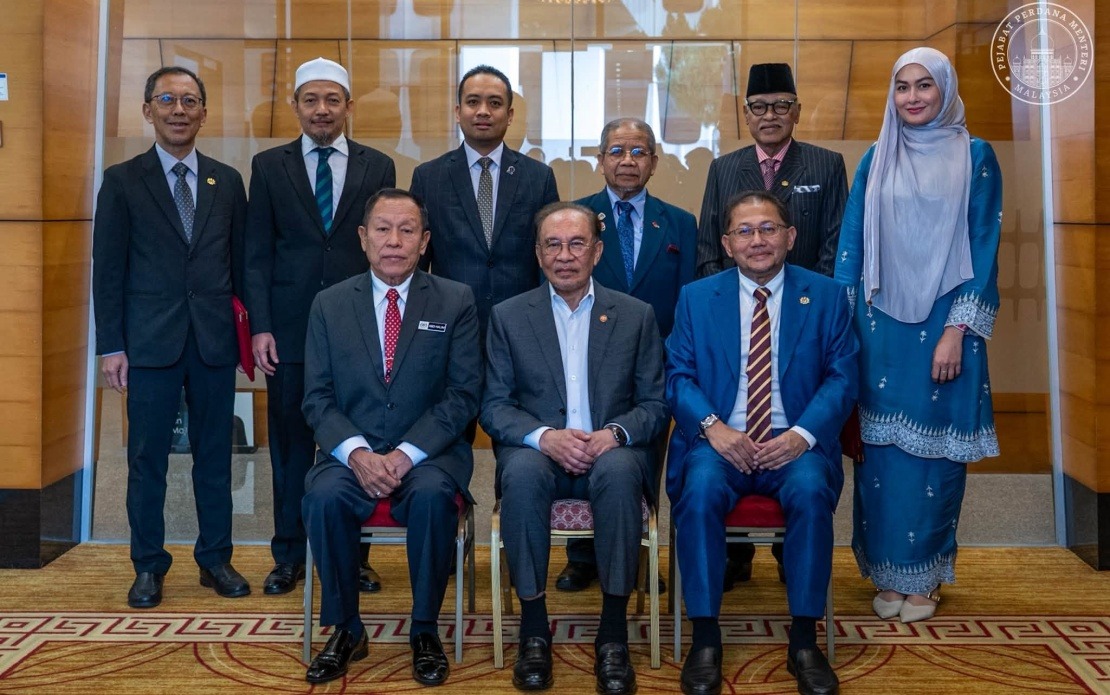
The Prime Minister recently presented letters of appointment to newly selected members of both committees following approval from the Yang di-Pertuan Agong, Malaysia's constitutional monarch. This process reflects the deliberate involvement of the Crown in selecting individuals deemed capable of contributing substantively to the anti-corruption agenda. By personalizing his message to the incoming appointees, Anwar sought to galvanize their commitment to the broader national mission, emphasizing that their diverse professional backgrounds should be harnessed toward a unified goal.
The JKMR's composition deliberately bridges the partisan divide that often characterises parliamentary business in Malaysia. The committee draws its membership from both the Government and Opposition benches, as well as from the appointed Senate, creating a forum where different political perspectives can be aired and debated. This cross-party representation theoretically enables the committee to function as a genuinely independent check on executive power, rather than serving as a rubber-stamp body reflecting only the government's interests. The inclusion of opposition voices provides a countervailing institutional voice that can challenge official narratives around anti-corruption efforts.
Meanwhile, the LPPR operates on a different selection principle, drawing its members not from Parliament but from civil society, the professional classes, and individuals with established records of integrity in public life. These appointments target experienced figures in law, business, academia, and public administration who can bring technical expertise and moral authority to their deliberations. The board's mandate centers on providing advisory services and critical analysis to strengthen anti-corruption institutions, functioning as a bridge between formal government structures and broader societal expectations around governance.
Anwar's remarks come at a time when Malaysia faces sustained international scrutiny over governance standards and corruption perceptions. The country's ranking on global corruption indices remains a concern for policymakers seeking to improve Malaysia's competitive position in attracting foreign investment and maintaining investor confidence. By publicly emphasizing whole-of-society approaches and institutional pluralism, the Prime Minister signals awareness that cosmetic reforms and institutional reshuffles alone cannot address deeply rooted patterns of misconduct.
The emphasis on collective effort reflects a recognition that enforcement agencies, even when adequately resourced and staffed, cannot single-handedly transform a corruption-prone institutional culture. The Malaysian Anti-Corruption Commission and other law enforcement bodies require external pressure and public scrutiny to maintain their independence and prevent regulatory capture by powerful interests. Advisory bodies like the LPPR and oversight committees like the JKMR can provide this external accountability, though their effectiveness depends fundamentally on their willingness to voice dissent and their insulation from political interference.
The private sector's role in this framework extends beyond mere compliance with anti-corruption statutes. Businesses operating in Malaysia, both domestic corporations and multinational enterprises, establish the ethical expectations and commercial norms that either reinforce or undermine official anti-corruption policy. When companies compete primarily on competitive advantage rather than through corrupt practices, they collectively raise the cost of bribery and reduce opportunities for institutional capture. Conversely, when commercial actors view corruption as a routine cost of business, they erode the credibility of government enforcement efforts.
Civil society and ordinary citizens constitute the final tier of this anti-corruption ecosystem. Transparency advocates, investigative journalists, academic researchers, and watchdog organizations generate the public scrutiny and information flows that constrain corrupt behavior. Citizens who report misconduct through formal channels or media outlets create accountability pressure that no enforcement agency could generate independently. However, this requires an environment where whistleblowers face meaningful legal protections and where public interest journalism can operate without excessive intimidation or commercial pressure.
The challenge facing Malaysia's anti-corruption agenda lies not primarily in institutional design but in translating this rhetorical commitment to collective action into sustained behavioral change across multiple sectors. The JKMR and LPPR can generate sophisticated policy recommendations, but implementation depends on executive departments that may resist interference with established practices. The private sector may publicly endorse anti-corruption principles while maintaining informal networks that facilitate corrupt transactions. Civil society actors may face resource constraints or political pressure that limits their investigative capacity.
Anwar's framing of anti-corruption as a collective endeavor reflects international best practice in governance reform. Countries that have successfully reduced endemic corruption, such as Hong Kong and Singapore, combined rigorous law enforcement with institutional checks, corporate accountability, and empowered civil society. These jurisdictions recognized that no single institution possesses sufficient authority or capacity to transform deeply entrenched patterns of misconduct. Rather, sustained improvement requires alignment across institutional actors, all pushing toward the same objective with consistent pressure over extended periods.
The appointment of new JKMR and LPPR members therefore carries symbolic weight beyond the individuals involved. It signals a government commitment to maintaining institutional forums where corruption can be discussed, debated, and combated outside party political frameworks. Whether these bodies can fulfill that role effectively will depend on the independence and assertiveness they demonstrate when investigating complaints or offering advice that contradicts official preferences. The true test of Anwar's commitment to collective anti-corruption efforts will emerge not from the rhetoric deployed at parliamentary proceedings, but from how government institutions respond when advisory bodies and oversight committees present findings that challenge official narratives or implicate powerful interests.

