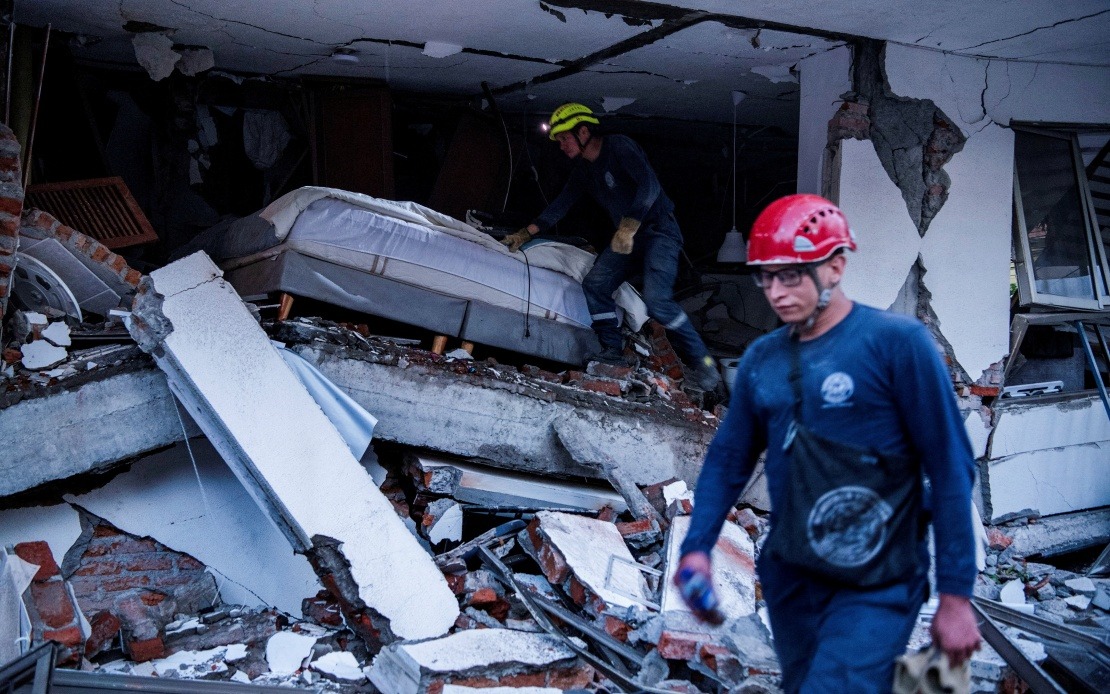
A powerful magnitude 7.4 earthquake that struck western Colombia on Monday morning has claimed at least 132 lives with hundreds more wounded, according to the latest government assessment. Authorities report that more than 570 individuals have sustained injuries ranging from minor to critical, overwhelming medical facilities across the affected region. The tremor has triggered a major humanitarian crisis that is expected to test the country's disaster response capabilities for weeks to come, with entire neighbourhoods reduced to rubble and essential services severely disrupted across multiple jurisdictions.
The seismic event originated near San Jose del Palmar in the department of Choco, striking at 7:34 am local time at a considerable depth of 96 kilometres. The depth of the epicentre likely spared the region from even greater destruction, though the magnitude and proximity to densely populated areas meant significant damage was inevitable. Preliminary assessments suggest the earthquake's impact radiated outward through western Colombia's mountainous terrain, affecting population centres that had limited time to respond to the initial tremor.
The destruction has been concentrated in several major urban centres. Pereira, a city of roughly 400,000 residents, has emerged as the hardest-hit area with 60 confirmed deaths, representing nearly half of the national fatality count. The city of Cali, Colombia's third-largest metropolis, has recorded 15 deaths, while Quibdo in the Choco department has reported eight fatalities. Manizales, another significant regional hub, has confirmed four deaths. These figures underscore how the earthquake's impact has been uneven across the affected zones, likely reflecting differences in building codes, population density, and construction standards.
According to official reports, the disaster has impacted at least 32 cities across Colombia, extending the humanitarian challenge far beyond what initial assessments had suggested. Five departmental capitals—Pereira, Cali, Quibdo, Manizales and Armenia—remain under red alert status, indicating ongoing hazards and the continued possibility of aftershocks causing further damage. This widespread alert status signals to residents and authorities alike that the situation remains fluid and unpredictable, with the potential for cascading emergencies in areas where infrastructure has already been compromised.
Structural damage has been catastrophic in scope. A total of 86 buildings have collapsed entirely, with authorities fearing that the final count could rise substantially as rescue teams conduct more thorough searches through rubble. Beyond complete collapses, thousands of structures have sustained varying degrees of damage, rendering many uninhabitable and creating an acute shelter crisis for displaced residents. The destruction of residential and commercial buildings simultaneously threatens livelihoods and housing security for the affected population.
The earthquake has also severely disrupted the nation's transportation infrastructure. Seven airports across the affected region have suspended operations due to quake-related damage, complicating relief efforts and hampering the movement of rescue personnel and humanitarian supplies. Runway damage, control tower concerns, and structural integrity issues at terminal facilities have necessitated these closures, isolating affected communities and slowing the government's ability to mobilise resources from other regions.
In response to the unfolding crisis, Colombian President Abelardo de la Espriella declared a state of national disaster, a critical decision that activates emergency protocols and mobilises federal resources toward immediate relief and recovery operations. This declaration streamlines bureaucratic processes that might otherwise impede rapid deployment of rescue teams, medical supplies, and temporary shelter for displaced persons. The national disaster declaration also facilitates international cooperation and humanitarian assistance, signalling to global partners that Colombia requires support in managing this catastrophe.
The Chinese Embassy in Colombia activated its emergency response protocols immediately upon learning of the earthquake, initiating systematic checks to account for Chinese nationals throughout the country. As of the latest update, no Chinese citizens have been reported among the casualties, providing some measure of relief to the diplomatic mission. This coordinated embassy response reflects standard international practice for protecting nationals abroad during major disasters and demonstrates how global networks assist in rapid casualty verification.
The earthquake's timing and location compound challenges for Colombian authorities managing this emergency. Western Colombia's mountainous geography complicates access to remote affected areas, potentially obscuring the true scale of destruction in communities that lack reliable communication with regional centres. Landslides triggered by the quake could further isolate villages and impede rescue operations, while damaged water and electrical systems threaten public health in the coming days. The regional Geological Service's precise characterisation of the epicentre location provides researchers and responders with critical information for understanding the earthquake's mechanics and predicting aftershock patterns.
For Malaysian observers and policymakers, this Colombian disaster serves as a sobering reminder of earthquake vulnerability in tectonically active regions and the importance of robust building codes and emergency preparedness frameworks. Southeast Asia, including Malaysia, lies in proximity to significant seismic zones, particularly in Indonesia and the Philippines, making Colombia's experience instructive for regional disaster management specialists. The efficiency with which Colombian authorities and international partners mobilise resources offers lessons in coordination and rapid response that extend beyond the immediate crisis.
The recovery phase will likely span months or years, requiring sustained international support and internal reconstruction efforts. Authorities will need to balance immediate humanitarian needs—shelter, food, medical care—with longer-term challenges of rebuilding infrastructure and restoring economic activity. The psychological impact on survivors and the disruption to educational and business continuity will require attention from mental health professionals and economic development planners alongside search and rescue teams currently engaged in the most urgent work.

