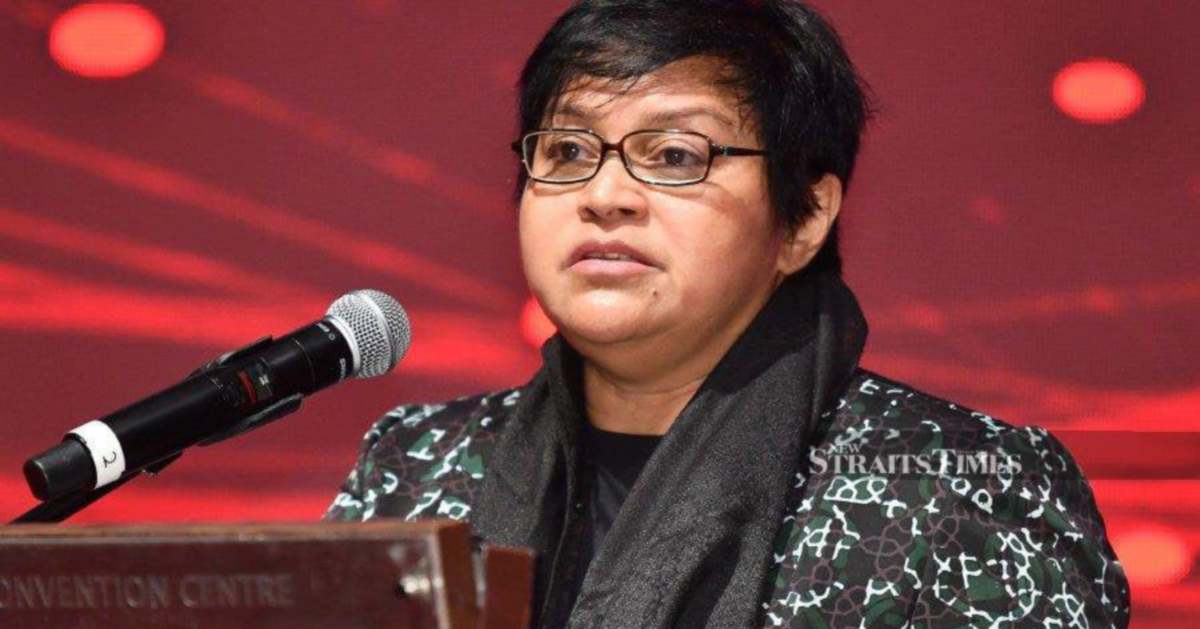
Umno information chief Datuk Seri Azalina Othman Said has urged political parties to refrain from premature speculation about coalition governments in Johor, emphasizing that substantive negotiations should only commence once voters have cast their ballots and the election results are officially declared.
The cautionary stance reflects a broader concern within the party hierarchy about the timing and sequencing of post-election politics. Rather than allowing coalition discussions to dominate the campaign narrative, Azalina's position suggests that Umno prefers to allow the electorate to determine the political landscape first, after which the mathematics of forming government becomes clearer and negotiations can proceed on firmer ground.
This approach carries particular significance in Johor, where the state remains a traditional Umno stronghold despite shifting voting patterns across Malaysia. The state's political configuration has long been a barometer of Malay-Muslim support for the party, making any loss of ground or unusual coalition arrangements a matter of considerable importance to party strategists and the broader Umno constituency.
Azalina's intervention into the timeline of coalition discussions appears designed to prevent rival factions or external parties from claiming that Umno has already secretly negotiated or committed to specific post-election arrangements. Such claims during election campaigns can undermine electoral messaging and create doubt among voters about whether their votes will genuinely shape the final government composition or whether deals have already been struck behind closed doors.
The statement also carries implications for opposition parties and independents contesting in Johor. By setting the expectation that coalition talks are off the table until results are known, Umno is attempting to maintain focus on direct electoral competition rather than allowing opposition figures to build coalitions preemptively or to frame themselves as viable alternatives before polling day.
For Malaysian political observers, Azalina's remarks underscore the delicate balance that ruling parties must maintain. On one hand, parties wish to signal stability and their capacity to govern by indicating potential coalition partners or governance frameworks. On the other hand, revealing too much about coalition preferences risks appearing presumptuous, insulting to voters, or overly calculated in ways that alienate the electorate.
The Johor context is particularly noteworthy given the state's demographic composition and historical voting behaviour. Should the state experience significant political change, it would send powerful signals about Malay and Muslim voter sentiment throughout Malaysia, potentially influencing national politics beyond the state's boundaries. Azalina's emphasis on allowing results to determine coalitions tacitly acknowledges this elevated importance.
The timing of such statements also warrants consideration. Political leaders often use intervention in procedural matters—such as when coalition discussions should occur—as a way of projecting confidence in their party's electoral prospects. By suggesting that talks should wait until results are known, rather than pre-empting outcomes, Azalina may be indicating Umno's expectation of securing a sufficiently strong mandate that coalitions can be negotiated from a position of strength.
Moreover, the declaration establishes a framework that distinguishes between campaign-period speculation and post-election negotiations. This separation serves multiple purposes: it keeps campaign messaging focused on party platforms and individual candidate credentials rather than complex coalition arithmetic, and it preserves the flexibility that parties require once actual electoral numbers become available. Unexpected results, unanticipated changes in seat distribution, or surprising performance by candidates can all reshape which coalitions become viable or desirable.
Azalina's position also reflects lessons learned from previous Malaysian elections where early coalition announcements occasionally backfired, either because they appeared undemocratic, because they alienated swing voters, or because they collapsed when election results proved different from expectations. By advocating for a results-first approach, Umno is positioning itself as respecting the electoral process and allowing genuine democratic choice to precede power-sharing arrangements.
For Southeast Asian readers and Malaysia-watchers, this approach illustrates broader patterns in how dominant ruling parties in the region manage the transition from campaigning to governance. The assertion that coalitions should await results demonstrates awareness that electoral legitimacy remains important even in contexts where certain parties have longstanding dominance.
Looking ahead, Azalina's remarks establish expectations that Malaysian voters and observers will hold Umno and other political parties accountable to. Should any party be discovered to have conducted secret coalition negotiations during the campaign period, or should government formation processes diverge significantly from this stated principle, political credibility could suffer measurable damage. The statement thus functions both as campaign guidance and as a commitment that shapes how post-election politics will unfold.

