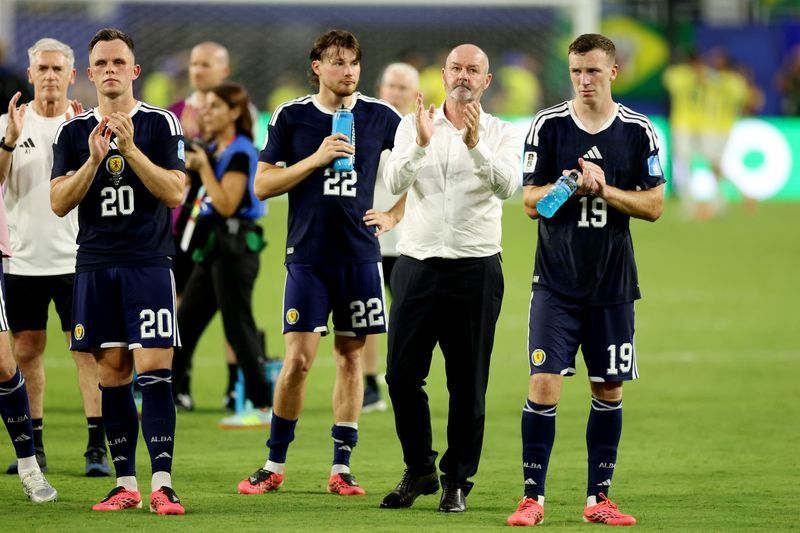
Scotland's first World Cup appearance in 28 years appears destined to end in disappointment following their comprehensive 3-0 defeat to Brazil on Wednesday in Miami. Coach Steve Clarke has effectively written off his team's knockout stage hopes, acknowledging that despite mathematically remaining alive as a potential third-placed qualifier, the reality of their situation and the performances of other contenders suggest their tournament is over. The result capped a frustrating campaign for the Scots, who entered the competition on the back of impressive qualifying credentials but have struggled to translate that form onto football's grandest stage.
Clarke's analysis of the Brazil match was notably candid, pointing to avoidable defensive errors that proved the difference between competition and elimination. Rather than dwelling on what might have been, the Scotland manager accepted the verdict as fair and proportionate to the errors his players committed. When teams at World Cup level are afforded opportunities to exploit their weaknesses, the consequences are severe and immediate. Brazil's clinical finishing punished Scotland's lapses in concentration and positioning, with the South Americans capitalising on the space and time gifted to them by a Scottish backline that struggled with the pace and intensity of world-class opposition.
While Scotland retain three points from their group campaign and technically remain in contention, Clarke's pessimism reflects the likely mathematical reality. With six points from their opening two matches, the Scots would need other results to fall favourably and maintain one of the eight best third-place records across all 12 groups. However, with 20 matches still remaining in the group stage, Clarke is confident that at least two teams with three points will accumulate superior records. Scotland currently holds the sixth-best record among one-point teams, a precarious position that offers little comfort as the tournament progresses. The coach's matter-of-fact assessment suggests he recognises the improbability of their passage rather than clinging to false hope.
The nature of Scotland's defending against Brazil highlighted vulnerabilities that extend beyond tactical adjustments or tactical tweaks. Clarke was particularly critical of how his team handed possession and positioning to Brazil's attack, essentially engineering their own downfall through poor decision-making. The Brazilian players did not need to construct elaborate attacking moves; Scotland's errors created straightforward opportunities that any elite team would capitalise upon. Goalkeeper Angus Gunn made several important interventions that prevented an even more emphatic scoreline, suggesting that the margin of defeat could have been greater given the defensive frailities on display.
Despite the frustration evident in Clarke's post-match comments, he stopped short of directing anger toward his squad. The Scotland boss acknowledged that his players had achieved something remarkable by securing qualification to a World Cup that has eluded the nation for nearly three decades. Getting to the tournament itself represented significant progress for Scottish football, requiring sustained excellence across a lengthy qualifying campaign. Clarke's perspective here is important: the players deserve credit for reaching America, even if their performances once there have fallen short of expectations. His measured tone reflected an understanding that this group had already exceeded many previous generations' achievements.
What became increasingly evident during Scotland's group stage campaign was a performance gap between themselves and elite opponents. Clarke referenced both Morocco and Brazil as examples of teams operating at a higher physical and technical level, and he suggested that Scottish football must address fundamental development issues to compete consistently at this level. The power, athleticism, and technical proficiency demonstrated by these opponents exposed limitations in how Scotland currently develops young players. This is not a matter of tactical tweaking or motivational adjustments, but rather a systemic challenge that will require investment and strategic thinking across Scottish youth development structures.
The coach's comments about player development carry particular weight given his background and experience. As a former Chelsea fullback, Clarke has worked within elite academy systems and understands the resources and infrastructure required to produce players capable of competing on the world stage. His frustration stems from the recognition that Scotland possesses talented individuals but lacks the collective depth and consistency needed to challenge the tournament's genuinely elite nations. The pathway from Scottish youth football to consistent Premier League performances or equivalent continental football remains underdeveloped compared to more successful footballing nations.
Scotland's supporters, the famous Tartan Army, have been one of the positive stories of the tournament, bringing vibrancy and colour to matches across the United States. Clarke went out of his way to praise their contribution and presence, while simultaneously issuing a gentle reminder about perspective. He emphasised that the supporters would not be in America if not for the qualification efforts of this particular squad of players. It is a statement that cuts both ways: yes, the supporters have enhanced the tournament experience, but they arrived specifically because the national team delivered something extraordinary. Clarke's point underscores that removing these players from the equation returns Scotland to its traditional position of watching the World Cup from home.
The broader narrative of Scotland's World Cup participation reflects both progress and frustration within the Scottish football context. Reaching the tournament was an achievement; the manner in which they have performed suggests that qualifying was perhaps closer to the ceiling of current capabilities rather than a platform for genuine tournament progression. Clarke's analysis suggests a recognition that closing the gap to elite nations will require not just tactical improvement but fundamental changes in how Scottish football develops, trains, and integrates young talent. The next qualifying campaign will likely reveal whether this defeat catalyses genuine reform or whether Scotland returns to familiar patterns of promise and underperformance.

