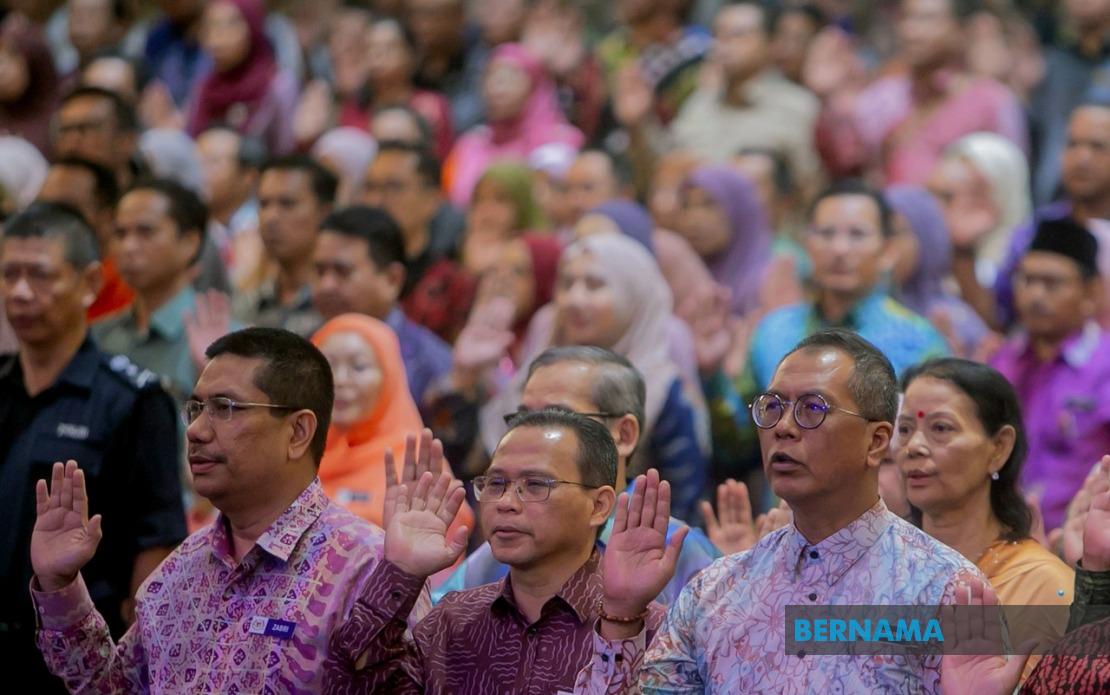
Prime Minister Datuk Seri Anwar Ibrahim has stressed that Malaysia's national strength depends fundamentally on a public service system characterised by robustness, integrity, and unwavering commitment. Speaking at Universiti Islam Selangor in Bangi, Anwar positioned civil servants as the essential backbone supporting the country's ability to maintain policy continuity while advancing broader development objectives. The remarks underscore the government's confidence in the civil service as a vehicle for translating political vision into tangible outcomes across the nation.
Anwar's comments reflect a broader strategic emphasis within his administration on revitalising the public sector as a driver of institutional effectiveness. The Prime Minister indicated that his focus on strengthening leadership capacity and operational efficiency throughout the civil service hierarchy stems directly from his assessment of the sector's potential to deliver results. This approach suggests recognition that policy implementation ultimately rests not merely on legislative frameworks but on the competence, motivation, and ethical foundation of those tasked with executing government programmes at federal, state, and local levels.
The Prime Minister articulated a specific vision for civil servants characterised by three interconnected qualities. First, he emphasised the importance of civil servants maintaining substantive connections with communities they serve, suggesting that distance between government institutions and citizens creates inefficiency and erodes public trust. Second, he stressed the necessity of deep comprehension of the administration's development philosophy, implying that bureaucratic effectiveness requires alignment between individual officials and broader government objectives. Third, he highlighted commitment as an indispensable ingredient, moving beyond technical competence to encompass genuine dedication to public service.
Anwar's formulation suggests that under his leadership, the government views the civil service not merely as an administrative apparatus but as a stakeholder with significant agency in shaping national outcomes. This perspective carries implications for human resource development, training programmes, and the broader culture cultivated within government institutions. By elevating the status of civil servants and framing their role in terms of national contribution, Anwar may be attempting to attract talent to public service and enhance morale within a sector that has faced criticism regarding efficiency and, in some quarters, questions about bureaucratic bloat.
The session in Bangi gathered senior government figures alongside civil servants, indicating the administration's intent to facilitate direct dialogue between political leadership and the bureaucracy. The presence of Selangor Menteri Besar Datuk Seri Amirudin Shari, Chief Secretary to the Government Tan Sri Shamsul Azri Abu Bakar, and Director-General of the Public Service Tan Sri Wan Ahmad Dahlan Abdul Aziz underscored the multi-level nature of this engagement. Such forums potentially serve multiple purposes: they allow political leaders to communicate priorities directly, they provide civil servants with visibility and access to senior decision-makers, and they create spaces for feedback on implementation challenges.
For Malaysian readers and policymakers, the Prime Minister's emphasis on the civil service carries particular resonance given the country's economic challenges and the need for efficient resource allocation. With Malaysia competing in an increasingly complex regional environment and facing pressures to modernise infrastructure, enhance social services, and maintain fiscal stability, the capacity of government institutions to execute policy effectively becomes a competitive factor. A civil service characterised by integrity, capability, and public-centricity represents a foundation upon which other reforms can be built.
The focus on integrity deserves particular attention within the Malaysian context. Historical challenges related to corruption and mismanagement within certain government institutions have prompted repeated reform efforts. By anchoring his vision of civil service reform in integrity-based systems, Anwar signals commitment to addressing these perennial concerns. The emphasis suggests that procedural and structural reforms must be accompanied by genuine cultural transformation within the bureaucracy, fostering environments where ethical conduct becomes normalised and institutionalised rather than exceptional.
Regionally, Malaysia's approach to civil service reform carries implications for broader Southeast Asian governance. As other nations in the region grapple with similar challenges of building effective, accountable public institutions, the strategies Malaysian leadership employs may offer either positive examples or cautionary lessons. The commitment articulated by Anwar to elevate the civil service through enhanced leadership and efficiency aligns with recommendations from development organisations and represents an acknowledgment that good governance depends substantially on public sector performance.
The Central Zone session also reflects a geographic strategy in civil service engagement. Rather than concentrating such forums in Kuala Lumpur, the government has chosen to conduct this event in Selangor, potentially enabling broader participation from officials working in the country's economic heartland. This approach may facilitate dialogue with civil servants whose work directly impacts the lives of millions of Malaysians in the densely populated Klang Valley corridor, where government services intersect with commerce, education, healthcare, and transportation infrastructure at particularly high volumes.
Moving forward, the challenge for the government will involve translating these aspirational statements about civil service transformation into concrete institutional changes. This requires sustained investment in training and professional development, implementation of meritocratic advancement systems that reward competence and integrity, modernisation of technology platforms used by government agencies, and cultivation of leadership qualities among mid-level managers who increasingly shape day-to-day bureaucratic performance. The success of Anwar's civil service agenda will ultimately be measured not by rhetorical emphasis but by observable improvements in service delivery, reduction in corruption, and enhanced responsiveness to public needs across the diverse regions Malaysia comprises.

