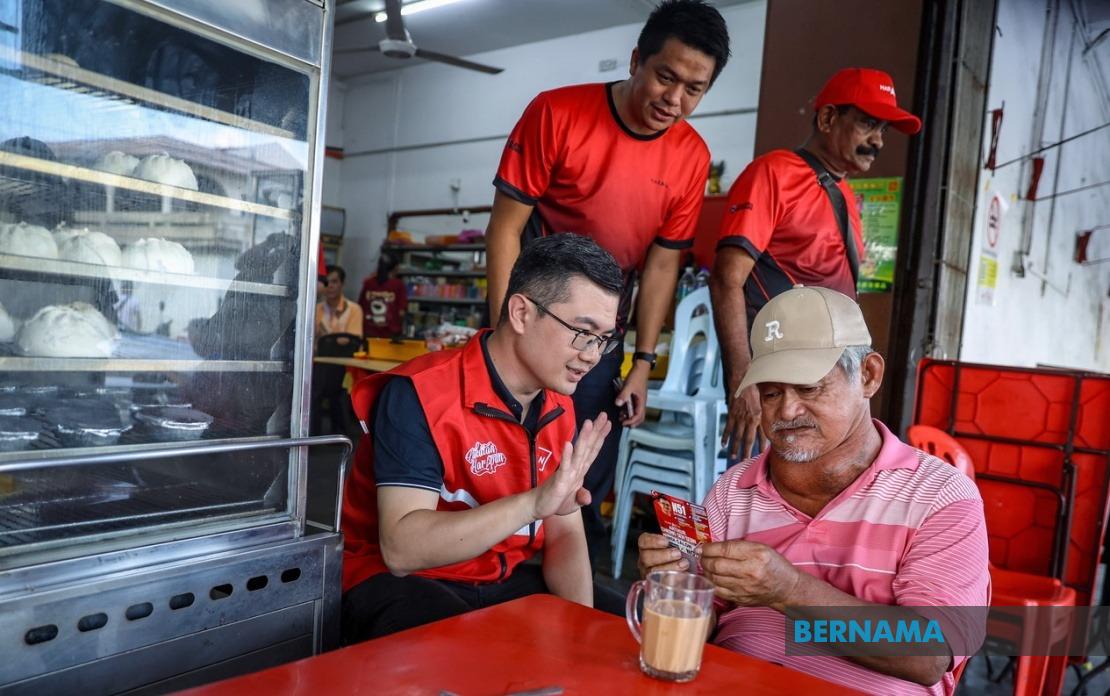
Arthur Chiong Sen Sern, the current Bukit Batu assemblyman, is preparing for a challenging four-cornered contest in the 16th Johor State Election on July 11, confident that his consistent ground presence and focus on local infrastructure will help him improve on his razor-thin 137-vote victory from 2022. The 36-year-old Pakatan Harapan candidate believes his track record of regular constituency visits and responsive governance since taking office will resonate with voters in a seat of nearly 50,000 registered electors, reversing the narrow margin that defined his initial electoral success.
Chiong's path to re-election reflects a broader trend among incumbent representatives across Malaysia who face pressure to consolidate support and demonstrate tangible returns on their mandate. His narrow triumph two years ago—achieved with 9,439 votes in a previous four-cornered battle that included Barisan Nasional's Datuk S. Suppayah, Perikatan Nasional's Tan Heng Choon, and Warisan's Lee Ming Wen—created an imperative to show voters he deserved another term. Rather than viewing the slender margin as a setback, Chiong has framed it as motivation to deepen his engagement with residents across all backgrounds, regardless of their political leanings or demographic profile.
The assemblyman's strategy centres on demonstrating responsiveness to bread-and-butter issues that directly affect household welfare and safety. His administration has prioritised addressing chronic flooding in communities such as Kampung Rahmat and Kampung Seri Paya, working closely with the Department of Irrigation and Drainage to implement structural improvements. By positioning himself as a visible presence during weather-related emergencies, Chiong aims to build trust and underscore his commitment to residents' immediate concerns. This hands-on approach—arriving early at flood scenes and coordinating relief efforts—represents a deliberate effort to create memorable interactions that voters associate with effective governance at the state assemblyman level.
Beyond crisis response, Chiong has directed resources toward grassroots development projects intended to benefit younger constituents and organised communities. His allocation of RM20,000 toward upgrading lighting facilities at a futsal court exemplifies the type of incremental improvements that enhance quality of life in semi-urban and rural constituencies. By supporting non-governmental organisations and targeting popular recreational spaces, he creates visible evidence of state-level support for community amenities, fostering goodwill among families and youth groups. These initiatives, though modest in monetary terms, establish Chiong as a representative who listens to local needs and acts within his budgetary constraints.
Chiong's outreach to the Felda settler communities reflects recognition that agricultural and plantation-dependent populations remain an important electoral bloc in many Johor constituencies. Regular visits to these areas, coupled with responsive assistance on land, infrastructure, and livelihood issues, demonstrate understanding of the unique challenges faced by smallholder farmers and their families. This targeted engagement is particularly relevant in Bukit Batu, where Felda settlements may constitute a meaningful share of the electorate. By cultivating strong relationships with Felda leadership and resident associations, Chiong seeks to build a stable voting coalition less susceptible to swing voting.
The political landscape for Bukit Batu's 2024 contest appears more fragmented than in 2022. Chiong faces competition from R. Kumaran, the PKR Kulai chief who now represents Barisan Nasional, suggesting a shift in BN's internal dynamics or candidate selection strategy. The presence of M. Premanand representing Ikatan Demokratik Malaysia-MUDA indicates that reformist and younger-voter-focused opposition has gained institutional footing since the last election. G. Tamili, running for Bersama, and independent candidate Kamaruzaman Ali further dilute the vote, potentially benefiting the candidate with the strongest ground machinery and voter loyalty. This multiplicity of challengers raises the stakes for Chiong, who must ensure that his 2022 supporters remain mobilised whilst persuading persuadable voters that his tenure merits continuation.
Chiong's public expressions of gratitude toward Pakatan Harapan leadership, particularly Prime Minister Datuk Seri Anwar Ibrahim, signal his integration within the coalition's machinery and expectations. Such acknowledgement underscores the importance of PH's institutional support, campaign resources, and messaging alignment in buttressing his candidacy. Anwar Ibrahim's dual role as Prime Minister and PH chairman carries particular weight; his endorsement amplifies Chiong's legitimacy and suggests that the national coalition invests confidence in the assemblyman's electability and performance. This national-state alignment can mobilise party volunteers, facilitate voter outreach, and elevate Chiong's profile beyond the confines of a state assembly contest.
Chiong's strategic emphasis on continuous ground engagement rather than crisis response alone reflects maturation in his political approach. Rather than relying solely on moments of visibly addressing emergencies, he has built a broader narrative of consistent presence and incremental improvement. This patient, cumulative strategy aims to inoculate him against accusations of opportunism or absent representation. By illustrating that his constituency work spans ordinary times—not merely during flooding or calamities—he positions himself as a permanent fixture in residents' civic life, a representative genuinely invested in long-term community development rather than transactional political engagement.
For Malaysian observers tracking Johor politics and electoral dynamics, Chiong's campaign offers insight into how first-term representatives in competitive seats navigate the transition from underdog to incumbent. His reframing of a narrow victory as inspiration rather than vindication, combined with tactical focus on service delivery and visible presence, represents a pragmatic playbook for survival in volatile constituencies. The question remains whether his demonstrated work over two years will persuade sufficient voters to expand his margin, or whether the four-cornered contest will again yield a tight outcome decided by organisational efficiency and voter turnout patterns.
Early voting will commence on July 7, giving campaigners a final week to mobilise core supporters and persuade swing voters. The actual election on July 11 will determine whether Chiong's strategy of combining consistent grassroots engagement with targeted development projects resonates with a broader coalition than his 2022 base. His ability to improve on the previous 137-vote margin will serve as a barometer of whether ground-level service delivery and visible presence translate into electoral expansion in an era when voter volatility remains high across Malaysian constituencies.

