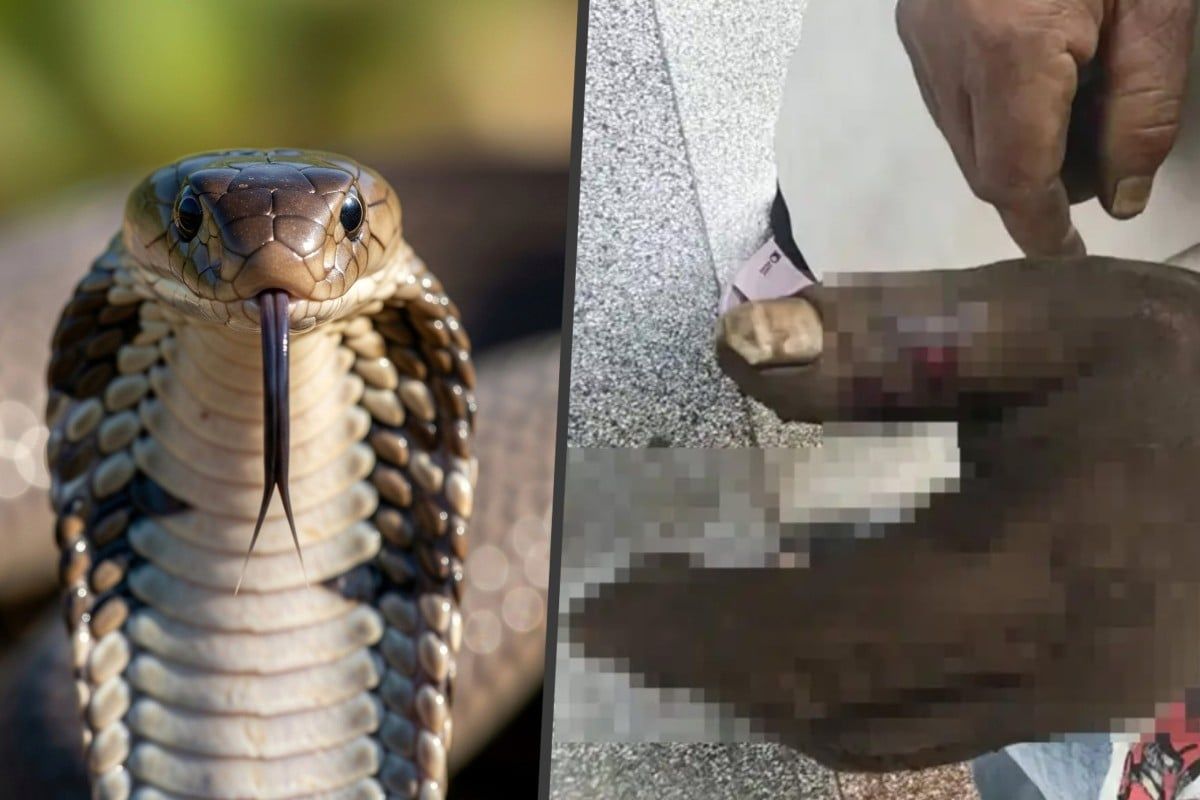
A dramatic medical emergency unfolded in Yuanyang county, Yunnan province, when a farmer suffered a cobra bite in his field, only for his rescue to create an unexpected second victim. The incident has drawn attention to the persistence of dangerous first-aid myths that circulate in popular culture, particularly through television dramas that regularly depict venom extraction as an effective lifesaving technique. Medical authorities in the region now view the case as a sobering reminder of how fictional portrayals can lead well-meaning people toward practices that modern medicine firmly rejects.
The sequence of events began ordinarily enough. The farmer was conducting routine work in his fields when a cobra struck his finger, delivering a bite that immediately caused concerning symptoms. His hand rapidly swelled to an alarming degree, and he experienced dizziness and weakness—classic indicators of envenomation. Observing her husband's deteriorating condition, his wife made a decision that would soon place her own life in jeopardy. Drawing on imagery she recalled from television programs, she immediately began sucking directly from the wound site in an attempt to extract the cobra's venom, disregarding any protective precautions whatsoever.
While the farmer was transported to hospital and began receiving appropriate medical care, his wife's condition took a troubling turn hours after her intervention. She developed progressive numbness affecting her mouth, tongue, face, and extremities—unmistakable signs of cobra venom poisoning. The following day brought increased severity, as she experienced profound fatigue that prompted her family to seek emergency care. Both patients ultimately arrived at Honghe Prefecture No 3 People's Hospital, where medical teams diagnosed them with cobra envenomation and administered antivenom serum alongside supportive treatments. Within days, as their conditions stabilised, both were discharged.
The incident has provided medical professionals in Yunnan with an opportunity to address widespread misconceptions about snakebite management. Doctors at the hospital emphasised that the venom-sucking method represents one of the most persistent and dangerous myths in emergency medicine. The explanation for its ineffectiveness lies in human oral anatomy: the mouth's mucous membranes contain an exceptionally rich network of capillaries that facilitate rapid absorption of toxins. When venom contacts these tissues, it enters the bloodstream with remarkable speed, meaning the rescuer becomes poisoned rather than the victim being helped.
Beyond the absorption problem, snake bites themselves present a physical challenge to extraction-based approaches. The puncture wounds created by fangs typically resemble nothing more than tiny pinholes—deceptively small openings that belie the depth of venom penetration. Within seconds of injection, the neurotoxins and haemotoxins begin diffusing into surrounding tissue and entering the circulatory system through subcutaneous pathways. By the time anyone attempts extraction, the venom has already dispersed far beyond any surface location where it might theoretically be removed. Attempting to create larger wounds through incision compounds the problem rather than solving it.
The medical consensus against cutting snakebite wounds stems from multiple hazards beyond the psychological feeling of taking action. Enlarging the initial puncture creates unnecessary trauma that risks excessive bleeding and infection, potentially transforming a manageable envenomation into a multi-system medical crisis. Similarly, applying heat or cold to the bite site—both intuitive-seeming interventions—causes additional tissue damage without conferring any therapeutic benefit. These outdated methods persist in popular memory despite decades of medical evidence demonstrating their ineffectiveness and actual harm.
Instead, modern snakebite protocols emphasise minimisation of systemic absorption and rapid access to antivenom treatment. Medical professionals recommend that bite victims remain as immobile as possible, as movement accelerates venom circulation. Emergency services should be contacted immediately, and victims should be transported to hospitals capable of administering species-specific antivenom. The only actionable information a victim or bystander can gather involves careful observation of the snake's characteristics—colour patterns, head shape, body size—and ideally obtaining photographs. This intelligence allows physicians to identify the species and deploy appropriate antivenin therapy without delay.
The Yunnan case arrives amid a pattern of snakebite incidents in China that regularly captivate social media audiences and spark intense discussion about emergency medicine literacy. A particularly harrowing example occurred in Guangdong province just months prior, when a 14-year-old student experienced a bite on school grounds from an unidentified reptile. The teenager initially dismissed the incident, experiencing no acute pain and having no clear memory of what had attacked him. Hours later, as numbness spread through his limbs and his vision blurred, he reported the suspected snakebite to school officials. By the time medical teams administered antivenom, the situation had become genuinely life-threatening; physicians subsequently stated that a delay of merely one to two additional hours would have resulted in respiratory failure and likely death.
Online reactions to the Yunnan farmer's case have reflected both practical recognition and emotional appreciation of the wife's intentions. Social media commentators widely acknowledged that television dramas frequently present misleading medical information that can prove dangerous when applied to real emergencies. One observer noted that the incident served as a stark demonstration that entertainment media cannot be relied upon as a guide for actual emergency response. Simultaneously, others recognised the profound love and desperation that motivated the wife's actions, understanding her willingness to risk herself despite lacking medical knowledge or certainty about appropriate intervention.
For Malaysian and broader Southeast Asian audiences, the incident carries particular relevance given the region's tropical climate and high prevalence of venomous snakes. Many communities across Malaysia, Thailand, Indonesia, and neighbouring countries face regular encounters with cobras, kraits, and pit vipers in agricultural and residential settings. Public health messaging about snakebite management remains inconsistent across the region, and access to appropriate antivenom can vary significantly depending on location and local medical infrastructure. The Yunnan case underscores the critical importance of disseminating accurate emergency protocols through channels that reach rural populations and farming communities where snakebite risks remain highest.
Healthcare authorities across Southeast Asia might productively examine whether public education campaigns adequately address snakebite first aid, particularly in languages and media formats accessible to rural populations. The persistence of dangerous myths suggests that repeated, targeted messaging through trusted local sources may be necessary to displace ingrained folk remedies and television-derived practices. Training programmes for community health workers and village medical volunteers could emphasise the specific clinical signs of severe envenomation and the paramount importance of rapid transport to facilities equipped with appropriate antivenom supplies. Such efforts might prevent future incidents where well-intentioned rescue attempts inadvertently create additional victims requiring emergency intervention.

