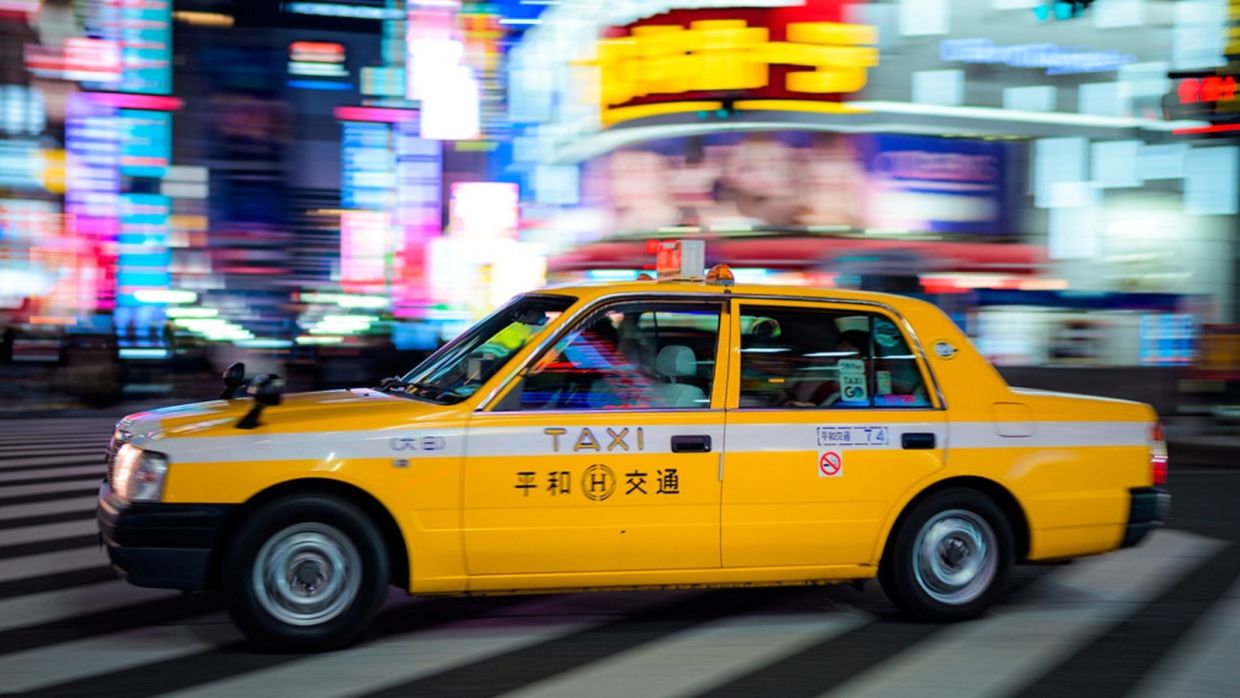
Tokyo authorities have apprehended a 41-year-old Chinese national, Wang Xiaoyu, on suspicion of orchestrating an illegal taxi network that circumvented Japan's transportation regulations by leveraging a legitimate vehicle-leasing framework. The operation, which targeted inbound tourists arriving at one of Asia's busiest travel hubs, represents a growing enforcement challenge as Japan grapples with regulatory compliance in its expanding ride-sharing sector during a period of unprecedented visitor arrivals.
Wang stands accused of violating the Road Transportation Act by leasing vehicles registered to Phoenix Kokusai, a chauffeur service company he effectively controlled, to individuals who were not formally employed by the organisation. These drivers then conducted commercial transportation services without proper licensing, ferrying Chinese tourists and other passengers through Tokyo's congested metropolitan area. The scheme operated between February and April this year, though investigators believe Wang's broader operation extended further back in time, potentially involving significantly larger sums of money than initially suspected.
The investigation centred on Tokyo's Haneda Airport, where multiple taxi operators filed complaints about unlicensed vehicles aggressively soliciting passengers. This grassroots reporting mechanism proved crucial in triggering the Tokyo Metropolitan Police Department's intervention. Officers discovered that the vehicles in question bore green licence plates—a designation intended for vehicles operating under Japan's "urban hire" category, a transportation model that has technically existed since 2014 but has exploded in prevalence as international tourism to Japan has surged dramatically.
Under the urban hire framework, vehicles must operate with advance passenger reservations and operate under minimum two-hour charter contracts, distinguishing them from traditional taxis that pick up customers on-demand at designated ranks or street corners. However, this regulatory mechanism has proven remarkably porous in practice. The reliance on green licence plates as the primary identifier of compliance has created what law enforcement officials acknowledge as a readily exploitable loophole—drivers operating vehicles with these plates are virtually indistinguishable from legitimate operators to external observers, making systematic enforcement extraordinarily difficult without targeted investigation.
Wang's operation generated substantial revenue by functioning as a middleman between the vehicle-leasing company and drivers seeking access to legitimately registered vehicles with green plates. According to the Tokyo Metropolitan Police Department's financial analysis, Wang collected approximately ¥38 million (around US$233,000) from eighteen different drivers between November 2024 and May 2026 in the form of usage fees paid for operating under the Phoenix Kokusai name. This arrangement essentially gave drivers instant credibility and regulatory cover, as their vehicles appeared to be operating within legal parameters despite the absence of proper licensing or contractual relationships.
Three additional Chinese nationals, all functioning as drivers within the scheme, have also been arrested on Road Transportation Act violations. Wang himself has partially refuted certain allegations, suggesting potential disputes about his precise level of knowledge or involvement in the drivers' specific operational decisions. Nevertheless, the evidence compiled by police paints a picture of coordinated, systematic exploitation of regulatory gaps rather than isolated individual violations.
The proliferation of urban hire vehicles provides important context for understanding both the appeal of this scheme and the scale of Japan's transportation infrastructure challenges. Official Ministry of Land, Infrastructure, Transport and Tourism data reveals that registered urban hire vehicles nearly tripled between fiscal 2013 and fiscal 2024, expanding from 3,868 vehicles to 8,850 vehicles. This explosive growth directly correlates with Japan's record-breaking inbound tourism recovery following the COVID-19 pandemic, as international visitors increasingly outnumber domestic travellers in many urban centres.
For Malaysian readers and Southeast Asian observers, this case illuminates broader challenges facing tourism-dependent economies attempting to manage rapid visitor growth while maintaining regulatory integrity. Japan's experience demonstrates how legitimately created frameworks designed to accommodate transportation demand can become vectors for organised exploitation when enforcement mechanisms lag behind operational sophistication. The scheme's reliance on targeting Chinese tourists suggests cultural and linguistic networks may facilitate recruitment and organisation of such operations, raising questions about how destination countries should balance openness to visitors with vigilance against organised service frauds.
The incident also reflects persistent tensions within Japan's transportation sector between traditional incumbent operators (conventional taxis) who have invested substantially in regulatory compliance and emerging models offering greater flexibility. Complaints from legitimate taxi drivers essentially served as the enforcement mechanism here—a reactive rather than proactive approach that leaves significant vulnerabilities unaddressed between detection points.
Police authorities acknowledge that the green licence plate system, while theoretically clear in its requirements, lacks effective real-world verification mechanisms for street-level enforcement or traveller verification. The ease with which vehicles could appear compliant while operating completely outside regulatory bounds presents a systemic vulnerability that extends beyond Wang's specific operation. Similar schemes could likely operate successfully in Tokyo or other major Japanese cities without detection if operators exercise adequate operational caution.
The case will likely accelerate discussions within Japan's transportation policy circles about whether the urban hire category requires additional safeguards, more stringent identification requirements, or enhanced digital verification systems. For countries throughout Southeast Asia managing similar surges in inbound tourism, the Tokyo situation offers a cautionary case study: regulatory frameworks must evolve in parallel with transportation demand, and compliance oversight mechanisms require continuous updating to prevent exploitation by sophisticated operators familiar with system vulnerabilities.

