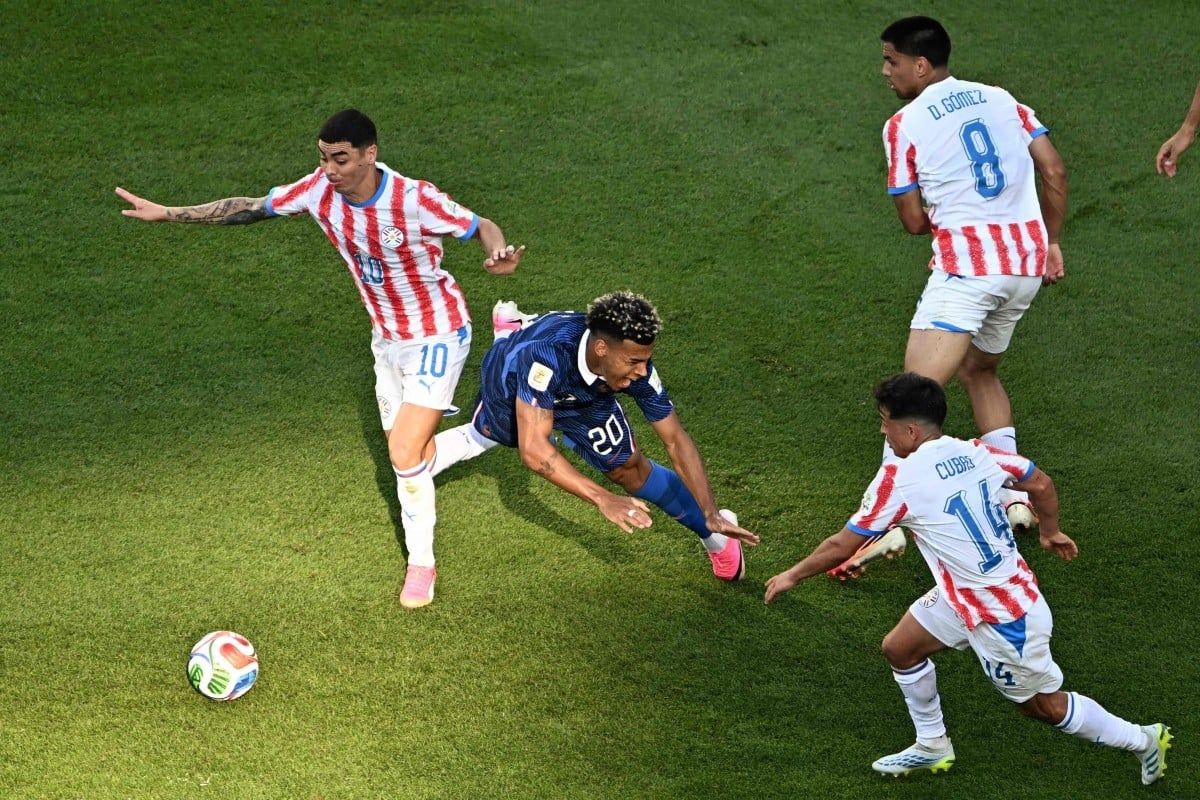
Chinese football enthusiasts have flooded social media platforms with complaints about Paraguay's aggressive and defensive approach during their World Cup last-16 encounter with France in Philadelphia on Saturday, a match that saw the European side advance on the strength of a late Kylian Mbappe penalty. The match itself generated considerable discussion across China's digital landscape, though largely for reasons that had little to do with skill or tactical brilliance, focusing instead on the conduct of both teams and the perceived inadequacy of Uzbekistan referee Ilgiz Tantashev in managing the game.
The nature of Paraguay's approach—prioritising physical intimidation and disruption over attacking play—became the dominant talking point among Chinese viewers. Rather than attempting to construct meaningful offensive opportunities, the South American side appeared dedicated to making life uncomfortable for their French opponents through persistent fouls and what many observers characterised as cynical challenges. This defensive strategy, while occasionally employed by underdog teams facing superior opposition, proved sufficiently pronounced that it overshadowed the technical aspects of the encounter and left viewers with the impression of watching a match about attrition rather than sport.
Chinese football audiences have developed particular views about refereeing standards, largely shaped by their familiarity with domestic league official Ma Ning, who has earned the nickname "card master" among supporters for his willingness to brandish yellow and red cards liberally. The contrast between Ma's approach and Tantashev's considerably more lenient handling of the Paraguay-France match proved striking to observers. The Uzbek official distributed just four cards during the ninety minutes—three to France and only one to Paraguay—despite the contest being marked by numerous minor infractions, niggling fouls, and what many felt constituted excessive physical contact that merited stronger intervention.
The disparity in card distribution drew sharp criticism on Chinese social media platforms, with users pointing out that what unfolded would likely have resulted in a dramatic reduction in Paraguay's player count had Ma Ning been in charge. One popular comment suggested that the South American side would have been reduced to a solitary goalkeeper remaining on the field. Others drew comparisons between Tantashev's permissive approach and the stricter standards that Chinese audiences associate with better-quality refereeing, implying that the official's performance fell significantly short of international standards. The consistency with which French players rather than Paraguayans found themselves in the referee's notebook particularly rankled observers who felt the distribution reflected bias rather than objective assessment.
Beyond concerns about disciplinary decisions, some Chinese commentators raised questions about Tantashev's fundamental competence and fairness. While acknowledging that South American teams traditionally employ more physical approaches than their European counterparts, several observers suggested the referee appeared to be actively favouring Paraguay despite the balance of play and conduct. One particularly pointed remark suggested Tantashev was "wearing a Paraguay jersey," while another noted that the referee seemed intent on "taking France out" of the competition. These accusations, while unsubstantiated, reflected a broader perception that the official's management proved inadequate and potentially compromised.
Mbappe, unsurprisingly, became the primary target of Paraguay's aggressive attentions throughout the encounter. The French forward absorbed considerable physical punishment during the ninety minutes but managed to maintain his composure and ultimately settle the match from the penalty spot. After the final whistle, Mbappe demonstrated awareness of the tactical approach deployed against him and his teammates, acknowledging that both sides understood "what kind of match it was going to be." Rather than characterising himself or France as victims of rough play, the star forward adopted a pragmatic stance, noting that his team possessed the capability and willingness to respond in kind, suggesting France could "get hands dirty" and play "ugly football" when circumstances demanded.
Mbappe's comments betrayed no sense that Paraguay's physical approach had genuinely troubled France, instead projecting confidence that the reigning world champions retained sufficient quality and adaptability to overcome any tactical scheme. The French captain dismissed any notion that France had been unprepared for what awaited them in Philadelphia, suggesting his team had anticipated the challenge and possessed the necessary tools to manage it. This measured response contrasted sharply with the indignation expressed by Chinese social media users, who appeared less inclined toward such philosophical acceptance of rough play.
France coach Didier Deschamps corroborated his captain's account, revealing that unsuitable conduct extended beyond the playing field into the technical areas. The 57-year-old former World Cup-winning coach indicated that Paraguay's coaching staff engaged in verbal abuse and unsporting behaviour along the sidelines, behaviour that Deschamps characterised as unnecessary and unwelcome. This additional context suggested that Paraguay's approach constituted a comprehensive strategy rather than isolated incidents, with aggressive tactics embedded throughout the team's operations. Deschamps' willingness to address these matters publicly indicated a level of irritation that suggested the conduct had crossed established norms even in competitive international football.
Incidents involving Paraguay goalkeeper Orlando Gill further illustrated the broader pattern of conduct that Chinese observers found objectionable. Gill was captured on camera throwing a ball at Mbappe's back after the French forward had declined to acknowledge him at the final whistle—a petulant response that the goalkeeper subsequently attributed to the emotional intensity of the occasion. However, Chinese commentators proved unforgiving of this explanation, interpreting the action as evidence of poor sportsmanship rather than understandable frustration. One notable comment characterised Paraguay as having lost "not only the match, but also their characters," suggesting the team's overall conduct reflected negatively on their character and professionalism.
For Malaysian and Southeast Asian readers, this match highlighted broader patterns in international football competition regarding physical approaches, tactical discipline, and refereeing standards. The discussion among Chinese supporters reflects how fans across Asia evaluate football through lenses shaped by domestic experiences and expectations. The controversy surrounding Tantashev's performance also raises questions about the consistency and quality of match officiating in major tournaments, matters of particular interest to regional audiences who regularly consume international football.
The incident underscores the challenges faced by referees managing matches between teams with significantly different tactical philosophies and cultural approaches to the sport. Paraguay's defensive intensity, while perhaps justified given the quality differential, ultimately proved insufficient and generated considerable criticism for crossing into unsporting behaviour. The match provided a fascinating case study in how football conduct is perceived and evaluated across different cultural contexts, with Chinese audiences applying standards shaped by their own domestic experience to international competition.
France's progression to face Morocco in the quarter-finals proved decisive, but the manner of victory and the surrounding controversy ensured the match would be remembered for reasons beyond the final result. The Chinese social media response demonstrated that football's appeal extends beyond the technical excellence displayed on the pitch, encompassing broader questions about sporting conduct, referee competence, and what constitutes acceptable competitive behaviour. These ongoing discussions contribute to a richer understanding of how international football is perceived and evaluated across Asia's diverse football communities.

