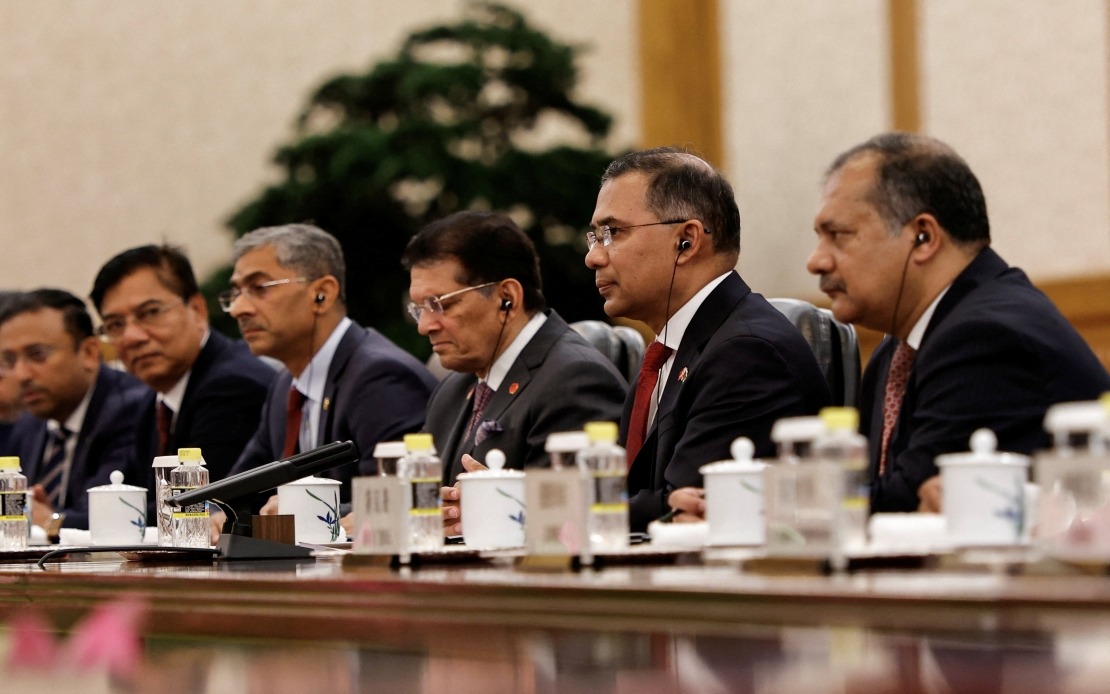
During a high-level visit to China from June 22 to 26, Bangladesh Prime Minister Tarique Rahman secured pledges from twelve Chinese companies totalling US$9.2 billion in potential investments, marking a significant deepening of economic ties between the two nations. The proposals, announced through Bangladesh state media, underscore China's continued strategic focus on South Asian infrastructure and industrial expansion while presenting substantial opportunities for Bangladesh to modernise its economy and expand employment.
The investment slate reflects a carefully coordinated approach to Bangladesh's development priorities, with Chinese firms targeting sectors that align directly with the government's long-term growth strategy. Energy infrastructure, logistics networks, manufacturing capabilities, and educational facilities all feature prominently in the proposed commitments, suggesting coordination between Beijing and Dhaka at governmental level to maximise impact across multiple economic domains. This breadth signals confidence among Chinese investors in Bangladesh's business environment despite recent political transitions and macroeconomic challenges.
Port modernisation emerges as a cornerstone of the investment programme, with Mongla Port securing particular attention. The China Civil Engineering Construction Corporation has proposed a US$650 million commitment to develop and operate the Mongla Port Economic Zone, which would encompass substantial warehousing and logistics capabilities. This investment directly supports Bangladesh's ambition to transform Mongla into a major regional trading hub, potentially diverting significant cargo flows from traditional routes and positioning the port as a gateway for Southeast Asian trade. The project's scale reflects broader Chinese interests in maintaining influence over critical maritime infrastructure across Asia.
The infrastructure development sector captures the largest single investment commitment, with Sichuan Road and Bridge Group pledging US$4.5 billion specifically for upgrading the Dhaka-Chattogram highway through a public-private partnership model. This corridor represents one of Bangladesh's most commercially vital arteries, linking the capital to the country's primary port city and industrial zones. Enhanced connectivity between these centres would unlock significant productivity gains across the manufacturing and export sectors, while also reducing logistics costs that currently burden Bangladeshi businesses competing in regional markets.
Energy security and environmental sustainability feature prominently in the proposed Chinese commitments, reflecting global trends toward cleaner power generation. Shanghai SUS Environment Company intends to invest US$890 million in developing waste-to-energy plants, addressing Bangladesh's mounting waste management challenges while generating electricity. Similarly, China Future Energy Group Holding Limited has outlined a US$250 million programme for gas field exploration and development, which would reduce Bangladesh's dependence on energy imports and enhance long-term energy independence. These complementary approaches suggest a comprehensive strategy to upgrade Bangladesh's energy infrastructure while addressing environmental concerns.
Circular economy and advanced manufacturing initiatives represent emerging investment frontiers. Zhongxin Environmental Protection Group has proposed US$1.65 billion for an e-waste recycling project at the Payra Port Industrial Zone, transforming waste materials into valuable resources while creating manufacturing employment. Huaxin Textile Industry Company has committed US$190 million to establish a 200 megawatt captive solar power plant within the same zone, while simultaneously expanding recycled cotton and yarn production and manufacturing cylindrical lithium batteries. These interconnected projects exemplify industrial ecosystem development, where waste streams from one process feed into feedstock for another, maximising economic value extraction.
High-technology sectors are attracting Chinese investment as Bangladesh seeks to upgrade its industrial base beyond traditional low-wage manufacturing. Shenzhen Kaifa Technology's proposed US$250 million investment in manufacturing electric smart metres reflects growing demand for smart grid technologies across Asia as utilities modernise their distribution networks. Such investments could position Bangladesh as a regional manufacturing hub for electrical equipment, creating higher-value employment opportunities than conventional garment manufacturing. This sector diversification aligns with Bangladesh's medium-term economic strategy to reduce vulnerability to textile sector volatility.
Logistics and cold-chain infrastructure investment signals recognition of Bangladesh's potential as a regional distribution centre. SF Express's US$180 million project to develop cold-chain logistics and warehouse facilities in Mongla addresses a critical gap in Bangladesh's capability to handle perishable goods, particularly agricultural exports destined for regional markets. Enhanced cold-chain capacity would enable Bangladeshi farmers and food processors to access premium markets in Southeast Asia, potentially generating higher returns and supporting rural income growth. The 230-kilometre proximity to Dhaka positions Mongla strategically for both domestic collection and international distribution.
The investment announcements carry significant implications for Bangladesh's perennial challenge of managing its trade deficit with China. Commerce Minister Khandakar Abdul Muktadir explicitly identified this concern, noting that expanded Chinese investment would help rebalance bilateral commercial relationships. While Bangladesh has become a major manufacturing economy, its imports of Chinese machinery, raw materials, and finished goods substantially exceed exports, creating persistent trade imbalances. By establishing Chinese manufacturing facilities and processing operations within Bangladesh, some of these supply chains could be internalised, improving Bangladesh's current account position and generating local employment.
For Malaysia and other Southeast Asian economies, these developments warrant careful observation. Bangladesh's investment success could intensify regional competition for Chinese capital and manufacturing relocation. The scale and diversity of Chinese commitments to Bangladesh—totalling nearly US$10 billion—exceed typical annual foreign direct investment allocations to many regional competitors. Southeast Asian countries dependent on similar Chinese investment flows should assess whether Bangladesh's political stability under the Tarique Rahman government and its strategic location along China's Belt and Road corridors are factors that might redirect capital flows away from alternative destinations within the region.
The broader context of Bangladesh-China cooperation extends beyond individual projects. The joint communiqué issued at the conclusion of Tarique's visit emphasised upgrading trade partnerships, strengthening supply chain integration, and supporting multilateral trading frameworks. These declarations suggest structural economic deepening rather than episodic investment booms. The planned Chinese industrial park in Chattogram, while not yet quantified in investment terms, would institutionalise ongoing Chinese manufacturing presence within Bangladesh's largest port city, creating permanent institutional infrastructure for bilateral commercial activity.
Implementation challenges remain substantial, however. Bangladesh's track record on infrastructure project delivery contains notable delays and cost overruns, and managing twelve simultaneous major Chinese projects will test government capacity significantly. Environmental concerns surrounding waste-to-energy plants and e-waste processing could generate domestic controversy if not properly addressed through transparent regulatory frameworks. Currency fluctuations and Bangladesh's historical balance-of-payments pressures may complicate project financing, requiring careful coordination with international financial institutions. Success will ultimately depend on execution capacity and maintenance of political stability necessary to shepherd these investments through multi-year development cycles.

