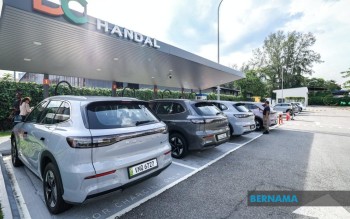
Malaysia's emerging electric vehicle sector is attracting significant interest from international charging infrastructure providers, particularly from China, which has spent years building one of the world's most sophisticated EV ecosystems. Xi'an LINCHR New Energy Technology Co Ltd, a major player in smart charging solutions, has positioned itself to support Malaysia's transition to electrified transport by collaborating with local partners and adapting its proven technologies to the unique conditions found in Southeast Asia's largest economy.
The symbiotic relationship between vehicle adoption and charging networks presents a critical challenge for Malaysia as it seeks to accelerate EV penetration over the next three to five years. According to LINCHR chairman Yuan Qingmin, delays or shortcomings in either component will inevitably throttle growth in the other, making coordinated infrastructure development essential. This understanding reflects China's own experience, where early investment in nationwide charging networks helped catalyze rapid EV uptake and positioned the country as the world's dominant electric vehicle manufacturer.
However, Yuan has emphasized a crucial distinction that often escapes policymakers and industry planners: technological prowess in one market does not automatically translate to success elsewhere. While China's approach to charging infrastructure has proven effective domestically, wholesale replication of Chinese models would likely underperform in Malaysia without substantial modifications. The company's participation in the Global Automotive and Technology Expo at the Malaysia International Trade and Exhibition Centre from August 26 to 28 reflects its commitment to engaging stakeholders across government, energy, and automotive sectors to demonstrate how thoughtful localization can drive sector success.
LINCHR's partnership with Swift Bridge Technologies Sdn Bhd exemplifies the kind of collaborative approach needed to establish viable charging infrastructure. By combining LINCHR's technological expertise with Swift Bridge's local market knowledge and manufacturing capabilities, the two companies are developing comprehensive solutions that address standards, product design, engineering specifications, and system deployment. This approach recognizes that sustainable technology transfer requires more than licensing agreements or equipment sales—it demands genuine partnership in research, development, and continuous improvement.
One concrete example of LINCHR's localization efforts illustrates the practical thinking behind its strategy. Malaysia's hot and humid tropical climate, combined with coastal proximity in many regions, creates corrosive conditions that can degrade electronics far more rapidly than in China's continental climate zones. Recognizing this challenge, LINCHR adopted oil-immersed insulation designs for the printed circuit boards in its charging stations, a modification specifically engineered to resist salt spray corrosion. Such adaptations may seem incremental, but they directly impact system longevity, maintenance costs, and overall reliability—factors that determine whether charging infrastructure becomes a trusted asset or a problematic liability.
Standardization and testing protocols represent another crucial dimension of localized technology transfer. The tripartite cooperation agreement signed in March by LINCHR, Swift Bridge, and Malaysia's Standards and Industrial Research Institute (SIRIM) establishes a framework for developing charging infrastructure testing and certification standards tailored to local conditions and requirements. This collaboration simultaneously upgrades Malaysia's equipment testing laboratories, building domestic capacity for ongoing quality assurance and innovation. Such institutional development ensures that Malaysia is not perpetually dependent on foreign expertise but develops indigenous capability to evaluate and improve charging technologies.
Yuan's assertion that LINCHR commands more than 70 per cent of China's market share in testing technology solutions underscores the company's technical sophistication and competitive standing. However, this dominance in China's market provides no guarantee of success abroad without strategic adaptation. International expansion, he notes, fundamentally requires working with local technology partners and investing in region-specific research and development. Companies that attempt overseas market entry by simply exporting proven products often discover that what works well at home encounters unexpected obstacles in different operating environments, regulatory frameworks, and user expectations.
The stakes for Malaysia are considerable. As the country pursues its commitment to reducing carbon emissions and positioning itself as a regional leader in clean technology adoption, the reliability and effectiveness of charging infrastructure will directly influence whether EV ownership becomes an attractive option for mainstream consumers or remains a niche pursuit for early adopters. A network of poorly maintained or frequently non-functional chargers would severely damage confidence in electric vehicle viability and delay Malaysia's energy transition by years.
Beyond immediate charging solutions, Yuan identifies an emerging frontier where charging infrastructure and vehicle intelligence converge. Future electric vehicles will function not merely as transportation devices but as mobile energy storage and distribution platforms. Vehicles parked at homes, offices, or other locations could accept electrical charges during off-peak hours and feed electricity back into the grid during peak demand periods, transforming the energy system's dynamics. This vision of vehicle-to-grid integration represents a fundamental reimagining of how transportation and energy infrastructure interact, with profound implications for grid stability, renewable energy integration, and consumer economics.
Malaysia's position at this critical juncture offers both challenge and opportunity. The country can either adopt a passive stance, waiting for foreign providers to dictate technological standards and infrastructure solutions, or it can engage proactively with international partners like LINCHR to build localized capabilities while maintaining technological competitiveness. Yuan's emphasis on adaptation over replication suggests a maturity in thinking about technology transfer that developing nations often lack. By insisting on genuine localization rather than superficial adoption, Malaysia can build an EV charging ecosystem that is both internationally competitive and deeply suited to local realities, positioning the nation as a credible model for other Southeast Asian countries navigating similar transitions.

