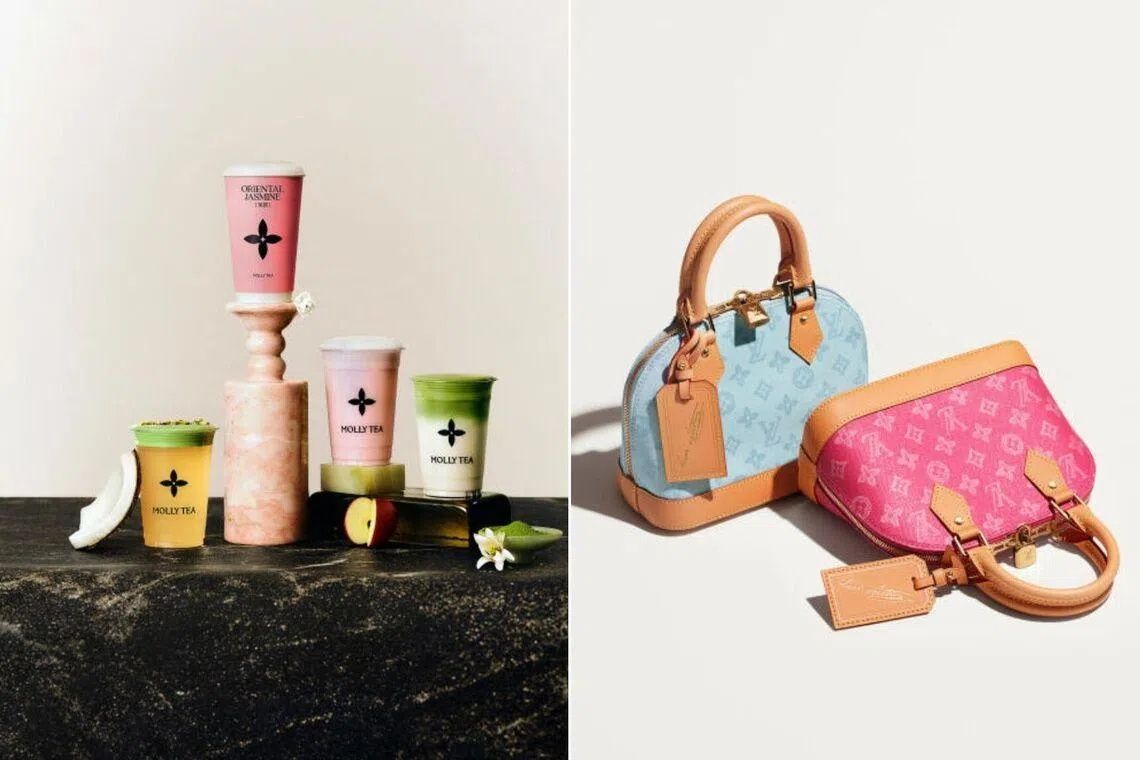
A Chinese court has ruled against homegrown milk tea brand Molly Tea in a high-profile trademark dispute with luxury goods giant Louis Vuitton, ordering the Shenzhen-based company to pay 10.3 million yuan (approximately US$1.5 million) and issue a public apology. The Suzhou Intermediate People's Court determined that Molly Tea and an affiliated franchise outlet in Wuzhong district had violated seven of Louis Vuitton's registered four-petal flower graphic trademarks, a decision that has triggered intense public debate on social media and raised broader questions about intellectual property rights in China.
The lawsuit, initiated by Louis Vuitton in May 2025, concluded on 29 June with the court's decisive judgment against the tea chain. Molly Tea has signalled its intention to challenge the ruling at a higher court, setting the stage for a potentially lengthy legal battle that will likely further test how Chinese courts balance trademark protection with the use of traditional design motifs. The case centres on whether Molly Tea's four-petal flower emblem—the company's primary brand identifier—too closely resembles the French conglomerate's iconic monogram pattern to the point of causing consumer confusion.
The underlying tension stems from how Molly Tea has sought to establish its brand identity since March 2024. The company and associated entities filed multiple trademark applications featuring floral designs with the China National Intellectual Property Administration, predominantly covering restaurant services, accommodation, advertising, and convenience food sectors. The intellectual property office rejected most of these applications, permitting registration only for the trademark displaying the Chinese characters for "Molly Tea" itself. This pattern of rejections suggests that Chinese authorities had already identified potential conflicts with existing marks, creating a factual foundation upon which the Suzhou court ultimately based its decision.
The verdict has generated extraordinary public interest online, with the dispute becoming a trending topic across Chinese social media platforms. A hashtag discussing Louis Vuitton's lawsuit against Molly Tea for the 10.3 million yuan damages has accumulated more than 360 million views, while a related discussion about the invalidation of Molly Tea's trademark-like design has attracted over 18.7 million reads. This unprecedented level of engagement reflects not merely curiosity about a commercial dispute, but deeper societal concerns about how intellectual property law functions in China and whether it fairly accommodates both multinational corporations and domestic businesses.
Public opinion on the matter remains decidedly mixed, revealing a generational and ideological divide within Chinese consumer and business communities. Supporters of the court's decision argue that Molly Tea's floral emblem demonstrates unmistakable visual similarity to Louis Vuitton's globally recognised monogram, leaving little room for distinguishing the two brands in consumers' minds. Conversely, critics contend that significant visual differences exist between the designs and that the two companies operate in entirely different market segments—luxury goods versus affordable daily beverages—making genuine consumer confusion unlikely. This disagreement underscores a fundamental question: at what point does similarity become infringement, and does market separation matter when trademarks cross conventional category lines?
Another significant strain of online commentary has questioned the originality of Louis Vuitton's signature pattern itself, with some observers asserting that the French luxury brand's design draws inspiration from traditional Chinese cultural motifs. These voices argue that if floral patterns originate in Asian cultural heritage, no single company should claim exclusive rights to such designs. This perspective taps into broader nationalist sentiment in China regarding intellectual property and the protection of cultural resources, particularly as Western brands expand their influence in Asian markets. The debate highlights tensions between respecting established trademark law and recognising collective cultural ownership of design elements.
Kang Lixia, a partner at Beijing Standzer IP Firm, has provided professional insight into the legal complexities surrounding potential appeals. She explained that either dissatisfied party may contest the ruling, though success depends substantially on the appellant's capacity to present compelling evidence demonstrating original and distinctive design characteristics. Crucially, Kang emphasised that floral patterns derived from traditional Chinese culture constitute part of the shared public domain and remain available for use by multiple parties. This principle would theoretically support Molly Tea's position, yet it collides directly with another established legal framework that advantages earlier registrants.
The Chinese Trademark Law operates on a "first to file" principle that grants trademark rights to whichever applicant registers earliest when multiple parties seek identical or similar marks for identical or similar goods. Subsequent applications face rejection regardless of the applicant's own investment in brand development. More problematically for Molly Tea, Louis Vuitton's status as an earlier-registered and exceptionally well-recognised mark entitles it to cross-class protection that extends beyond its conventional luxury goods categories. This expansion means Louis Vuitton's trademark rights can legally shield the company against use of similar designs in completely unrelated product sectors, including beverages. This doctrine fundamentally constrains how much flexibility newer applicants enjoy when selecting commercial identifiers, even if those designs draw on shared cultural heritage.
Liu Bin, an intellectual property lawyer from Beijing Zhongwen Law Firm, has advocated for measured analysis of the case while highlighting a crucial distinction between protecting cultural heritage and protecting commercial marks. Under Chinese law, trademark protection for figurative marks does not require perfect identity between the disputed sign and the registered trademark; instead, courts focus on whether ordinary consumers are likely to experience confusion. Liu emphasised that the central puzzlement troubling the public concerns the appropriate balance between permitting use of traditional Chinese cultural patterns and preventing commercial exploitation that misleads markets. Since such motifs remain public resources historically, many citizens believe no entity should enjoy monopolistic control over their application.
Yet Liu simultaneously stressed that intellectual property protection extends beyond mere graphic similarity to encompass the brand recognition companies cultivate through commercial use of traditional elements. The law distinguishes between preserving cultural patterns themselves—which should remain available to all—and protecting the specific commercial marks that companies develop when deploying cultural motifs in trade. This nuanced position suggests that while traditional designs warrant continued accessibility to preserve cultural continuity, companies that register commercial marks built on those cultural elements merit legal protection against confusion and market disruption caused by competing marks. The challenge lies in maintaining this equilibrium without allowing either multinational corporations or domestic enterprises to monopolise cultural patrimony through aggressive trademark registration strategies.
The Molly Tea case carries particular significance for Malaysia and the broader Southeast Asian region, where domestic consumer brands increasingly compete with established international players in food and beverage sectors. Malaysian businesses developing their own milk tea and food service brands face comparable trademark challenges, particularly when drawing aesthetic inspiration from shared East Asian cultural motifs. The ruling establishes precedent suggesting that Chinese courts will rigorously enforce trademark rights even when disputed marks employ traditional design elements, and that cross-class protection extends robust safeguards to early-registering international brands. Malaysian enterprises must therefore carefully differentiate their branding strategies and conduct thorough trademark searches across multiple jurisdictions before committing substantial resources to product development and market launch.
Furthermore, the case illuminates how intellectual property disputes increasingly function as proxies for broader conversations about cultural ownership, commercial fairness, and the appropriate boundaries of trademark monopolies in developing Asian economies. As regional competitors grow more sophisticated and ambitious, questions about whether established multinational trademark holders should enjoy seemingly unlimited protection become more contentious. Southeast Asian governments and business communities might consider whether existing trademark frameworks adequately balance protecting legitimate commercial interests against enabling small and medium enterprises to compete fairly with multinational corporations. The resolution of Molly Tea's appeal could reshape how Chinese courts calibrate these competing interests, potentially influencing trademark enforcement practices throughout Asia and affecting how regional businesses navigate increasingly complex intellectual property landscapes.

