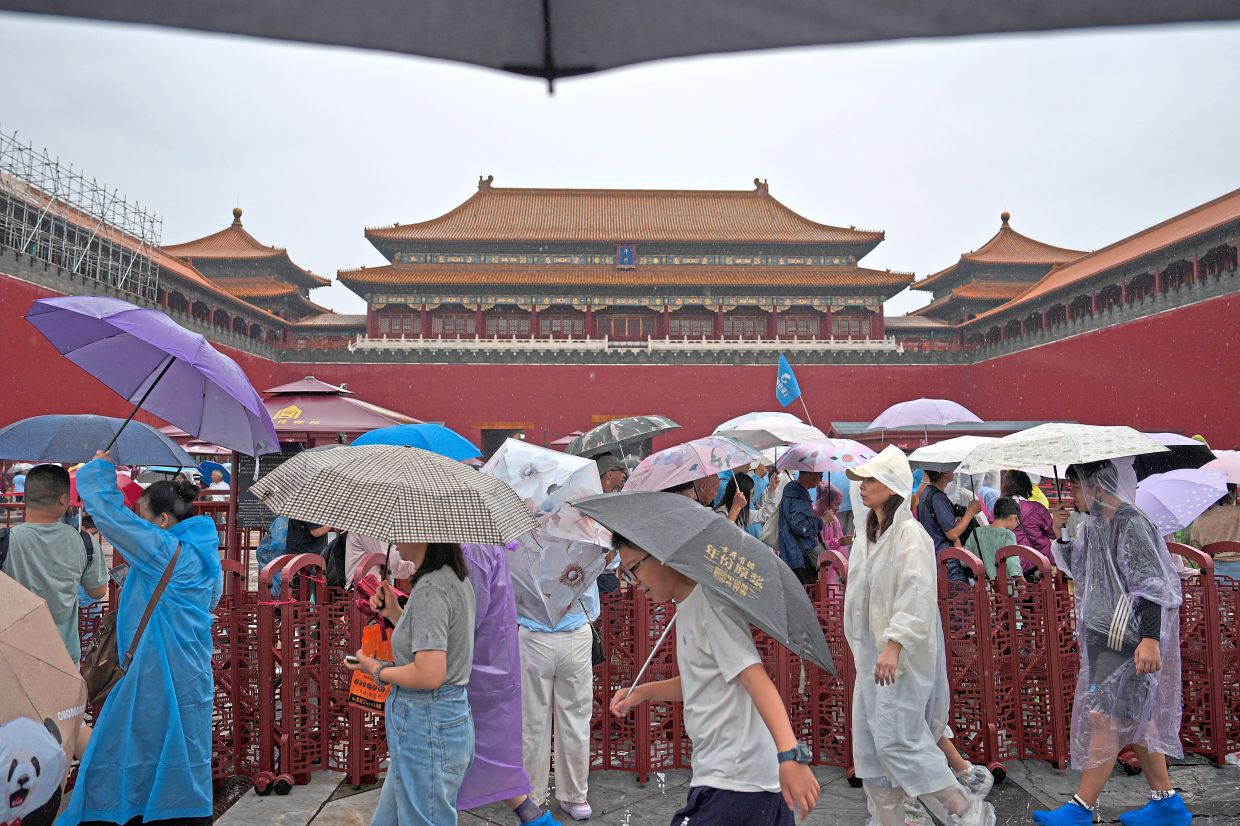
China has successfully reversed years of tourism decline, with foreign visitor numbers reaching 35 million in 2025—the first time arrivals and spending have surpassed pre-pandemic levels. This recovery marks a turning point for the world's second-largest economy, which had struggled to rebuild international tourism confidence following years of strict Covid-19 restrictions that damaged its global reputation and fractured established travel routes. The milestone places China among Asia's premier tourism destinations, trailing only Japan and Malaysia in the region while substantially outpacing Thailand.
The strategic pivot began in 2023 when Beijing launched an ambitious visa-free travel programme covering 50 countries, but initial results proved sluggish as pandemic memories lingered and international flight connectivity remained limited. However, a dramatic acceleration beginning in 2024 reveals how Chinese authorities have refined their approach through targeted digital marketing, government investment, and an unexpected boost from global geopolitical shifts. The rebound carries significant implications for Southeast Asian tourism markets, which now face intensified competition as China repositions itself as an essential regional destination.
Visa-free entry has emerged as the campaign's centrepiece, accounting for over 70 per cent of foreign arrivals last year—a 50 per cent increase from 2024. The first half of 2026 saw 18 million people entering from visa-free countries, representing a 20 per cent surge in overall foreign arrivals. Nations benefiting most include Asian peers such as South Korea, Russia, Malaysia and Thailand, with Beijing experiencing notable influxes of Vietnamese and Russian visitors. Conversely, Japanese arrivals have declined following diplomatic tensions between Beijing and Tokyo, illustrating how tourism patterns reflect broader geopolitical relationships within the region.
The Chinese government has backed its marketing vision with substantial resources. Beijing allocated an additional CNY2.64 million (RM1.26 million) in 2026 to manage increased visitor numbers and finance online publicity initiatives—an unusually generous local expenditure in a period of constrained fiscal conditions. Shanghai committed at least CNY1.6 million to promotional campaigns on platforms including Expedia and Booking.com. Local authorities have also incentivised travel agencies to hire foreign-language tour guides, recognising that language barriers and navigation challenges remain significant friction points for international visitors.
Social media has proven decisive in reshaping perceptions, particularly among younger travellers who discover China through content creators rather than traditional guidebooks. The viral phenomenon of "Chinamaxxing"—where Western citizens emulate Chinese lifestyle habits such as consuming hot tea—has created organic promotional momentum. Simultaneously, Chinese officials have navigated the country's "Great Firewall" restrictions to establish official accounts on X, TikTok and other platforms banned domestically, directly engaging international audiences. Chongqing's deputy director general of tourism Zhu Mao exemplifies this approach, explicitly pursuing internet fame through influencer partnerships and celebrity endorsements, including basketball star Stephen Curry.
Pew Research Centre data from 2025 shows that favourable perceptions of China reached record highs across numerous countries during this period, partly reflecting global reassessment of the United States under Donald Trump's returned presidency. This geopolitical recalibration has created psychological space for China to rehabilitate its international image through tourism soft power—a strategic objective leadership has pursued for years. Marketing consultancy founder Olivia Plotnick observed that Shanghai now competes directly with Tokyo in visitors' imaginations, suggesting a fundamental reordering of Asia's tourism hierarchy.
Content promoting China's authentic everyday experiences rather than exclusively heritage sites has proven particularly compelling. Visitors increasingly explore high-technology retail environments at Huawei and DJI flagship stores, visit theme-park-style Pop Mart outlets, and experience local dining at Haidilao hot-pot restaurants. This shift toward experiential and contemporary consumption differs markedly from traditional tourism focused on the Great Wall or terracotta warriors. French history student Virgile Kebaili, visiting for the first time, spent two weeks traversing Chengdu, Chongqing, Xi'an and Beijing, returning home with Chinese cigarettes—priced six times cheaper than in France—and memories of posing for photographs with locals and participating in museum interviews.
Geopolitical disruptions have inadvertently benefited China's tourism recovery. The conflict in West Asia has elevated airfares for Gulf region transit and redirected international passenger flows through Chinese hubs. State-controlled carriers including China Eastern, Air China and China Southern have captured increased passenger volumes precisely because their ticket prices remain substantially lower than foreign competitors who have not fully restored pre-pandemic route capacity to China. This cost advantage particularly attracts price-sensitive travellers and transit passengers seeking to avoid higher prices on Western airlines.
China's retail sector has reaped immediate benefits from tourism spending after years of sluggish domestic consumption and a troubled real estate market. Miniso's flagship Shanghai store experiences international visitors comprising up to 70 per cent of foot traffic during certain hours, attracted by exclusive collaborations featuring characters from Chiikawa, Sanrio, Harry Potter and Disney properties. The global beauty brand Judydoll, owned by Joy Group, achieved tenfold growth over two years through tourism-driven demand, generating over CNY600 million (RM363.88 million) in overseas retail sales last year with particularly strong performance in Vietnam and Japan. International consumers have discovered that specialist services—including dental cleaning at one-fifth US costs—offer substantial savings unavailable domestically.
Yet structural challenges persist in transforming tourism curiosity into sustained demand. China's predominantly cashless urban systems create substantial barriers for foreign visitors lacking local bank accounts, digital payment wallets or phone numbers required for digital transactions. Tourists cannot access mainstream global applications including Google, Instagram and WhatsApp without technically illegal VPNs, creating communication and navigation frustration. Language support remains inconsistent across major cities. Emerging solutions including Kora, an artificial intelligence tourist guide chatbot that has served tens of thousands of visitors since launching in early 2026, attempt addressing these friction points by streamlining ride-hailing, restaurant reservations and translations.
From an economic perspective, China's tourism sector remains underdeveloped relative to its potential. Despite recovering arrivals, inbound tourism receipts remain less than one-third of American levels, while per-capita visitor spending of approximately US$2,240 (RM9,163) represents only 40 per cent of mature tourism economies' averages. Tourism accounted for less than 0.5 per cent of China's national GDP in 2025, dramatically lagging specialist tourism economies such as Spain and Thailand where the sector comprises approximately 8 per cent of economic output. This disparity indicates substantial revenue expansion potential if China resolves accessibility barriers and increases per-visitor spending through enhanced hospitality experiences.
Singapore-based Claire Thum exemplifies the emerging tourist profile—initially unaware of China beyond stereotypical attractions, she discovered Shanghai through Instagram reels showcasing minimalist villas, misty limestone peaks and dramatic skylines. Her first visit encompassed the viral perfumery To Summer, snowboarding simulation experiences and Japanese sportswear shopping. She now plans subsequent journeys targeting far-flung regions including Yunnan, Xinjiang and Harbin. This trajectory from social media discovery to repeat visitation, with deepening regional exploration, represents the marketing model Chinese authorities have successfully engineered.
China's tourism renaissance carries profound implications for Southeast Asian competitors. Malaysia, Thailand and Vietnam risk losing market share as Chinese destinations become simultaneously more accessible and more culturally compelling to international audiences. The successful marriage of visa-free travel policy, government-backed marketing infrastructure and organic social media virality has created a replicable playbook that other regional economies might emulate. For Malaysian readers, this represents both a competitive threat to domestic tourism sectors and a signal regarding China's accelerating regional integration through cultural exchange and economic interdependence.

