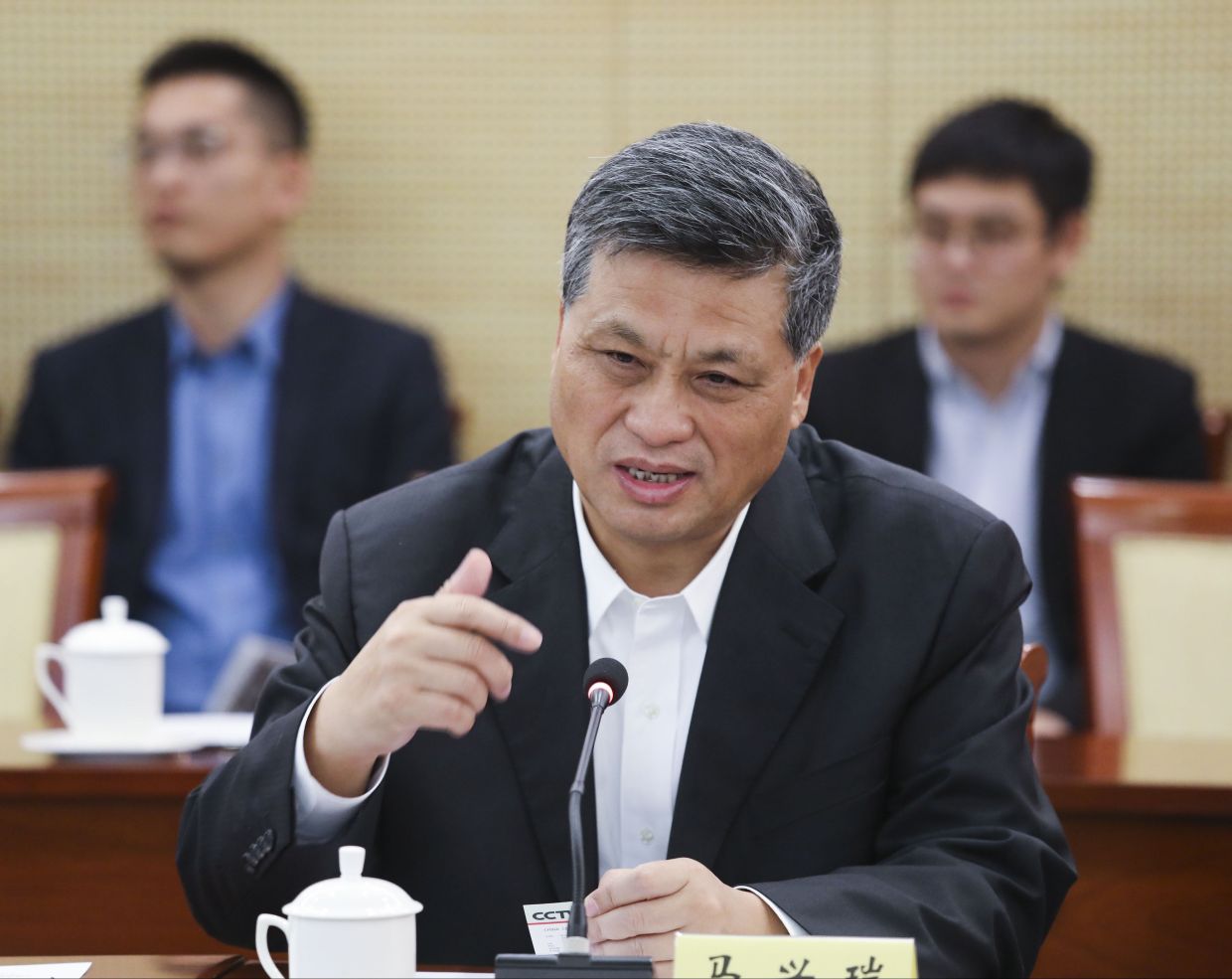
The Communist Party of China has formalized charges against Ma Xingrui, a 67-year-old former Politburo member and one-time leader of the country's space programme, linking his immediate family to what party investigators describe as systematic and pervasive corrupt practices. The Central Commission for Discipline Inspection, China's premier anti-corruption watchdog, submitted its report on Ma's misconduct to the Politburo for review on June 30, which the party's leadership subsequently approved, according to state media announcements made this week. This development marks a significant escalation in President Xi Jinping's ongoing campaign to root out graft within the upper echelons of party leadership, a phenomenon virtually unknown in recent decades.
Ma's trajectory through China's political and technocratic establishment illustrates the reach of the current anti-corruption offensive into strategically important sectors. Before his appointment as party secretary of Xinjiang, the northwestern autonomous region, in 2021, Ma had risen through progressively senior positions in Guangdong province, including stints as deputy party secretary, party chief of Shenzhen, and ultimately provincial governor. His earlier career in aerospace was particularly distinguished, having helmed the China Aerospace Science and Technology Corporation from 2007 to 2013, during which he also directed the nation's manned space programme and commanded the new-generation carrier rocket initiative. This background in both civilian space exploration and regional administration placed him at the intersection of technological advancement and political control, positions that Beijing considered crucial for consolidating authority in sensitive frontier territories.
The formal charges against Ma paint a portrait of systematic exploitation of public authority for private enrichment. According to the disciplinary commission's findings, Ma improperly accepted monetary gifts and facilitated the purchase of residential properties by family members at below-market rates, arrangements that constitute flagrant violations of party conduct standards. More seriously, investigators discovered evidence of what the party terms "power-for-sex and money-for-sex transactions," a euphemistic reference to sexual coercion tied to the exercise of official power. Beyond these personal transgressions, the report emphasises that Ma actively abetted his relatives' ability to leverage his official position for commercial advantage, thereby institutionalising corruption within his household and enabling what the commission describes as a culture of graft suffusing his entire family unit.
The scope of Ma's alleged misconduct extended well beyond personal enrichment into the systematic abuse of administrative authority. Investigators determined that Ma wielded his governmental power to steer business contracts, property development projects, and employment opportunities toward individuals and enterprises willing to provide financial rewards. Through intermediaries and family members, he allegedly accumulated substantial sums of money and valuable property through patently illegal channels, a pattern that suggests sophisticated mechanisms for disguising ill-gotten gains. The disciplinary report also indicates that Ma failed in his supervisory responsibilities toward subordinates, deliberately or negligently overlooking serious breaches of law and party discipline committed by staff members under his direct command, thereby permitting misconduct to proliferate throughout his administrative apparatus.
Particularly damaging to Ma's standing within the party hierarchy is the finding that he resisted full disclosure during the commission's initial investigation phase, choosing instead to provide incomplete and misleading accounts of his activities. This obstruction, combined with the discovery that his corrupt conduct persisted after Xi Jinping's landmark 2012 anti-corruption proclamations and the establishment of stringent official conduct regulations, demonstrates what the party characterises as brazen disregard for leadership authority. The severity of these findings prompted the disciplinary commission to recommend that all assets acquired through corrupt means be stripped from Ma, with the matter transferred to the judicial system for criminal prosecution. The language employed in the formal charges—describing his conduct as "extremely serious in nature" and characterising his influence as "extremely bad"—signals the party's determination to pursue maximum penalties.
Ma's fall from grace represents part of a broader purge within China's political elite that has reached unprecedented proportions within a single leadership cycle. With his removal from the Politburo, the twenty-five-member body that serves as the Communist Party's governing council has contracted to twenty-one members, a reduction partially attributable to the concurrent removal of two senior military figures. He Weidong, the former vice-chairman of the Central Military Commission that oversees all armed forces under Xi's direct authority, was expelled from both the party and military in October on unspecified grounds. This simultaneous targeting of civilian and military leadership within the Politburo signals Xi's consolidation of power through systematic elimination of potential rivals and authority challengers.
The intensification of investigations into Xinjiang officials in recent months reveals a deliberate focus on the autonomous region, an area of paramount strategic and political importance to Beijing. Beyond Ma's case, investigators have brought charges against Chen Weijun, former executive vice-chairman of Xinjiang's regional government, whose investigation became public in December, and Li Xu, ex-deputy commander of the Xinjiang Production and Construction Corps, whose case surfaced in January. This clustering of high-profile probes within Xinjiang's bureaucratic and security establishment suggests either genuine endemic corruption within regional governance structures or, alternatively, a strategic recalibration of Beijing's control apparatus in a region where stability and loyalty remain perpetually contested.
For Southeast Asian observers and Malaysia's policy community, the implications of Ma's downfall extend beyond internal Chinese party politics. The aerospace sector represented a domain where Ma accumulated substantial influence, and the cascade of investigations subsequently ensnaring numerous former colleagues from the China Aerospace Science and Technology Corporation indicates that technical expertise and administrative authority have become increasingly precarious positions within Xi's governance model. This pattern reflects a broader consolidation wherein technical or managerial competence alone offers no protection against political purges, a dynamic that may reshape Beijing's approach to regional cooperation in emerging technologies and infrastructure projects throughout Southeast Asia. The demonstrated willingness to prosecute Politburo-level officials, previously considered insulated from such consequences, signals a fundamental shift in how China's leadership manages internal governance and projects power throughout its sphere of influence.

