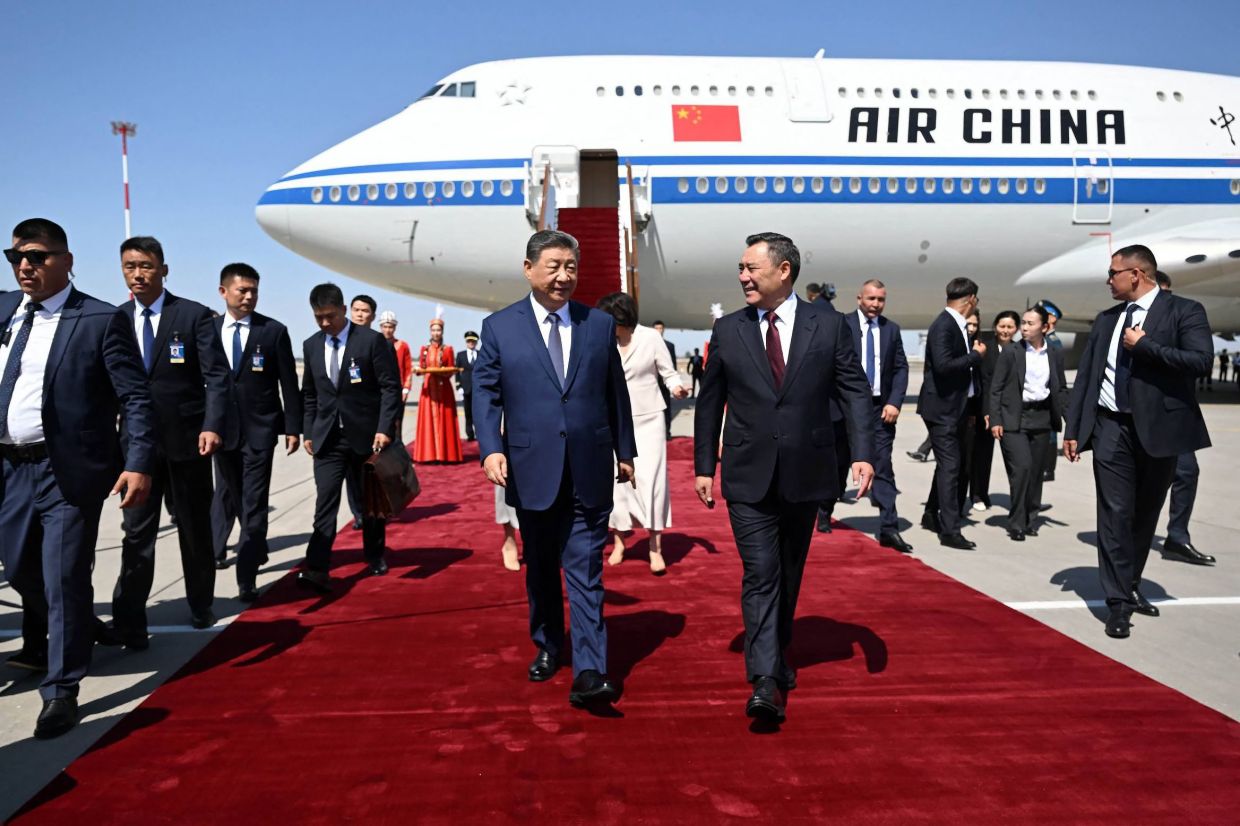
The Shanghai Cooperation Organisation is hosting its latest summit this week in Bishkek, Kyrgyzstan, with the region's most consequential players in attendance. Chinese President Xi Jinping, Russian President Vladimir Putin and Indian Prime Minister Narendra Modi are all scheduled to participate in the gathering, which aims to project the SCO as a viable alternative to Western-dominated international structures. Multiple bilateral meetings are planned on the sidelines, including a Putin-Xi discussion on Monday and talks between the Russian leader and Iranian President Masoud Pezeshkian on Tuesday, underscoring the diplomatic importance member states attach to the forum.
The SCO's relevance has grown substantially since its founding in 2001 by China and Russia alongside four Central Asian neighbours. What began as a security-focused regional arrangement has expanded to encompass ten full members: Russia, China, India, Iran, Pakistan, Belarus, Kazakhstan, Kyrgyzstan, Tajikistan and Uzbekistan. The organisation now functions as a platform through which Beijing and Moscow deliberately frame regional cooperation as distinct from and independent of Western institutions like the G7. This positioning carries particular weight as both China and Russia have intensified efforts to promote an alternative international order based on what they characterise as non-interference and multipolar principles.
For nations facing international isolation or Western pressure, the SCO represents an opportunity to reinforce their standing among non-Western powers. Russia, now four and a half years into its full-scale invasion of Ukraine, views the summit as essential for demonstrating that it maintains robust partnerships beyond Western sanctions regimes. Similarly, Iran, which has been engaged in conflict with the United States and Israel for roughly six months, leverages the forum to strengthen diplomatic and strategic relationships with major Asian powers. The gathering effectively signals to domestic audiences and international observers that these nations retain diplomatic alternatives to Western engagement.
China's Ministry of Foreign Affairs has explicitly promoted the SCO as having "explored a new path for regional cooperation," language that reflects Beijing's broader ambitions to reshape global power structures. The organisation has become a vehicle through which China offers development assistance and financial partnerships to member states, seeking to deepen institutional ties while enhancing its regional influence. This approach contrasts deliberately with what Chinese officials characterise as the conditional and hegemonic nature of Western development models.
The SCO's actual cohesion masks significant underlying tensions among its membership. Analysts caution against viewing the organisation as a unified political or military bloc capable of coordinated action on major geopolitical issues. Members harbour substantive disagreements on regional priorities and maintain their own distinct strategic interests that sometimes conflict with one another. The organisation's formal objectives and operational programmes remain relatively opaque, contributing to its limited public recognition despite the prominence of its members.
India's participation exemplifies the complex calculations member states navigate. New Delhi faces a particular structural challenge given that both China and Pakistan—strategic rivals—hold full membership. Rather than seeking to shape the SCO's overall agenda, Indian strategists view the platform primarily through an optics and signalling lens, according to regional security experts. Dinakar Peri, a fellow in security studies at Carnegie India, explains that the SCO provides India with a formal seat in a region increasingly shaped by competition among major powers, enabling New Delhi to monitor shifting geopolitical alignments while projecting itself as a reliable stakeholder. The forum essentially grants India visibility into Beijing's and Moscow's strategic calculations regarding Central Asia and beyond, allowing the country to hedge its position with other powers even when unable to fundamentally influence organisational direction.
Turkey represents another instructive case within the SCO framework. Holding "dialogue partner" status rather than full membership, Ankara explicitly leverages the organisation as part of a deliberately balanced foreign policy. President Recep Tayyip Erdogan seeks to maintain Turkey's traditional Western orientation through NATO membership and EU trade relationships while simultaneously strengthening Eurasian influence and positioning. Erdogan has repeatedly advocated for Turkey's elevation to permanent membership status, viewing this upgrade as validation of Turkey's strategic importance. Despite close trade ties with the European Union under a 1995 agreement, Turkey's EU membership application has stalled for over two decades, making the SCO increasingly attractive as an alternative avenue for international status and influence.
For Southeast Asian observers, the SCO summit underscores accelerating bifurcation in the global order. The region's smaller nations must navigate between Western-aligned institutions and this emerging non-Western coalition that increasingly dominates Central Asian and Asian affairs. The forum's expansion and apparent strengthening suggests that alternative international structures are becoming institutionalised rather than remaining temporary expressions of anti-Western sentiment. As these regional powers consolidate their alternative arrangements, Southeast Asian governments must calibrate their own positioning carefully, maintaining sufficient flexibility to benefit from both Western and non-Western partnerships while avoiding forced alignment with either bloc.

