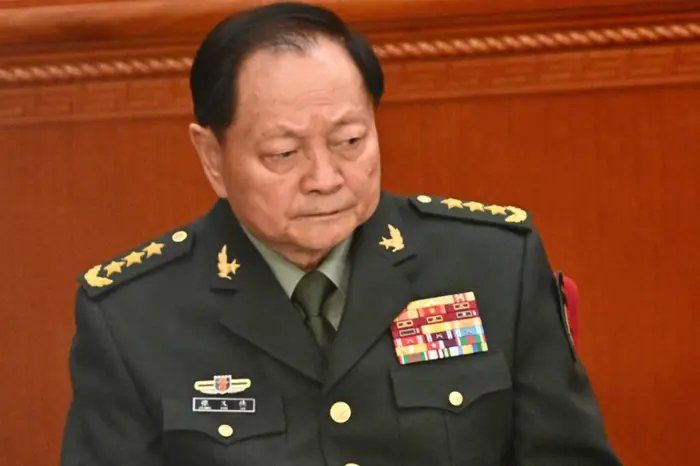
China's leadership has officially removed Zhang Youxia from his position as vice chairman of the Central Military Commission, according to an announcement made Friday by state media. The action concludes a seven-month investigation that began in January when authorities disclosed that Zhang, along with another senior military official Liu Zhenli, faced allegations of "serious violations of discipline and the law"—a standard phrase used by Beijing to describe corruption-related offences. The formal removal came through a decision by the standing committee of China's parliament, as reported by the official Xinhua news agency.
Zhang's departure marks a significant reshuffling within China's military hierarchy. As the more senior of two vice chairmen serving on the Central Military Commission, he had held the distinction of being China's highest-ranked general, a position that placed him among the nation's most powerful military figures. His removal therefore represents a notable gap in the country's defence establishment that will require succession planning at the highest levels of the People's Liberation Army.
The investigation into Zhang's conduct exemplifies President Xi Jinping's sustained anti-corruption campaign, which has become a defining characteristic of his tenure in power. Since assuming leadership, Xi has systematically pursued what Beijing describes as a sweeping graft-elimination drive, targeting officials across civilian and military sectors regardless of rank or seniority. This approach has reshaped China's political landscape by removing numerous high-level figures accused of corruption and misusing their positions for personal gain.
What distinguishes Zhang's case from routine anti-corruption actions is the apparent closeness observers had attributed to him and Xi. Military analysts and China watchers had generally perceived Zhang as being within the president's inner circle, making his investigation and removal more surprising than similar actions against lower-ranking officials. The shock value of his fall from grace underscores that even those believed to enjoy Xi's confidence are not immune from investigation and removal if evidence of wrongdoing surfaces.
Liu Zhenli, the other official implicated in the January announcement, has also been removed from his post. Liu held the position of chief of staff of the Central Military Commission's joint staff department, a role that carries substantial responsibility for overseeing combat planning and military operations strategy. His removal alongside Zhang's suggests that the investigation may have uncovered systematic issues or that both men were involved in related misconduct.
The timing and manner of these removals reflect how China's political system operates when addressing senior-level misconduct. Rather than public trials or detailed disclosures of specific charges, the government typically announces investigations using carefully chosen language, allows a period for internal proceedings, and then announces personnel changes through formal state channels. This approach maintains institutional stability while demonstrating commitment to accountability and discipline within the military establishment.
For regional observers including those in Southeast Asia, these developments carry implications for understanding China's military command structure and decision-making processes. The Central Military Commission serves as China's paramount military authority, and changes in its composition can affect strategic direction and operational priorities. Nations in the region that interact with or are affected by Chinese military activities maintain interest in how leadership transitions might influence Beijing's approach to regional security matters.
The investigation also illustrates the vulnerability of even the most senior military commanders to Xi's governance style, which emphasises centralised authority and strict discipline. By demonstrating that rank offers no protection from investigation, the leadership reinforces its control over the military apparatus and sends a message that compliance with anti-corruption standards is non-negotiable. This approach has been effective in consolidating Xi's power but also creates uncertainty about stability in the upper ranks of China's defence establishment.
Zhang's removal leaves a vacant position in the CMC's vice chairman ranks, a position that will need to be filled through China's political and military selection processes. The successor appointment will likely signal the direction of future military leadership priorities and may provide clues about Xi's confidence in various military commanders and factions within the People's Liberation Army.
The broader implications of these removals extend to China's military effectiveness and command continuity. High-level corruption investigations and personnel changes at the CMC level can create uncertainty about strategic direction and resource allocation. However, the government has typically managed such transitions without significant operational disruptions, suggesting institutional mechanisms are in place to maintain military readiness despite leadership changes. The completion of these investigations and formal removals may also signal the end of this particular chapter of the anti-corruption drive within China's military establishment, potentially allowing some stabilisation in the defence hierarchy.

