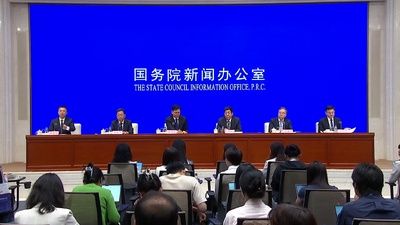
China has firmly rejected allegations that forced labour and involuntary migration occur in the Xinjiang Uygur autonomous region, with senior government officials characterising such claims as unfounded criticism from Western organisations and media outlets. Chen Ruifeng, Minister of the National Ethnic Affairs Commission, made the denial during a statement on Wednesday, June 24, asserting that the country's constitutional framework and legal system explicitly prohibit any form of coerced work. The ministry's response reflects Beijing's sustained pushback against international scrutiny regarding labour practices in the northwestern region, an issue that has drawn criticism from human rights groups and Western governments for several years.
The timing of these denials coincides with the implementation of a significant new legal instrument designed to strengthen worker protections across ethnic groups. The Law on Promoting Ethnic Unity and Progress, which received parliamentary approval on March 12, takes effect on July 1 and introduces enhanced provisions governing labour mobility and rights protection. According to Chen, the legislation specifically addresses cross-regional workers and clarifies mechanisms for legal assistance, thereby establishing clearer safeguards for individuals seeking employment outside their home areas. The law's emphasis on formalising rights protection suggests Beijing's effort to create a more transparent regulatory framework that addresses international concerns about labour conditions.
Official rhetoric emphasises the voluntary nature of employment decisions made by Xinjiang residents. Chen stated categorically that workers who seek jobs beyond their region do so of their own volition, driven by personal aspirations to improve household incomes and develop professional skills. This characterisation attempts to reframe labour migration as an individual choice rooted in economic self-interest rather than state compulsion. The minister dismissed criticism of such policies as "extremely absurd and ridiculous," employing unusually blunt language that underscores the sensitivity of the issue within Chinese policy circles. By framing forced labour allegations as irrational, Beijing seeks to delegitimise the credibility of international critics.
The government points to substantial employment creation as evidence of successful labour policy. Over the past five years, Xinjiang has generated more than 2.39 million new urban jobs through various policy initiatives aimed at increasing workforce participation across the region. These figures suggest significant economic dynamism and job expansion that, officials argue, would be unnecessary if labour were already being coerced. The scale of new employment opportunities presented in official statistics is offered as a counterargument to claims of systematic forced labour, implying that workers have genuine choices among multiple employment pathways.
Beyond urban employment, the government highlights the extent of agricultural labour mobility, noting that farm workers have undertaken 16.1 million outbound work trips over the past five years. This data point illustrates the substantial scale of internal labour movement, suggesting that cross-regional employment is a significant feature of Xinjiang's economic landscape. For Malaysian readers familiar with seasonal agricultural labour patterns across Southeast Asia, these migration figures demonstrate comparable workforce mobility trends, though the governance structures surrounding such movements differ considerably across the region. The sheer volume of work trips implies that labour mobility has become institutionalised within Xinjiang's economy.
Income growth statistics are deployed as a further metric of successful employment policy. Official figures indicate that per capita disposable income for urban residents has expanded at an average annual rate of 5.3 percent over the five-year period, while rural residents have experienced even faster growth at 8.1 percent annually. These income trajectories, if accurate, would suggest that Xinjiang's labour market is generating tangible economic benefits for residents, particularly in rural areas where historical income disparities have been more pronounced. The government interprets such growth as validation of its labour policies and as evidence that employment initiatives are delivering material improvements to living standards.
China's approach emphasises the development of institutional mechanisms designed to protect worker rights and ensure dignified employment conditions. By establishing what officials describe as a "fair employment policy system and labour rights protection mechanism," Beijing claims to have created formal structures that safeguard legal entitlements for all workers regardless of ethnicity. This institutional framework purportedly ensures that all economically active individuals have access to employment opportunities while maintaining protections against exploitation and abuse. The stated objective is to maximise voluntary employment choice while simultaneously guaranteeing that work is conducted with appropriate dignity and in compliance with legal standards.
The controversy over Xinjiang labour practices reflects broader geopolitical tensions between China and Western nations regarding human rights and ethnic minority treatment. International organisations and several governments have expressed concerns about labour practices in the region, leading to targeted sanctions and trade restrictions. Beijing's sustained denials and presentation of employment statistics represent an attempt to counter these criticisms through official narrative and quantitative evidence. However, the persistence of allegations despite repeated government denials indicates that international scepticism remains substantial, and that official Chinese claims continue to be disputed by external observers.
For Southeast Asian nations monitoring this dispute, the Xinjiang labour issue carries implications for regional engagement with China and international labour standards. Many Southeast Asian countries maintain significant labour mobility with China and have economic dependencies that require careful navigation of human rights concerns. The debate over Xinjiang labour practices influences broader discussions about labour rights protections, worker mobility governance, and corporate supply chain accountability across the region. Malaysia, as a country with its own complex labour migration patterns and supply chain integration with China, faces practical policy questions about how to balance economic relationships with labour standards monitoring.
The establishment of the new ethnic unity law and enhanced legal protections suggests that Beijing recognises the need to formalise governance structures around labour mobility and worker rights. Whether such legislative measures adequately address international concerns remains contested, with critics arguing that legal frameworks alone cannot ensure compliance absent independent monitoring and enforcement mechanisms. The emphasis on ethnic group inclusion within the legal framework indicates official recognition that multi-ethnic workforce management requires explicit protections and equal treatment provisions. This regulatory development may influence how other countries, including those in Southeast Asia, approach the governance of labour mobility among diverse populations.