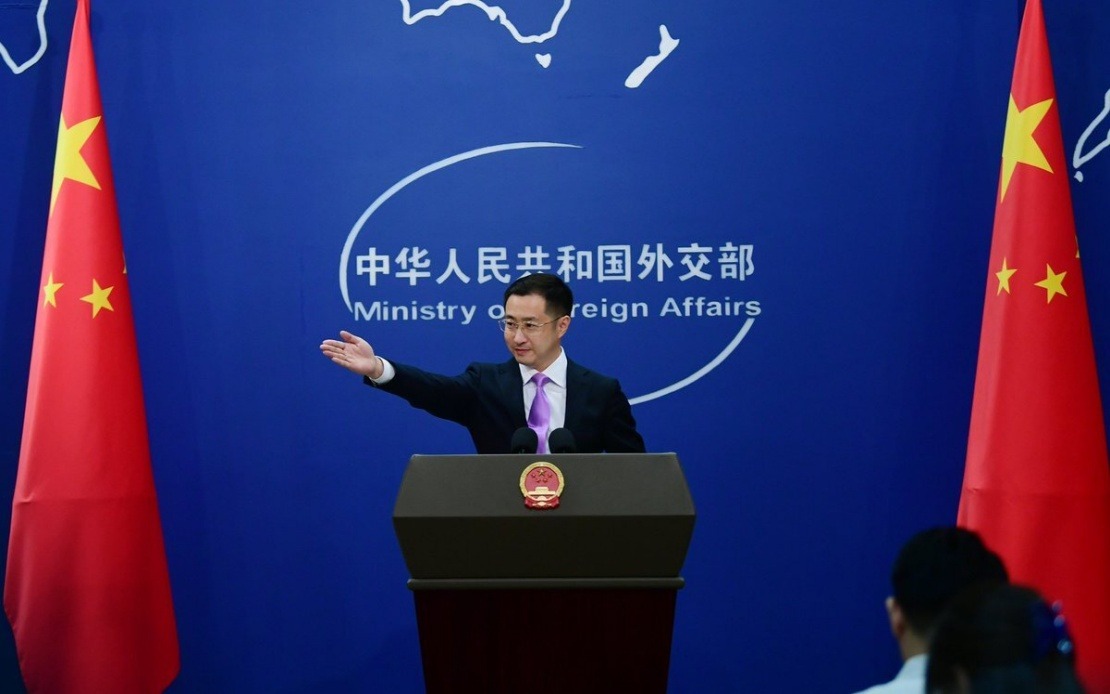
China's government has formally acknowledged Malaysian Prime Minister Datuk Seri Anwar Ibrahim's recent statements affirming the one-China principle, with Beijing's Ministry of Foreign Affairs posting a message of commendation on social media on Wednesday. The endorsement came after Anwar articulated his view that Taiwan constitutes part of China in an interview with international broadcaster Al Jazeera, positioning himself firmly within the framework of Beijing's longstanding territorial claims.
The diplomatic recognition from China underscores how significant Malaysia's stance is within the broader geopolitical landscape of Southeast Asia, a region where Beijing maintains substantial economic and strategic interests. Anwar's unambiguous alignment with the one-China principle represents continuity with Malaysia's historical foreign policy position, though his explicit public articulation in an international media forum carries particular weight given Malaysia's role as a major regional player and current chair of the Association of Southeast Asian Nations.
Chinese foreign ministry spokesperson Lin Jian elaborated on Beijing's perspective during a regular press briefing in Beijing on Wednesday, characterizing the one-China principle not merely as a political position but as reflecting universal sentiment and moral correctness. Lin asserted that the international community's commitment to this principle remains unshakeable, and framed China's eventual reunification as an inexorable historical development that cannot be impeded by external forces or circumstances.
The substance of Lin's remarks revealed China's strategic framing of the Taiwan question as settled in principle, if not yet in practice. By describing reunification as an unstoppable trend, Beijing seeks to establish psychological and diplomatic momentum behind its ultimate territorial objective, positioning acceptance of the one-China principle as the only rational and inevitable position for nations to adopt. This rhetorical strategy aims to marginalize alternative frameworks or expressions of ambiguity regarding Taiwan's political status.
For Malaysia, maintaining this diplomatic alignment carries implications across multiple dimensions. Economically, Malaysia's bilateral relationship with China encompasses substantial trade flows, investment, and infrastructure projects under initiatives such as the Regional Comprehensive Economic Partnership. Politically, Malaysia's position as a Muslim-majority ASEAN nation that has maintained stable relations with Beijing offers a model of coexistence that does not require sacrificing regional principles or solidarity.
Anwar's remarks during the Al Jazeera interview presented Taiwan's incorporation within China as not merely a Chinese position but as globally accepted reality, asserting that "it is one China" and that this understanding enjoys universal recognition. This framing effectively delegitimizes any questioning of the principle, treating dissent as deviation from established international consensus rather than as a legitimate alternative perspective.
The timing of China's formal commendation reflects Beijing's appreciation for statements that reinforce its preferred narrative at a moment of ongoing cross-strait tension and international debate regarding Taiwan's status. Malaysia's reaffirmation of the one-China principle becomes particularly valuable to China when articulated by a nation that maintains democratic institutions and engagement with Western powers, as it suggests that adherence to this principle need not conflict with broader international engagement or regional stability frameworks.
Within the ASEAN context, Malaysia's position assumes heightened significance given the organization's commitment to maintaining neutrality on major power disputes while upholding international law and the UN Charter. Anwar's statements navigate these tensions by grounding his stance in principles of sovereignty and territorial integrity, concepts that underpin international order while also supporting China's territorial claims.
The exchange between Malaysia's Prime Minister and China's foreign ministry apparatus illustrates how diplomatic language operates as a form of mutual reinforcement within bilateral relationships. China's public commendation validates Anwar's international profile and signals to other regional actors the benefits of alignment with Beijing's core positions, while Anwar's reaffirmation strengthens Malaysia's relationship with its largest trading partner and a major source of foreign investment.
The principle itself remains contentious within international relations, with different nations interpreting the one-China framework in ways that accommodate varying degrees of Taiwan's practical autonomy. Malaysia's explicit endorsement, however, positions the country clearly within the camp of nations that prioritize their relationship with Beijing over maintaining deliberate ambiguity on the question.
Looking forward, Anwar's articulation of this position establishes a clear benchmark for Malaysia's Taiwan policy, potentially constraining future Malaysian governments' flexibility in responding to international developments or pressure from other stakeholders interested in Taiwan's governance arrangements. The public nature of this commitment, communicated through an international media platform and subsequently amplified through official Chinese channels, transforms it from a private diplomatic understanding into a publicly documented national position.

