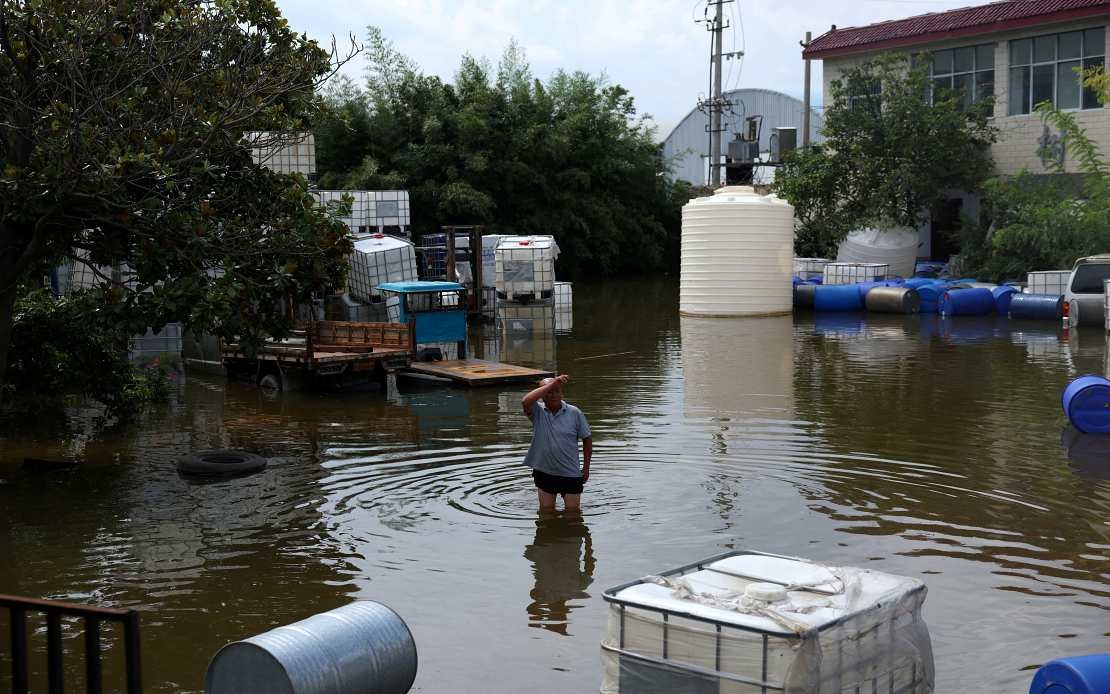
China has launched a significant emergency response in Henan Province after heavy rainfall associated with Typhoon Dolphin overwhelmed river systems and caused a critical levee failure near Zhoukou City. The breach occurred late Thursday evening, prompting rapid mobilization of rescue assets across the region. This incident underscores the mounting challenges that typhoons and monsoon systems pose to China's infrastructure, particularly in central provinces where agricultural communities depend heavily on functional water management systems.
The Ministry of Emergency Management responded swiftly by deploying specialized rescue personnel to the affected area. The response force totals 200 engineers from China Anneng Group, a major infrastructure contractor, supported by 110 large engineering machines designed for embankment repair and flood mitigation work. These teams reached the disaster zone on Friday and immediately began collaborating with local emergency personnel to contain the breach and prevent additional water surges into populated areas downstream. The speed of deployment demonstrates China's capacity to mobilize specialized resources when natural disasters strike.
Typhoon Dolphin, classified as the 13th typhoon of the current season, has brought unprecedented rainfall to multiple provinces in central China. The system's weakened remnants caused torrential downpours that swelled already-saturated river networks across Henan. For Malaysian observers, this pattern mirrors the monsoon flooding challenges that regularly affect Southeast Asia, though China's typhoon season operates on a different timeline and intensity profile. The accumulated rainfall overwhelmed existing water management infrastructure, creating conditions where levee systems designed for standard flood events faced extraordinary pressure.
In response to the scale of the disaster, China's National Commission for Disaster Prevention, Reduction and Relief activated a Level-IV national disaster relief emergency protocol. This classification places the Henan flooding among the country's most serious natural disasters requiring coordinated federal intervention. The activation triggers pre-positioned supply chains and authorizes emergency funding for response and recovery operations. Such centralized disaster management frameworks are increasingly relevant to regional neighbours as climate patterns shift and extreme weather events become more frequent across Asia.
The scope of humanitarian assistance being mobilized reflects the anticipated scale of displacement and damage across multiple municipalities. Officials have allocated 30,000 items of disaster relief supplies specifically for affected communities in Zhoukou, Xuchang, and surrounding regions. The relief packages include essential items such as portable beds, bedding appropriate for warm climates, and family emergency kits containing basic survival items. This logistical approach prioritizes rapid provision of shelter and dignity for displaced residents while permanent repairs proceed.
Three central government agencies coordinated the supply distribution: the National Commission for Disaster Prevention, Reduction and Relief's administrative office, the Ministry of Emergency Management, and the National Food and Strategic Reserves Administration. This multi-agency coordination ensures that food security, emergency supplies, and strategic resources reach affected populations without duplication or gaps in coverage. For Southeast Asian countries managing their own disaster response mechanisms, China's integrated approach offers lessons in coordination efficiency, though the scale of China's bureaucratic apparatus differs substantially from smaller regional neighbours.
The levee breach in Henan carries broader implications for water security across central China. Levees form the foundation of agricultural productivity in densely populated river valleys, protecting millions of people and vast agricultural areas from seasonal flooding. When these structures fail catastrophically, they threaten not only immediate safety but also farming systems and food production for entire regions. Repairs to damaged embankments typically require months of intensive engineering work, during which communities remain vulnerable to subsequent rainfall events.
From a Malaysian perspective, this disaster highlights how vulnerable even developed nations remain when facing climate-driven extreme weather. China's rapid response capability, while impressive, cannot prevent the initial infrastructure failure or the loss of life and property damage that inevitably accompanies such events. As typhoon seasons intensify across Asia and rainfall patterns become more erratic, both China and Southeast Asian nations must invest in levee reinforcement, early warning systems, and community preparedness programs that go beyond reactive emergency response.
Typhoon Dolphin's impact extends beyond Henan Province, affecting multiple regions across central and eastern China. The broader climate context involves warmer ocean temperatures that energize typhoon formation and cause these systems to carry more moisture than historical patterns would suggest. Scientists studying typhoon evolution note that warming trends in the Western Pacific create conditions for more intense precipitation events, even as typhoons weaken after making landfall. This pattern suggests that Henan's experience with catastrophic rainfall may become increasingly common rather than exceptional.
The coordination between national authorities and provincial administration in Henan demonstrates China's capacity for rapid resource mobilization during crisis situations. However, questions remain about the adequacy of preventive infrastructure investment relative to climate risks. Engineering solutions like levee reinforcement and improved drainage systems require sustained funding and long-term planning that extends beyond emergency response budgets. Malaysia and other Southeast Asian nations facing similar typhoon exposure should consider whether their own infrastructure investment strategies adequately account for intensifying weather patterns projected for coming decades.

