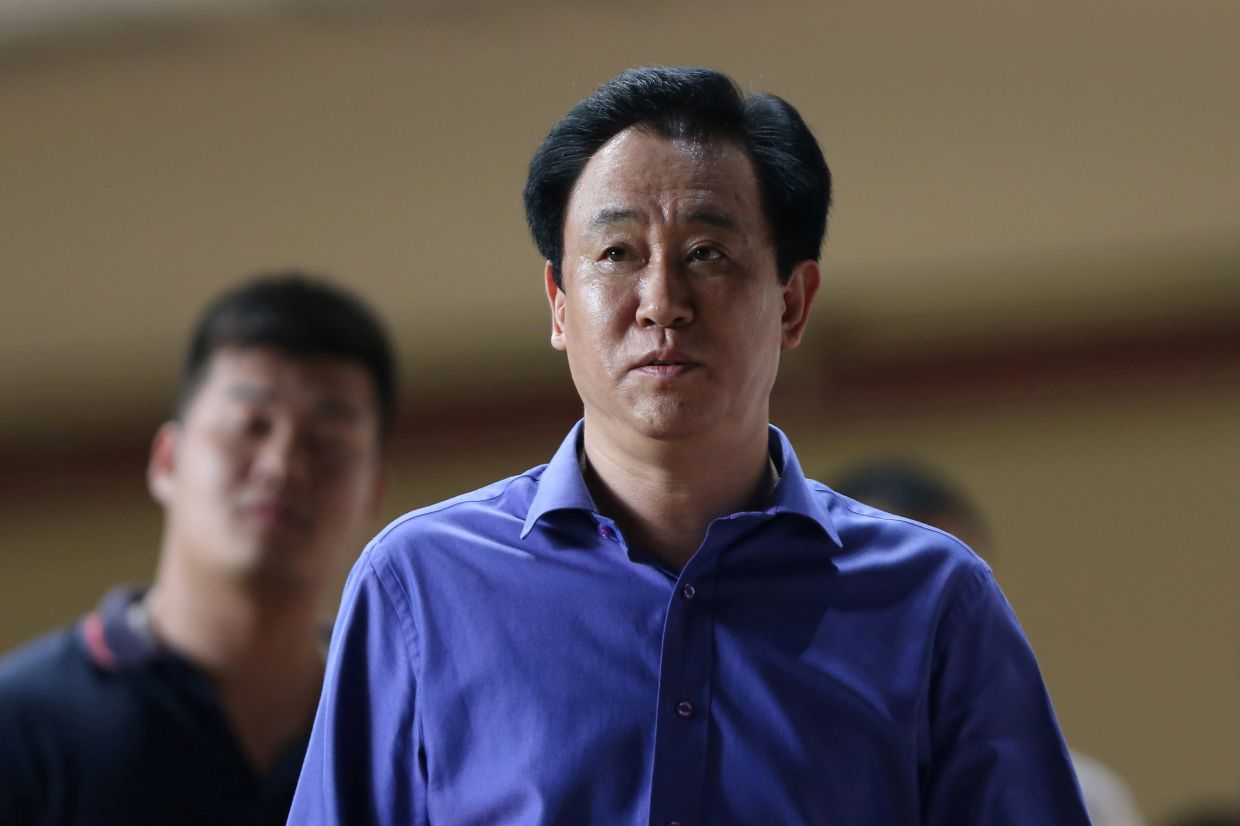
China's judiciary has delivered its verdict in one of the most significant corporate fraud cases in the country's recent history, sentencing Evergrande Group founder Xu Jiayin to life imprisonment on Thursday and simultaneously imposing financial penalties of 15.82 billion yuan (US$2.4 billion) against the company and its real estate division. The Shenzhen Intermediate People's Court in Guangdong province announced the decision, which strips Xu of all political rights and orders the complete confiscation of his personal assets.
The conviction represents the legal reckoning for a man whose company once epitomised China's seemingly unstoppable real estate ascendancy. For nearly two decades, Evergrande emerged as one of the world's largest property developers, becoming synonymous with the transformation of Chinese cities and the realisation of homeownership dreams across the nation. The developer gorged on easy credit and rapid expansion, becoming a bellwether of China's broader property boom that fuelled economic growth but also masked underlying structural vulnerabilities in the system.
Xu's downfall accelerated after Beijing introduced a series of stringent regulations designed to curtail speculative borrowing and excessive risk-taking in the real estate sector. These measures, introduced starting around 2020, dramatically constrained Evergrande's access to capital markets and financial institutions. The tightening of credit channels proved catastrophic for a company whose business model had depended fundamentally on continuous refinancing and leverage to fund new projects and service existing debts.
The company's inability to meet its obligations came into sharp focus in 2021 when Evergrande defaulted, triggering a cascade of financial distress that extended far beyond the corporation itself. Hundreds of thousands of home buyers found themselves holding contracts for unfinished apartments, while creditors, suppliers, and offshore bondholders faced significant losses. The default exposed the fragility of China's property sector and raised broader questions about financial stability within the world's second-largest economy.
According to court documents, Xu and Evergrande engaged in systematic financial manipulation between 2016 and 2021, employing what prosecutors characterised as large-scale fraud to artificially inflate asset values while simultaneously concealing substantial liabilities from regulators, investors, and creditors. The schemes involved misrepresenting financial statements, falsifying documentation, and presenting a distorted picture of the company's true financial health. These tactics allowed Evergrande to continue accessing credit and issuing bonds at times when transparent accounting would have revealed the company's deteriorating position.
Beyond the core allegations of financial fraud, the investigation uncovered evidence of bribery and corruption. The court found that Xu and other company executives improperly secured control over financial institutions through corrupt payments, though the specific institutions involved were not identified in the public announcement. Such findings underscore how corporate misconduct at Evergrande's scale extended into the broader financial ecosystem, compromising the integrity of institutions that should have served as gatekeepers against reckless lending.
Xu had previously entered a guilty plea in April to charges encompassing embezzlement, bribery, and financial fraud, effectively conceding the factual basis for his prosecution. The life sentence imposed represents the maximum penalty available under Chinese law for such offences. Additionally, the court imposed collective prison sentences ranging from six to eighteen years on five other senior executives within the Evergrande organisation, ensuring accountability extended beyond the founder to those who participated in or facilitated the fraudulent schemes.
The implications of this case resonate throughout Asia's financial markets and regulatory frameworks. For Malaysia and the broader region, the Evergrande collapse and subsequent prosecution serve as cautionary reminders about the risks inherent in rapid property market expansion fuelled primarily by debt rather than sustainable economic fundamentals. Malaysian regulators and policymakers have closely observed China's experience, with some arguing that stricter oversight of developer leverage and more transparent financial reporting standards could help prevent similar crises in Malaysia's own property sector.
The conviction also reflects Beijing's determination to impose accountability for large-scale corporate wrongdoing despite the political and economic sensitivities involved. Allowing Xu to escape serious consequences would have sent problematic signals to other corporate leaders and undermined the government's broader anti-corruption agenda. Conversely, the severity of the punishment demonstrates the government's willingness to pursue even prominent business figures when fraud of this magnitude is established.
For investors and creditors who suffered losses due to Evergrande's default, this verdict offers at least symbolic validation that culpability has been assigned, though it provides limited practical recompense. The confiscation of Xu's personal assets may recover some funds, but many stakeholders will likely never recover their full losses. The case underscores the inadequacy of legal proceedings alone in addressing the broader consequences of systemic fraud and mismanagement.
Looking forward, the Evergrande case will likely influence how Chinese authorities approach oversight of large property developers and financial risk management within the sector. While some analysts argue the severe punishment of Xu represents a form of scapegoating that deflects responsibility from systemic regulatory failures, others contend it provides necessary deterrence against future misconduct. The verdict concludes one chapter but leaves unresolved broader questions about how China's property sector will stabilise and recover from the damage inflicted by years of unsustainable expansion.

